
CBSE – New Language Policy Offers Transition Relief for Existing Students
CBSE – The Central Board of Secondary Education (CBSE) has introduced a phased transition to its upcoming three-language framework, ensuring that students already studying under the current system face minimal disruption as the new policy takes effect.
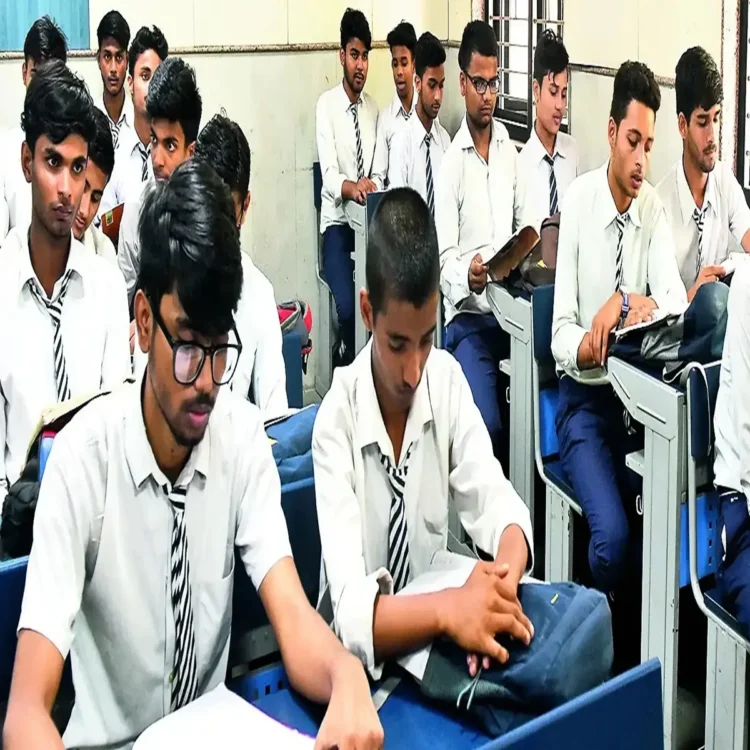
The CBSE has announced important relaxations for students currently enrolled in Classes VII, VIII and IX as part of the implementation of the language policy proposed under the National Education Policy (NEP) 2020. The revised framework, scheduled to come into force from the 2026-27 academic session, aims to balance the objectives of the new education policy while addressing concerns raised by schools, students and parents about the shift to a different language structure.
Existing Class X Students Exempt from New Rules
According to the board, students who are presently in Class X will continue under the existing two-language system. They will not be affected by the revised language policy, ensuring that those preparing for their Board examinations do not have to adapt to new academic requirements midway through their studies.
The exemption has been designed to provide stability for the current batch while allowing schools adequate time to prepare for the gradual introduction of the revised curriculum.
Three-Language Structure Begins with New Class IX Batch
From the 2026-27 academic year, students entering Class IX will be required to study three languages. Under the new arrangement, at least two of these must be Indian languages, which may include Hindi, Tamil, Bengali, Marathi and other recognised Bhartiya Bhashas.
The third language may either be another Indian language or a foreign language such as English, French or German, depending on the language combination already followed by the student and the options available in the school.
One-Time Relaxation for Students Studying Foreign Languages
To make the transition smoother, CBSE has granted a special one-time concession to students who are already studying two foreign languages. These students will be allowed to continue with the same subjects while adding one Indian language to comply with the revised policy.
For this transitional group, the additional language will be assessed through internal evaluation conducted by the respective schools. Students covered under this relaxation will not be required to appear for a Class X Board examination in the third language. The same provision will also benefit students currently studying in Classes VII and VIII when they move to the secondary level.
Full Rollout to Begin with Current Class VI Students
The board clarified that the revised language framework will be implemented in its complete form for students who are currently in Class VI and all future batches. These students will study three languages throughout secondary education and will eventually appear for a Board examination in the third language.
To support schools during implementation, CBSE and the National Council of Educational Research and Training (NCERT) are preparing teaching and learning resources in all 22 scheduled Indian languages recognised under the Constitution.
Special Exemptions and Flexible Language Choices
CBSE has also outlined several exemptions under the revised guidelines. Children with Special Needs covered under the Rights of Persons with Disabilities (RPwD) Act, CBSE-affiliated schools located outside India and foreign students returning to Indian schools will receive appropriate flexibility.
Additionally, children from migrant families will be provided greater freedom in selecting suitable language combinations to reduce academic challenges arising from relocation.
Maharashtra Makes Marathi Mandatory Across School Boards
Separately, the Maharashtra government has announced that Marathi will become a compulsory subject for students from Class 1 to Class 10 across all educational boards operating in the state.
Authorities have stated that schools failing to implement the requirement may face strict action, including suspension of permissions or cancellation of registration, reinforcing the state’s commitment to promoting Marathi language education.