
IranNuclearTalks – Trump Signals Confidence Ahead of Key Doha Negotiations With Iran
IranNuclearTalks – US President Donald Trump has said he believes Iran has accepted that it will not pursue the development of nuclear weapons, as American and Iranian officials prepare for another round of discussions in Doha, Qatar. Speaking from the Oval Office on Monday, Trump projected confidence about the direction of the negotiations while maintaining that preventing Iran from obtaining nuclear arms remains Washington’s central objective.
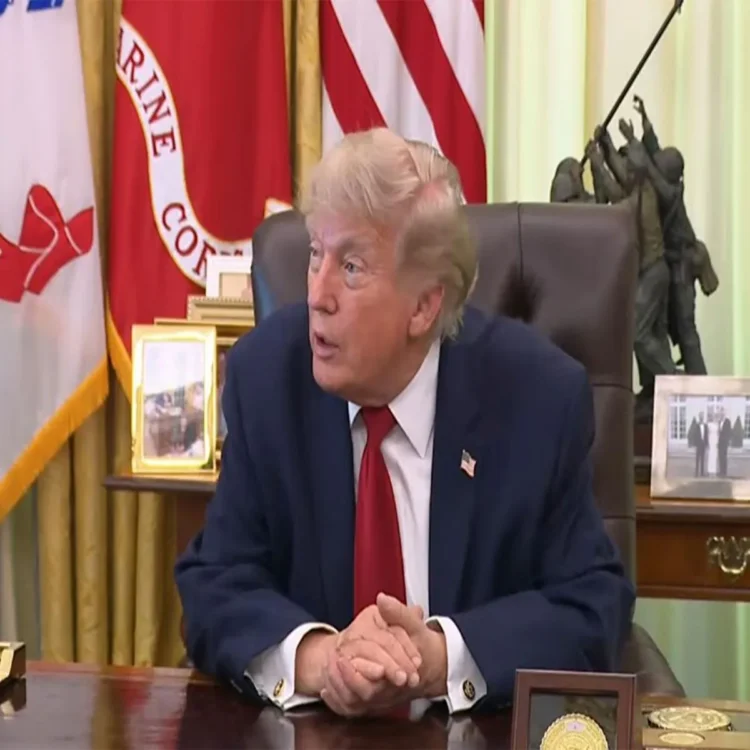
Talks in Doha Set to Test Diplomatic Progress
Trump confirmed that US representatives were already travelling to Qatar for meetings expected to take place on Tuesday. He described the upcoming discussions as potentially significant but acknowledged that their outcome would only become clear once negotiations begin.
According to the President, the meeting could play an important role in shaping future diplomatic efforts between the two countries. However, he stopped short of predicting specific results, saying the discussions would determine the next phase of engagement.
Trump Reiterates US Position on Iran’s Nuclear Programme
Addressing reporters, Trump said the United States remains committed to ensuring that Iran does not acquire nuclear weapons. He claimed Tehran had agreed not to pursue such capabilities, although he did not provide additional information about the reported understanding or explain whether any formal agreement had been reached.
The President also offered an upbeat assessment of recent developments, arguing that the United States had strengthened its position through a combination of diplomatic efforts and military actions targeting Iran’s nuclear infrastructure. While expressing confidence in America’s approach, he emphasized that the ultimate goal continues to be the complete denuclearization of Iran.
No Details Shared on Negotiation Agenda
Despite his optimistic remarks, Trump declined to outline the specific topics that would be discussed during the Doha meeting. He also did not clarify the framework of Iran’s reported commitment or whether new agreements were expected to emerge from the latest round of talks.
The absence of detailed information leaves uncertainty over what issues negotiators will prioritize, including whether discussions will focus solely on nuclear matters or broader regional security concerns.
President Links Oil Market Trends to Regional Developments
During his appearance, Trump also commented on global energy markets, pointing to a decline in oil prices. He suggested that recent developments involving Iran had contributed to lower crude prices, noting that oil had fallen to around $69 per barrel after previously trading at higher levels.
Although he connected the price movement with progress related to Iran, the President did not provide further economic analysis or identify additional factors influencing the global energy market.
Vehicle Repair Policy Announced Alongside Foreign Policy Remarks
Before taking questions on international affairs, Trump signed a presidential memorandum aimed at expanding consumers’ ability to repair their own vehicles. The directive instructs the Environmental Protection Agency to support greater competition in the aftermarket automotive parts industry while protecting what the administration describes as the right of vehicle owners to carry out repairs independently.
EPA Administrator Lee Zeldin said the policy is intended to strengthen consumer choice by safeguarding the freedom to repair personal vehicles. He also stated that the administration plans to prevent regulatory action against Americans performing vehicle repairs and reduce California’s influence over third-party certification standards for aftermarket automotive components.
Wide-Ranging Questions During White House Appearance
Although the event initially focused on the newly signed vehicle repair memorandum, reporters quickly shifted attention to international affairs, with Iran dominating the discussion. The question-and-answer session later expanded to several domestic topics, including election legislation, recent Supreme Court decisions and immigration policy, reflecting the broad range of issues currently facing the administration.