
India-US Relations – Kenneth Juster Highlights People-to-People Bonds Behind Strong Bilateral Partnership
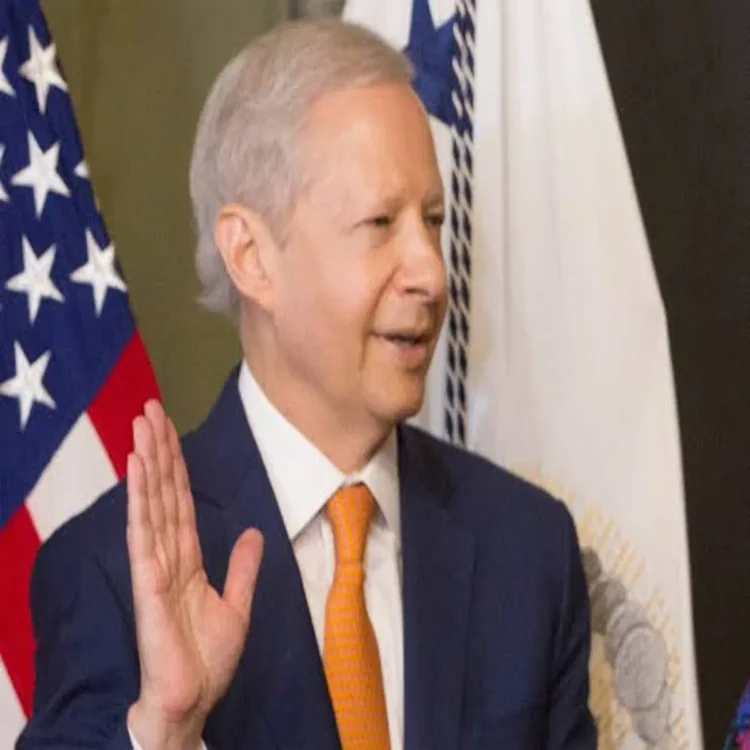
India-US Relations – Former United States Ambassador to India Kenneth I. Juster has said that the enduring relationship between India and the United States has been driven not only by government policies but also by the strong connections shared by their people over generations. Addressing the US-India Strategic Partnership Forum (USISPF) Leadership Summit, Juster described these personal and cultural ties as the foundation that has helped both countries maintain close relations despite occasional diplomatic challenges.
Historic Links Date Back More Than Two Centuries
Speaking about the history of bilateral engagement, Juster noted that the relationship between the two nations stretches back much further than the modern strategic partnership. He pointed out that the United States established some of its earliest overseas diplomatic missions in India, opening consulates in Calcutta in 1792 and Madras in 1794, reflecting the importance of the region even during the early years of American diplomacy.
He also recalled that the United States supported India’s path toward independence in the 1940s. According to Juster, President Franklin D. Roosevelt encouraged Britain to move forward on the issue, while Washington formally established ties with India’s interim government in September 1946, well before the country officially gained independence in August 1947.
Economic Reforms Opened a New Chapter
Juster said the bilateral relationship entered a new phase after India’s economic liberalisation in 1991. Although India’s nuclear tests in 1998 temporarily slowed diplomatic progress, sustained dialogue between senior officials from both countries helped rebuild confidence. Those discussions eventually paved the way for then US President Bill Clinton’s landmark visit to India in 2000, which marked an important step in strengthening cooperation.
He added that the administration of President George W. Bush significantly expanded the partnership by focusing on strategic collaboration, advanced technology, and the landmark civil nuclear agreement, which reshaped relations between the two democracies.
Partnership Expanded Across Successive Administrations
According to Juster, every subsequent US administration continued to deepen cooperation with India. He referred to India’s recognition as a major defence partner during Barack Obama’s presidency, the launch of the 2+2 ministerial dialogue and the revival of the Quad during Donald Trump’s first term, and the elevation of Quad meetings to the leaders’ level under President Joe Biden.
He also said that the current Trump administration has continued discussions with India on defence cooperation, energy security and efforts to finalise what could become the first bilateral trade agreement between the two countries.
Trade and Cooperation Continue to Grow
Highlighting the economic relationship, Juster said bilateral trade in goods and services has expanded dramatically over the past two decades. Trade has increased from around 19 billion dollars in 2001 to nearly 250 billion dollars today, with both governments aiming to raise that figure to 500 billion dollars before the end of the decade. He observed that a comprehensive trade agreement would further support this objective.
Beyond commerce, he noted that cooperation now extends across a wide range of sectors, including defence, counter-terrorism, healthcare, science and technology, education, agriculture, energy, investment, space exploration and maritime affairs.
Community Connections Remain the Strongest Pillar
Juster stressed that the relationship between citizens of both countries has remained the most reliable element of the partnership. He cited large public events such as the “Howdy Modi” programme in Houston and the “Namaste Trump” gathering in Ahmedabad as examples of growing public goodwill. He also praised the contribution of more than five million Indian Americans, saying their influence on the US economy and society continues to strengthen bilateral understanding.
The former ambassador also recognised the role played by the US-India Strategic Partnership Forum in encouraging closer business and strategic cooperation. His remarks came ahead of the release of the organisation’s new coffee table book, We the People: 250 Voices That Have Shaped the U.S.-India Relationship, which honours individuals from diplomacy, business, medicine, education, politics, engineering, arts and public service who have contributed to the evolving partnership between the two countries.