
Immigration – Supreme Court Decisions Strengthen Trump Administration Border Enforcement Measures
Immigration – The Trump administration welcomed a series of recent US Supreme Court decisions that it says reinforce the federal government’s authority to enforce immigration laws and strengthen border security measures. Among the most significant rulings was a decision permitting officials to deny asylum requests from migrants at the US-Mexico border before they physically enter the United States. Administration leaders described the judgments as important legal backing for existing immigration enforcement efforts.
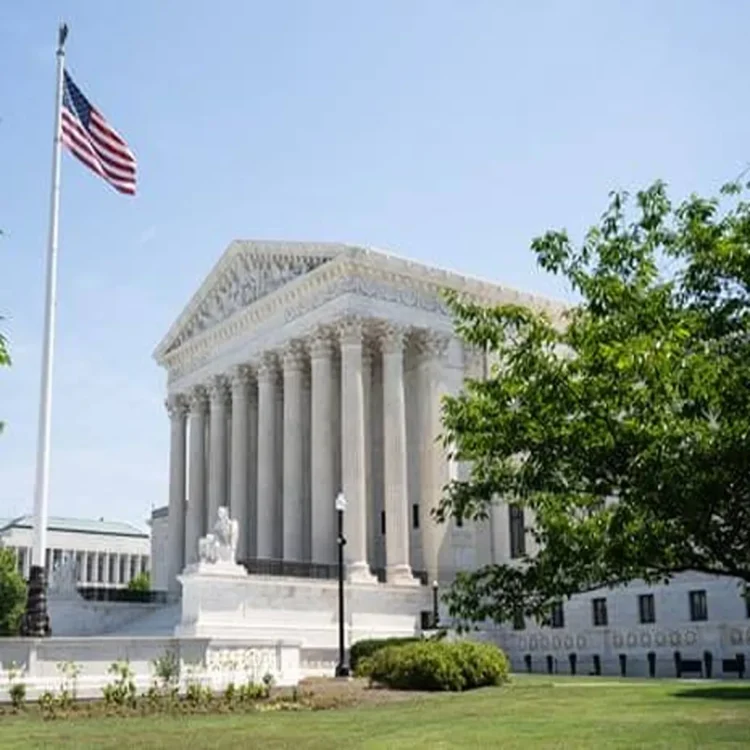
Administration Welcomes Court’s Decisions
Officials from the administration argued that the Supreme Court’s rulings provide greater clarity on immigration enforcement while reaffirming that humanitarian protections should remain temporary unless Congress decides otherwise. They said the decisions support long-standing legal principles governing border management and asylum procedures.
In a statement shared on X, US Department of Homeland Security Secretary Markwayne Mullin described all three Supreme Court rulings issued during the week as significant victories for the enforcement of American immigration laws. He said the judgments make it possible to prevent asylum applications from individuals who have not yet entered the country, simplify the removal process for lawful permanent residents convicted of certain crimes, and confirm that Temporary Protected Status (TPS) is intended to be limited in duration rather than permanent.
Officials Say Rulings Support National Security
Mullin further stated that the decisions provide the administration with additional legal tools to continue strengthening border security and protecting the nation’s interests. According to him, the rulings will assist federal authorities in carrying out immigration policies more effectively while maintaining compliance with existing laws.
Acting Attorney General Todd Blanche also praised the court’s decisions, particularly the ruling that upheld the administration’s authority to end Temporary Protected Status for hundreds of thousands of Haitian and Syrian nationals. He said the Department of Justice successfully defended the government’s position that TPS was designed as a temporary humanitarian program rather than a permanent pathway for remaining in the United States.
Supreme Court Upholds Border Metering Policy
According to reports published by the New York Post, the Supreme Court voted 6-3 in favor of allowing the administration to continue enforcing the border policy known as “metering.” The practice enables immigration officials at ports of entry to limit the number of migrants permitted to request asylum each day.
Writing for the majority, Justice Samuel Alito stated that, under the ordinary meaning of the law, an individual cannot be considered to have “arrived in” the United States until physically entering the country. The majority concluded that the wording of federal immigration statutes supports this interpretation, providing the legal basis for the administration’s policy.
The administration argued during the case that the metering process helps officials manage large numbers of migrants at the southern border while allowing those initially turned away to return later and seek asylum through the appropriate process.
White House Calls Decision a Major Victory
Reacting to the ruling, White House spokeswoman Abigail Jackson described the decision as a major success for the administration, the rule of law, and the country’s immigration system. She said President Donald Trump remains committed to restoring integrity to immigration policies through lawful enforcement and by addressing what the administration considers misuse of the asylum process.
Dissenting Justices Raise Concerns
The New York Post reported that the court’s three Democratic-appointed justices disagreed with the ruling. Justice Sonia Sotomayor, reading from her dissent, expressed concern that the decision weakens the humanitarian values symbolized by the Statue of Liberty.
The metering policy was first introduced during the Obama administration in 2016, expanded nationwide during President Trump’s first term, suspended during the COVID-19 pandemic in 2020, and formally ended by the Biden administration in 2021. A federal judge in California later ruled the policy unlawful, a decision that was upheld by the Ninth Circuit Court of Appeals before being reversed by the Supreme Court.