
NSE IPO – National Stock Exchange Files Draft Papers for Record Public Listing
NSE IPO – India’s capital markets are set for a landmark development after the National Stock Exchange (NSE) submitted its Draft Red Herring Prospectus (DRHP) to the Securities and Exchange Board of India (SEBI) for a proposed initial public offering. The issue could involve up to 148.9 million equity shares and is expected to become the largest IPO ever launched in the country, with an estimated size of around ₹30,000 crore.
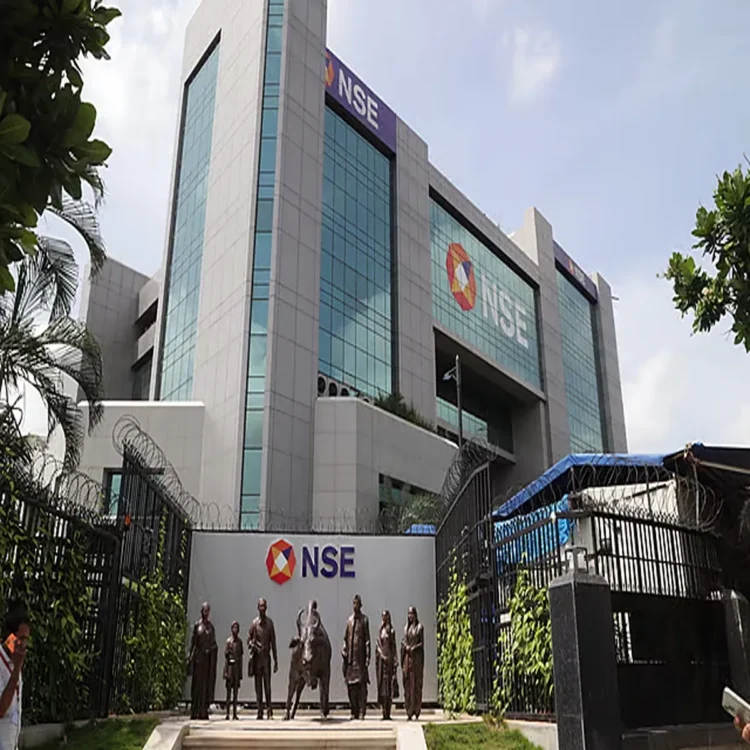
Potential to Set a New IPO Benchmark
If the offering proceeds as planned, it will surpass the ₹27,859 crore public issue launched by Hyundai Motor India in October 2024. The proposed listing represents a significant milestone for India’s largest stock exchange, which has been pursuing a public market debut for several years while addressing regulatory and compliance-related challenges.
The filing marks an important step in NSE’s long-awaited journey toward becoming a publicly traded company. Market participants have closely watched the exchange’s efforts to secure regulatory approvals and complete the necessary procedures required for listing.
Offer Structure Based Entirely on Share Sales
According to details contained in the draft prospectus, the IPO will be structured entirely as an Offer for Sale (OFS). No new shares will be issued by the exchange. Instead, existing shareholders will reduce their stakes by selling equity shares with a face value of Re 1 each.
Several major institutional investors and government-backed financial organizations are among the proposed sellers. State Bank of India is expected to offload the largest number of shares, amounting to 24.75 million. MS Strategic (Mauritius) Limited plans to sell 16 million shares, while the Canada Pension Plan Investment Board has proposed the sale of approximately 11.87 million shares.
Major Institutions to Reduce Holdings
Other prominent shareholders participating in the offer include Aranda Investments (Mauritius) Pte. Ltd., Bank of Baroda, and Stock Holding Corporation of India Limited. State-owned insurance companies are also part of the transaction, including General Insurance Corporation of India, The New India Assurance Company Limited, National Insurance Company Limited, and United India Insurance Company Limited.
The participation of these institutions highlights the broad shareholder base that has developed around the exchange over the years and provides investors with an opportunity to acquire ownership through the public market.
Financial Performance Remains Strong
The financial information included in the filing provides insight into NSE’s recent business performance. For the financial year ending March 31, 2026, the exchange reported total income of ₹187,133.70 million. Although this was slightly lower than the ₹191,768.31 million recorded in the previous fiscal year, it remained above the ₹163,520.62 million reported in FY24.
Revenue from operations stood at ₹166,013.09 million during FY26. This compares with ₹171,406.78 million in FY25 and ₹147,800.11 million in FY24, reflecting the exchange’s continued ability to generate substantial operating revenue despite changing market conditions.
Costs Rise While Profitability Stays Robust
Operating expenses showed an upward trend during the year. Total expenses, excluding contributions to the Core Settlement Guarantee Fund, increased to ₹59,999.03 million in FY26 from ₹48,062.92 million a year earlier.
Despite higher costs, NSE maintained strong profitability. Profit from continuing operations reached ₹101,795.29 million during FY26. While this figure was lower than the ₹116,057.48 million recorded in FY25, it remained significantly above the ₹84,064.80 million reported in FY24.
Net profit for FY26 stood at ₹103,020.61 million, compared with ₹121,876.89 million in the previous financial year. Total comprehensive income reached ₹103,710.93 million, supported by additional comprehensive income of ₹690.32 million.
With the filing now submitted, investors and market observers will closely monitor the regulatory review process as NSE moves toward what could become the largest public listing in India’s corporate history.