
TaxRevenue – Assam Government Focuses on Expanding Tax Base Ahead of State Budget
TaxRevenue – As Assam prepares for the presentation of its upcoming state budget, Finance Minister Jayanta Mallabaruah conducted a detailed review of the state’s taxation department to evaluate its performance and discuss measures aimed at improving revenue collection. The meeting took place at Kar Bhawan in Guwahati on Monday and brought together senior officials from the Commissionerate of Taxes along with field officers who joined virtually from different districts.
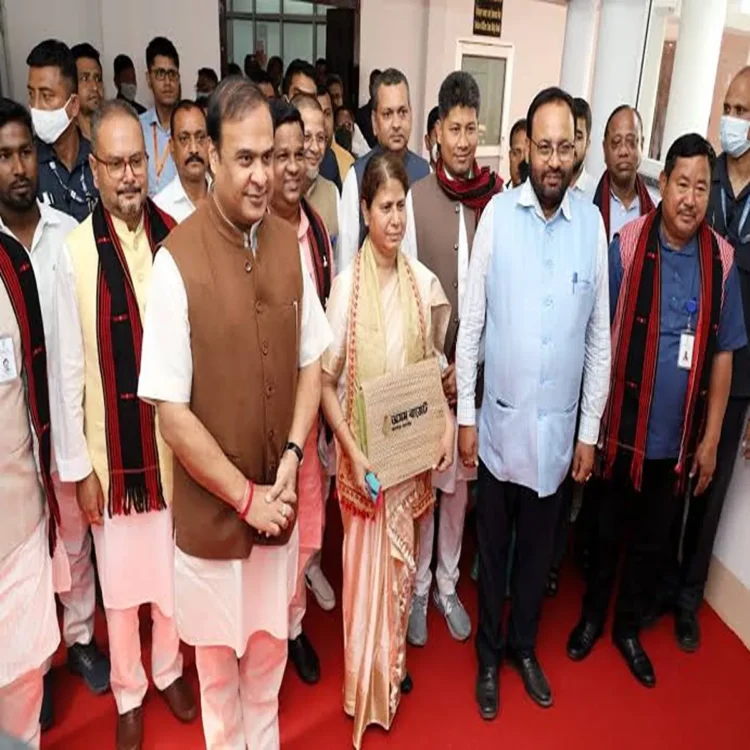
Review of Revenue Collection Mechanisms
During the session, officials presented a comprehensive assessment of the department’s activities, including revenue performance, enforcement efforts, and ongoing administrative initiatives. The review focused on identifying opportunities to strengthen the state’s financial resources while maintaining a balanced approach toward taxpayers and businesses.
The Finance Minister examined current revenue trends and held discussions with departmental officers regarding the effectiveness of existing tax administration systems. The exercise comes ahead of the first budget session of the 16th Assam Legislative Assembly, which is scheduled to begin on July 6.
Emphasis on Broadening Tax Coverage
A key focus of the meeting was the need to increase revenue by expanding the tax base rather than introducing additional burdens on compliant taxpayers. Mallabaruah highlighted that Assam’s taxpayer participation level remains slightly below the national average and urged officials to encourage greater voluntary compliance across the state.
He stressed the importance of bringing eligible individuals and businesses into the formal tax system, stating that broader participation would contribute to stronger and more sustainable revenue generation. Officials were asked to intensify outreach and monitoring efforts to improve overall tax coverage.
Data-Based Monitoring and Compliance Measures
The Finance Minister directed the taxation department to make greater use of data analytics for identifying compliance gaps and reducing potential revenue losses. He emphasized the need for stronger monitoring systems capable of detecting irregularities and improving oversight.
Discussions also covered ongoing efforts to tackle fraudulent tax practices and enhance transparency within the administration. Authorities were encouraged to strengthen mechanisms that support fair enforcement while ensuring a smooth experience for law-abiding taxpayers.
Support for Genuine Businesses
Recognising the role of the business community in contributing to the state’s finances, Mallabaruah instructed officials to create a supportive environment for honest traders and enterprises. He said compliant businesses should receive appropriate facilitation and assistance to encourage continued participation in the formal economy.
At the same time, the department was advised to closely monitor sectors displaying unusual reporting patterns or inconsistencies in tax filings. Officials were asked to maintain vigilance in areas where revenue leakages could potentially occur.
Technology to Drive Administrative Efficiency
A significant part of the review focused on the adoption of advanced technology in tax administration. Discussions included the use of modern systems for tracking the movement of goods, improving compliance procedures, and reducing dependence on manual processes.
The minister noted that technology-driven solutions can help improve efficiency, accountability, and transparency across the department. He encouraged officials to accelerate the implementation of digital tools that can strengthen governance and simplify administrative operations.
Organisational Strengthening Discussed
The meeting also addressed internal administrative matters, including cadre restructuring and measures to strengthen the organisational framework of the Commissionerate of Taxes. Senior officers shared recommendations related to institutional reforms and workforce development to improve the department’s ability to meet future challenges.
Later in the day, Mallabaruah interacted with representatives from professional and industry bodies, including tax practitioners, chartered accountants, company secretaries, cost accountants, and transport sector associations. Participants discussed procedural concerns, compliance-related issues, and suggestions for improving the overall taxation ecosystem.
Reaffirming the government’s approach, the Finance Minister said Assam remains committed to improving revenue mobilisation through better governance, enhanced compliance, and technological innovation while maintaining a business-friendly environment that supports economic development.