
DisasterRelief – Philippine Town Seeks Air Support as Quake Cuts Off Villages
DisasterRelief – Authorities in a southern Philippine municipality heavily affected by a powerful earthquake have appealed for urgent air support to deliver food and essential supplies to communities cut off by landslides. Local officials warned that residents in several remote villages are facing growing shortages as damaged roads continue to hamper relief efforts.
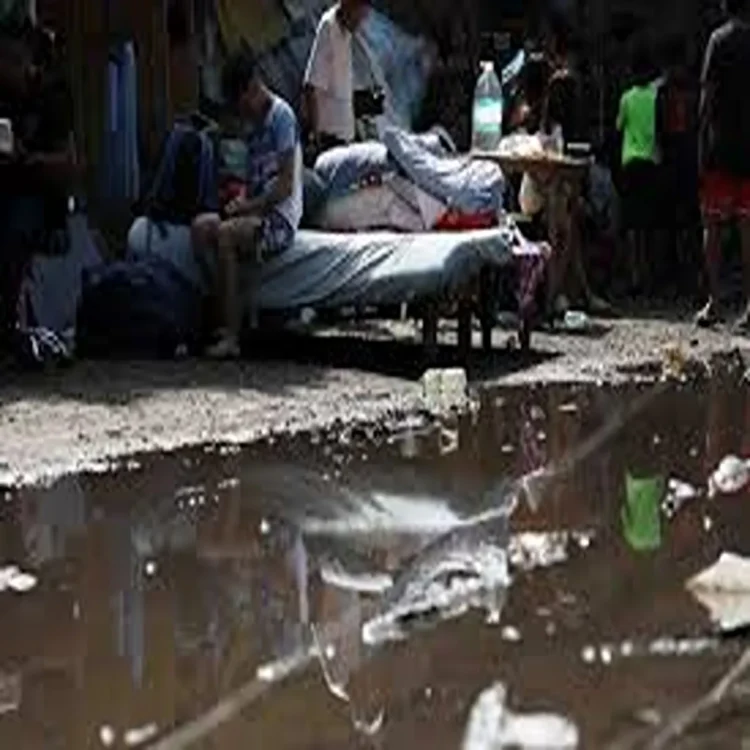
Mayor Calls for Immediate Airlift Operations
The appeal came from the mayor of Glan, a coastal town in Sarangani province, where the impact of the earthquake has been particularly severe. According to local authorities, several villages remain isolated after landslides blocked access routes, making it difficult for emergency teams to transport food, drinking water, and other necessities.
Mayor Victor James Yap said helicopters would be the fastest and most effective way to reach affected residents. He noted that many families in inaccessible communities have been waiting for assistance since the disaster struck and that food supplies are becoming critically low.
Powerful Earthquake Leaves Widespread Damage
The offshore earthquake, measured at magnitude 7.8, struck near the southern Philippines on Monday. It ranks among the most powerful earthquakes to hit the country in recent decades. Official figures show that at least 47 people lost their lives, while 688 others suffered injuries. Search efforts are continuing for 31 people who remain unaccounted for.
The disaster caused extensive destruction across several provinces, damaging homes, infrastructure, and public facilities. Authorities reported that more than 12,600 houses were affected, forcing thousands of residents to leave their homes.
Thousands Remain Displaced
More than 45,000 people are still living away from their residences, with many staying in temporary evacuation centers. Officials said fear of continuing aftershocks has prevented numerous families from returning home, even in areas where structures remain standing.
Emergency shelters across affected regions continue to provide basic assistance while local and national agencies coordinate recovery operations. Relief teams are also assessing additional needs as communities begin the long process of rebuilding.
Sarangani Records Highest Fatalities
Among all affected areas, Sarangani province reported the highest number of deaths. Many of the fatalities were linked to a major landslide that buried homes in Glan. Other casualties occurred when buildings collapsed or debris fell during the earthquake.
The neighboring city of General Santos, along with South Cotabato and Davao Occidental provinces, also experienced significant losses and structural damage. Rescue workers have been conducting inspections to identify unsafe buildings and prevent further accidents.
Infrastructure Challenges Slow Recovery
Although a major road leading to Glan has reopened, restoring a critical supply route, challenges remain. Electricity services have yet to be fully restored in several locations, while mobile communication networks continue to operate intermittently.
Local leaders expressed hope that the reopening of transport corridors would allow fuel deliveries and additional aid to reach affected communities more efficiently. However, isolated villages remain dependent on alternative forms of transportation until blocked routes are cleared.
Regional Effects Felt Beyond the Philippines
The earthquake’s impact extended beyond land damage. In General Santos, two swimmers drowned after being swept into the sea shortly after the tremor. Another person remains missing.
Monitoring agencies also recorded elevated sea levels in parts of the southern Philippines, with waves reaching up to 1.4 meters above normal tide levels. Smaller sea disturbances were observed in nearby countries, including Indonesia and Palau, and were detected as far away as southern Japan.
Country Remains Vulnerable to Seismic Activity
The Philippines regularly experiences earthquakes and volcanic activity because it lies along the Pacific Ring of Fire, a region known for intense tectonic movement. The recent disaster has renewed attention on the country’s vulnerability to major seismic events and the importance of disaster preparedness.
The earthquake is considered one of the strongest to affect the nation since the devastating 1976 earthquake and tsunami that claimed thousands of lives and remains one of the deadliest natural disasters in Philippine history.