
Infrastructure – Zojila Tunnel Breakthrough Marks Major Milestone for Ladakh Connectivity
Infrastructure – India reached a significant infrastructure milestone on Tuesday as the strategically important Zojila Tunnel project recorded a major breakthrough, bringing the country closer to establishing uninterrupted road connectivity with Ladakh throughout the year.
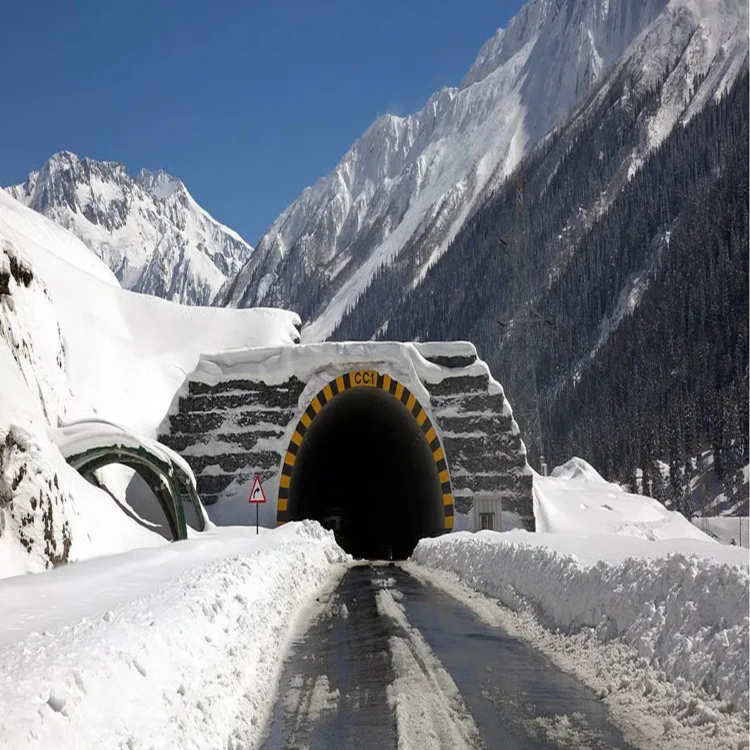
The breakthrough was achieved when Union Minister for Road Transport and Highways Nitin Gadkari remotely initiated the final blast near the eastern portal at Minimarg in Ladakh, successfully connecting both ends of the tunnel. The event was attended by Jammu and Kashmir Lieutenant Governor Manoj Sinha and Chief Minister Omar Abdullah.
Landmark Achievement in Himalayan Infrastructure
Situated at an altitude of approximately 11,500 feet, the 13.150-kilometre Zojila Tunnel is set to become the world’s longest single-tube bi-directional road tunnel at such a high elevation. The project is considered one of India’s most ambitious transportation initiatives due to its strategic importance and challenging construction environment.
Speaking on the occasion, Gadkari described the breakthrough as a reflection of India’s growing engineering strength and technological capabilities. He noted that the accomplishment highlights the determination and expertise of engineers and workers who continued construction despite severe weather conditions and difficult geological terrain.
Improved Connectivity for Ladakh Region
The tunnel is being developed along the Srinagar-Leh National Highway and is expected to transform travel in the region. Heavy snowfall during winter months often blocks the Zojila Pass, isolating Ladakh from the rest of the country for extended periods.
Once operational, the tunnel will provide reliable year-round connectivity and significantly reduce travel time between Sonamarg and Minimarg. A journey that currently takes around two hours is expected to be completed in nearly 30 minutes, improving transportation efficiency and accessibility.
International Expertise Contributes to Project
The project has also benefited from international engineering participation. Iranian engineer Yousuf Es’haghpour Rahimabadi has been serving as the authority engineer for the tunnel since January 2022.
According to Rahimabadi, his team is responsible for reviewing designs, supervising construction activities, verifying engineering standards, and monitoring contractor operations inside the tunnel. The oversight process ensures that construction quality and safety requirements are consistently maintained throughout the project.
Massive Workforce and Advanced Construction Techniques
Approximately 1,200 professionals, including engineers, technicians, mechanics, and labourers, are currently engaged in the project. Built at an estimated cost of Rs 2,600 crore, the tunnel features a horseshoe-shaped design with a height of 7.57 metres and a two-lane roadway configuration.
The structure passes beneath the Zojila Pass in the Himalayas, linking Ganderbal district in Kashmir with Drass in Ladakh’s Kargil district. Its completion is expected to enhance economic activity, tourism, and strategic mobility in the region.
Safety Measures Remain a Priority
Construction is being carried out using the New Austrian Tunnelling Method (NATM), which is widely regarded as suitable for the fragile and unpredictable geological conditions found in the Himalayan mountain range.
Project officials stated that international safety standards have been incorporated throughout the construction process. Special attention has been given to managing geological risks, water seepage challenges, and other engineering complexities commonly associated with large-scale tunnel projects.
Next Phase of Construction
With excavation work now successfully connected from both sides, the project will move into its next stage. This includes tunnel lining, installation of ventilation systems, development of safety infrastructure, and completion of finishing work.
Officials associated with the project indicated that the overall construction is expected to be completed by May 2028, after which the tunnel will play a crucial role in strengthening year-round connectivity between Ladakh and the rest of India.