
Wildlife – Brazil’s Snake Island Remains a Scientific Mystery
Wildlife – A remote island off the coast of Brazil continues to capture global attention due to its unusual population of venomous snakes and the strict restrictions placed on human access. Known as Snake Island, or Ilha da Queimada Grande, the isolated landmass has earned a reputation as one of the world’s most intimidating natural locations. However, experts say many of the dramatic stories circulating online fail to reflect the reality of the island.
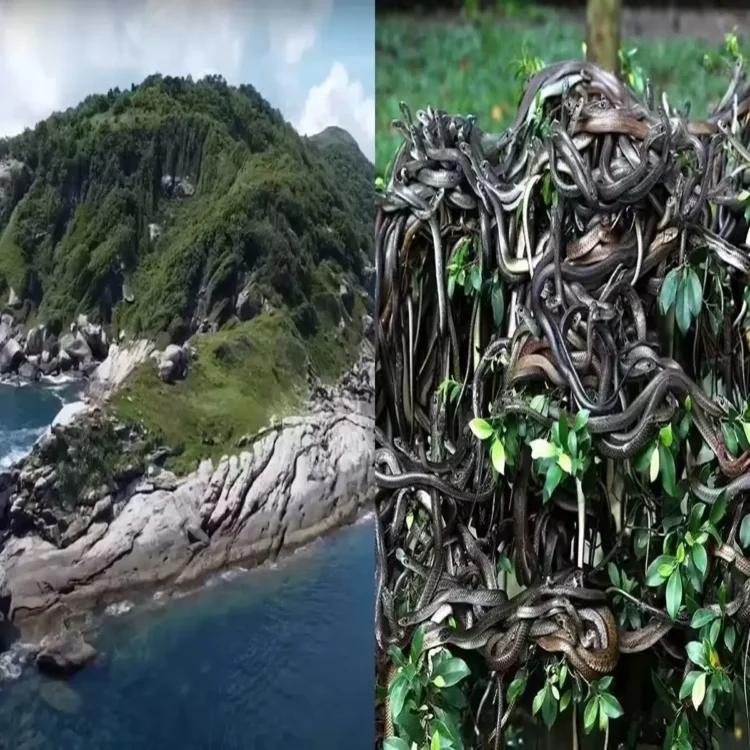
Remote Island Surrounded by Myths
Located roughly 33 kilometres from Brazil’s mainland, Snake Island has become the subject of countless internet posts and videos. Many of these claims suggest the island is covered with snakes at an extraordinary density, with some reports even stating there is a snake on nearly every metre of land. Such descriptions have contributed to its image as an exceptionally dangerous destination.
Because of safety concerns and environmental protections, public access to the island is prohibited. Entry is generally limited to authorised scientific teams and Brazilian military personnel operating under carefully regulated conditions.
Home to a Unique Snake Species
The island is the only known habitat of the golden lancehead, a rare snake species found nowhere else on Earth. Researchers believe the species became isolated thousands of years ago when rising sea levels separated the island from the Brazilian mainland. Cut off from other populations, the snakes gradually adapted to the island’s distinct environment through the process of evolution.
This long period of isolation has made the island an important site for biological and ecological research, attracting interest from scientists studying species development and ecosystem dynamics.
Experts Challenge Exaggerated Claims
Although the golden lancehead possesses venom, specialists who have worked on the island say many online accounts significantly overstate the threat posed by the reptiles. According to researchers, the snakes do not typically display aggressive behaviour toward people.
Their primary food source consists of birds rather than mammals, which influences their hunting patterns. Scientists also note that documented snakebite incidents connected to the island remain extremely uncommon, despite the widespread perception of constant danger.
Population Estimates Lower Than Viral Stories Suggest
Various scientific assessments estimate that between 2,000 and 4,000 snakes inhabit the island. While this represents a substantial population within a relatively small area, the figures are considerably lower than some of the more sensational claims found online.
Researchers explain that many of the snakes spend much of their time concealed within dense vegetation, rocky terrain, and tree cover. As a result, spotting them can be more difficult than many people expect.
Unauthorised Visit Renewed Public Interest
Snake Island returned to public discussion in 2023 after YouTuber Lord Miles reportedly travelled to the restricted location without official permission. Wearing protective body armour during the visit, he later stated that he did not encounter a single snake while on the island.
His account surprised many observers and added another layer of intrigue to a place already surrounded by mystery and speculation.
Conservation Efforts Remain a Priority
Environmental experts emphasise that restrictions on travel to the island are intended not only to reduce risks to visitors but also to protect the rare golden lancehead population. The species has long been considered vulnerable to illegal wildlife trafficking, making conservation measures particularly important.
For scientists, Snake Island represents far more than a frightening destination. It serves as a valuable natural research site where experts can examine evolutionary processes and isolated ecosystems. Despite its fearsome reputation, many researchers view the island as a unique scientific resource rather than the terrifying place often portrayed online.