
Climate – Global Heat Trends Expected To Stay Near Historic Highs
Climate – Global temperatures are expected to remain unusually high over the next several years, according to a fresh warning issued by the United Nations weather agency. Scientists say the planet may continue experiencing near-record warmth through the end of the decade as climate patterns and greenhouse gas emissions keep influencing weather systems worldwide.
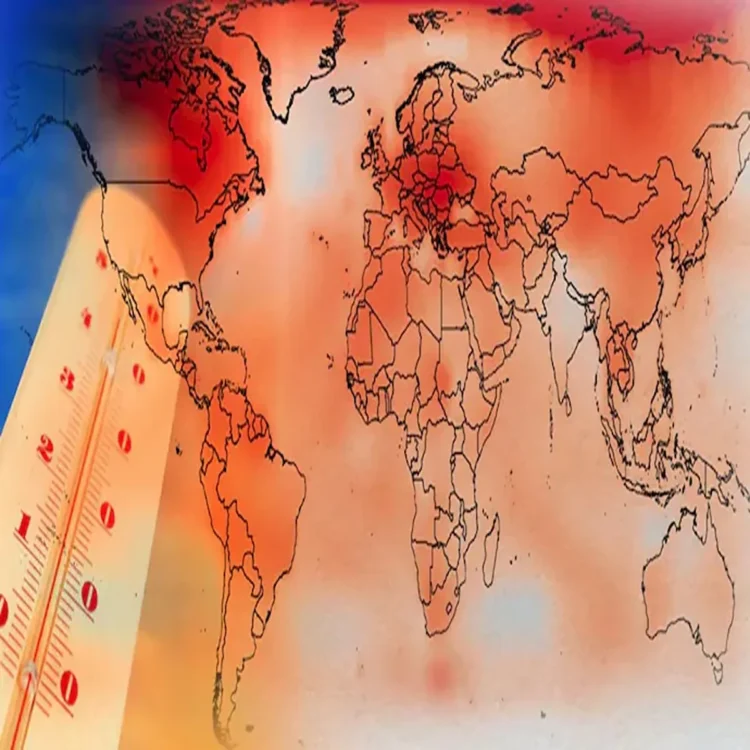
Rising Temperatures Expected Through 2030
The World Meteorological Organization stated that the coming years are likely to remain among the warmest ever observed. Data collected from international climate centers suggests there is a strong possibility that another annual heat record could be broken before 2031.
Researchers noted that the planet has already witnessed an extraordinary stretch of hot years since 2015. Each of the 11 warmest years recorded globally has occurred during this period, highlighting the accelerating pace of climate change.
The agency estimated a 75 percent likelihood that the average global temperature between 2026 and 2030 will remain more than 1.5 degrees Celsius above pre-industrial levels. Scientists use the 1850-1900 period as the benchmark because it reflects temperatures before large-scale fossil fuel use expanded worldwide.
Europe Faces Early Heatwave Conditions
The latest warning arrived as several parts of western Europe experienced unusually high temperatures for May. Countries including Britain and France recently reported record-breaking heat under a large area of trapped warm air commonly known as a “heat dome.”
Meteorologists say such weather patterns can increase the duration and intensity of heatwaves. The WMO added that the overall warming trend is expected to continue regardless of short-term seasonal changes.
According to the report, there is an 86 percent chance that at least one year between 2026 and 2030 will become hotter than 2024, which currently holds the global temperature record.
El Nino Could Push Temperatures Higher
Climate experts also pointed to the possible return of El Nino conditions toward the end of 2026. Leon Hermanson, one of the report’s lead authors, explained that this climate event could significantly increase the chances of 2027 becoming another record-setting year.
El Nino develops when ocean surface temperatures in parts of the Pacific Ocean become warmer than usual. This natural phenomenon often affects rainfall, wind circulation and temperatures across many regions of the world.
The previous El Nino event played a major role in pushing global temperatures to exceptional levels during 2023 and 2024. Scientists estimate that 2024 averaged roughly 1.55 degrees Celsius above pre-industrial conditions.
Paris Climate Goals Under Pressure
The report also renewed concerns about the long-term targets established under the Paris climate agreement. Nearly every country agreed in 2015 to work toward limiting global warming to well below 2 degrees Celsius, while aiming for 1.5 degrees if possible.
Forecasts for the next five years indicate annual average temperatures may range between 1.3 and 1.9 degrees Celsius above the historical baseline.
The WMO clarified that temporary increases above 1.5 degrees do not automatically mean the Paris target has permanently failed. Climate agreements measure warming over longer periods, usually spanning two decades or more.
Still, scientists warn that temporary breaches are becoming increasingly frequent and demonstrate how quickly the planet is heating.
Arctic Region Showing Stronger Warming Signals
One of the strongest warning signs highlighted in the report involves the Arctic region. Climate models predict Arctic winters during the next five years could average around 2.8 degrees Celsius warmer than the 1991-2020 average.
Experts say the Arctic continues warming much faster than the global average, contributing to melting sea ice, rising sea levels and changing weather patterns elsewhere.
The report also projected shifting rainfall trends across several regions. Wetter conditions are expected in northern Europe, the Sahel region of Africa, Alaska and Siberia. In contrast, drier-than-normal conditions may affect parts of the Amazon basin.
The findings were compiled using forecasts from 13 international climate institutions and coordinated through Britain’s Met Office alongside the World Meteorological Organization.