
EducationPolicy – Supreme Court Reviews CBSE Three-Language Requirement for Students
EducationPolicy – The Supreme Court has asked the Central government, the Central Board of Secondary Education (CBSE), and the National Council of Educational Research and Training (NCERT) to submit detailed explanations regarding the recently introduced three-language rule for students studying in Classes 6 to 9.
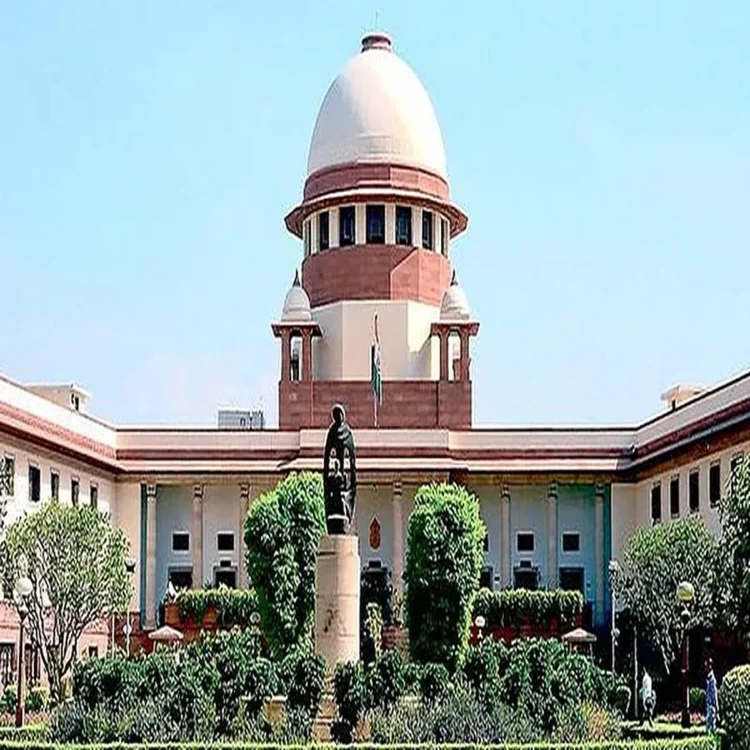
Supreme Court Seeks Clarification on New Language Policy
The matter came up before a bench headed by Chief Justice Surya Kant along with Justices Joymalya Bagchi and Vipul M. Pancholi on Wednesday. The court agreed to examine a petition challenging the CBSE directive that makes the study of three languages compulsory for Class 9 students from July 1 onwards.
The judges issued formal notices to the Union government, CBSE, and NCERT, directing them to file comprehensive responses within two weeks. The bench observed that the implementation of the policy may create practical difficulties for schools, students, and teachers across different regions of the country.
During the hearing, Chief Justice Kant stated that the issue involves several logistical concerns and therefore requires careful judicial scrutiny before any further steps are taken.
Details of the CBSE Circular Under Challenge
The controversy centers around a circular released by CBSE on May 15, 2026. According to the notification, students entering Class 9 will now be required to study three languages identified as R1, R2, and R3. Among these, at least two languages must be native Indian languages.
The petitioners have argued that the sudden enforcement of the rule could place additional pressure on students and educational institutions, especially in metropolitan regions where schools already follow different language structures.
The court acknowledged that implementing such a large-scale academic change across schools affiliated with CBSE may involve administrative and educational complications. The matter is expected to be heard again on June 15.
Petition Filed by Parents and Teachers
The plea has been filed under Article 32 of the Constitution by a group of 19 petitioners that includes parents and teachers from Delhi, Gurugram, Noida, and Chennai.
In their petition, they have challenged the legality and practicality of the CBSE directive. The petition claims that the circular introduces a compulsory academic structure without adequately considering regional realities, availability of teachers, and existing school systems.
The petitioners are seeking judicial intervention to review whether the policy aligns with constitutional principles and educational fairness.
Concerns Over Practical Implementation
Legal representatives appearing in the matter highlighted concerns related to infrastructure, staffing, and curriculum planning. Many schools may face challenges in arranging qualified language teachers within a short period.
Questions have also been raised about how schools operating under different educational environments would adapt to the revised framework. Some parents fear that students may experience additional academic stress due to the sudden curriculum changes.
The Supreme Court indicated that these concerns would be examined carefully after receiving responses from the authorities involved.
Other Developments in the Supreme Court
In a separate development, the Supreme Court Collegium has recommended several names for elevation to the apex court. The proposed names include Justices Sheel Nagu of the Punjab and Haryana High Court, Shree Chandrashekhar of the Bombay High Court, Sanjeev Sachdeva of the Madhya Pradesh High Court, and Arun Palli of the Jammu and Kashmir High Court.
Senior advocate V. Mohana has also been recommended for appointment as a judge of the Supreme Court.