
Population – Southern States Renew Concerns Over Delimitation and Census Data
Population – India’s latest demographic figures have once again intensified the debate over parliamentary seat redistribution, as fresh government data highlights a growing population imbalance between northern and southern states.
The latest Sample Registration System (SRS) Bulletin released by the Union Home Ministry shows a clear divide in birth rates across the country. Southern states continue to report significantly lower fertility and birth figures compared to several northern and central states, a trend that has triggered renewed political discussion over the future of delimitation and representation in Parliament.
Sharp Difference in Birth Rates Across States
According to the bulletin, Kerala registered the lowest birth rate among major states with 11.1 births per 1,000 people. Tamil Nadu followed closely at 11.6, while Andhra Pradesh, Karnataka, and Telangana also remained below the national average. On the other hand, Bihar recorded the highest birth rate at 26.8, with Uttar Pradesh, Rajasthan, Madhya Pradesh, Chhattisgarh, and Jharkhand also reporting relatively high figures.
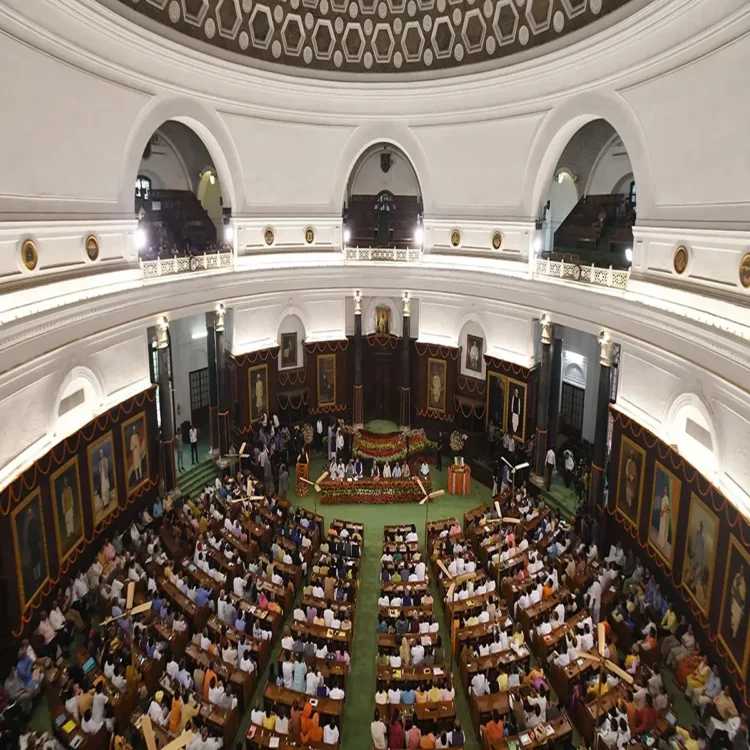
The data has gained political significance because it comes at a time when the issue of delimitation remains highly sensitive. During the recent Budget session of Parliament, a proposal linked to increasing Lok Sabha seats and carrying out constituency redistribution based on the 2011 Census did not move forward after facing strong opposition.
Southern Leaders Raise Representation Concerns
Political leaders from southern states argue that regions which successfully controlled population growth through education and healthcare reforms should not face reduced political influence in the future.
DMK MP T Sumathy said the latest fertility data strengthens the concerns repeatedly raised by Tamil Nadu and other southern states. She pointed out that Tamil Nadu’s total fertility rate has fallen to 1.3, which is far below the replacement level.
According to her, the decline reflects years of investment in public health services, nutrition programs, women’s welfare schemes, and access to education. She maintained that states implementing effective social development policies should not be placed at a disadvantage in terms of parliamentary representation.
Debate Over Delimitation Formula Intensifies
The report further revealed that the total fertility rate has dropped below replacement level in nearly all states except Bihar, Uttar Pradesh, Madhya Pradesh, Rajasthan, Chhattisgarh, and Jharkhand.
Congress MP Manickam Tagore stated that the widening demographic gap could eventually transform the southern states’ demographic achievements into a political challenge. He said the latest figures validate long-standing fears that states with slower population growth may lose influence if parliamentary seats are redistributed strictly on population numbers.
CPI(M) MP John Brittas also questioned the idea of relying solely on population figures for delimitation. He argued that a simple increase in Lok Sabha seats would not resolve regional imbalances and suggested that a fresh framework should be considered before implementing any large-scale changes.
Brittas further said the demographic patterns indicate that several Hindi-speaking states are likely to maintain higher fertility rates for years to come. In his view, the population gap between northern and southern regions could continue expanding in the coming decades, making it necessary to rethink the current approach to seat allocation.
Experts Urge Caution Before Final Conclusions
Experts believe the latest figures reflect long-term demographic changes that have been developing over several decades. However, some analysts have advised against drawing immediate conclusions until updated Census data becomes available.
Former chief statistician Pronab Sen said the SRS numbers confirm ongoing demographic shifts across India but added that the next national Census would provide a more complete picture. He noted that migration trends, urban movement, and changing economic conditions could influence future population distribution in ways not fully reflected in the current estimates.
Sen also observed that factors such as reverse migration and regional economic shifts may reshape population patterns over time, making the upcoming Census particularly important for any future decisions related to delimitation.
The debate surrounding representation, population control, and federal balance is expected to remain politically significant as discussions over the next phase of parliamentary restructuring continue.