
Conflict – HRW Report Raises Fresh Concerns Over Rohingya Killings in Myanmar
Conflict – Human Rights Watch has released a detailed report alleging that survivors of a deadly attack on a Rohingya village in Myanmar’s Rakhine State remain trapped in unsafe conditions two years after the violence occurred.
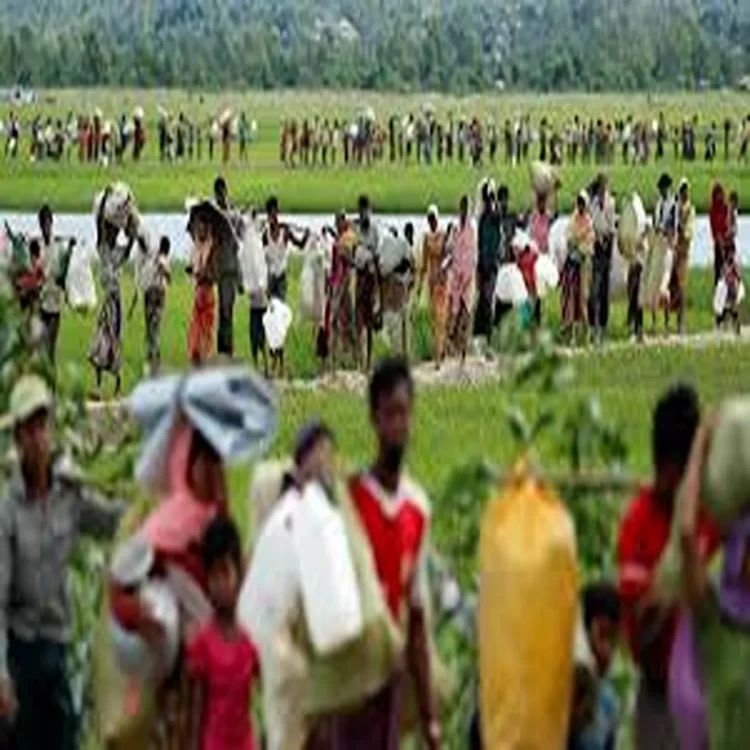
The rights organization stated that the attack took place on May 2, 2024, in Hoyyar Siri village of Buthidaung township, where hundreds of Rohingya Muslims were reportedly killed, injured, or went missing during fighting linked to the Arakan Army, an ethnic armed organization operating in the region. According to the report, many survivors have still not been able to return home and are living under severe restrictions.
Human Rights Watch Details Alleged Atrocities
In its 56-page investigation, Human Rights Watch documented testimonies from survivors, satellite evidence, and verified visual material connected to the incident. The organisation accused Arakan Army fighters of firing on civilians who were attempting to escape the conflict zone after clashes erupted near Myanmar military bases.
The report described scenes in which villagers carrying white flags were allegedly shot while trying to flee. Witnesses recounted that families were separated during the attack, while several people were killed in front of relatives attempting to protect them.
One survivor claimed that armed men opened fire without warning as civilians gathered near a mosque and nearby fields. According to testimonies collected by Human Rights Watch, some injured individuals were allegedly targeted again after being found alive.
Death Toll Believed to Be Much Higher
Human Rights Watch said it identified more than 170 villagers who were either confirmed dead or remain missing following the attack, including around 90 children. However, investigators believe the actual number of casualties could be significantly larger due to incomplete records and difficulties accessing the area.
The organisation also reviewed photographs and videos showing scattered human remains at multiple locations inside the village. Additional satellite imagery reportedly confirmed widespread destruction caused by fires after the Arakan Army took control of the settlement.
Residents also accused fighters of stealing valuables, cash, and jewellery during the operation. Some detainees claimed they were beaten and subjected to torture while being held in custody.
Claims of Forced Relocation and Restrictions
According to the report, surviving residents were ordered in February 2025 to move into a temporary camp close to the village. Refugees who later managed to escape to Bangladesh told investigators they faced movement restrictions, forced labour, and shortages of food and medical supplies while living there.
Some witnesses further alleged that Rohingya women and girls were abducted during the violence. Human Rights Watch said survivors were later pressured to provide statements defending the Arakan Army during a controlled media visit organised months after the attack.
The Arakan Army has denied responsibility for targeting civilians. In a response shared with Human Rights Watch, the group maintained that its operations focused only on military personnel and armed combatants linked to Rohingya groups.
Conflict in Rakhine State Continues
Fighting between Myanmar’s military junta and the Arakan Army intensified again in late 2023, leading to renewed instability across Rakhine State. Rights groups have repeatedly accused both sides of serious violations against civilians, including unlawful killings, forced recruitment, and attacks on villages.
Human Rights Watch said the latest findings highlight continuing risks for Rohingya refugees considering a return to Myanmar. The organisation noted that more than one million Rohingya have fled violence and persecution in the country over the past decade.
Calls for International Investigation
Human Rights Watch urged both the Myanmar military and the Arakan Army to immediately halt attacks on civilians and cooperate with independent international investigations. The organisation also called for unrestricted access for United Nations officials, human rights monitors, and the Independent Investigative Mechanism for Myanmar.
Meenakshi Ganguly, deputy Asia director at Human Rights Watch, said governments around the world should increase pressure on all parties involved in the conflict to ensure the protection of civilians and accountability for alleged abuses in Rakhine State.