
DelhiRiotsCase – Court Rejects Umar Khalid’s Interim Bail Request
DelhiRiotsCase – A Delhi court on Tuesday declined the interim bail plea filed by former Jawaharlal Nehru University student leader Umar Khalid in connection with the larger conspiracy case linked to the 2020 north-east Delhi riots. The court said the reasons presented for temporary release were not strong enough to justify granting relief.
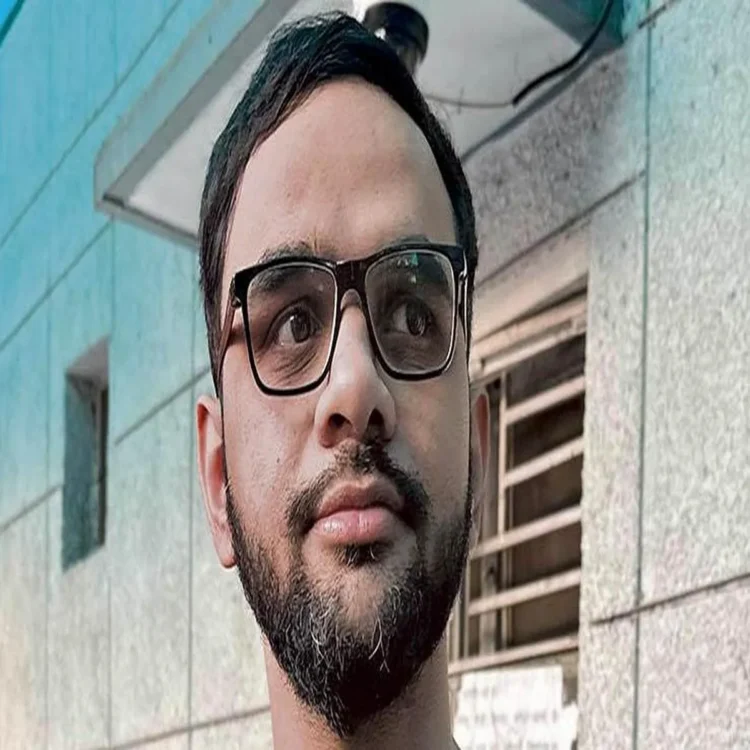
Court Refuses Temporary Release
The order was delivered by Additional Sessions Judge Sameer Bajpai at the Karkardooma Court during hearings in the matter related to an FIR registered by the Delhi Police Crime Branch. The case is being heard under the title State vs Tahir Hussain.
Khalid had approached the court seeking interim bail for 15 days under provisions of the Bharatiya Nagarik Suraksha Sanhita and the Code of Criminal Procedure. His application cited two reasons for temporary release: participation in the Chehlum ceremony of his late uncle and the need to support his mother during her upcoming surgery.
Family Grounds Cited in Bail Application
According to the plea, Khalid’s uncle, Khursheed Ahmad Khan, died on April 10, while the 40th day ritual is expected to take place in Delhi on May 24. The application also informed the court that Khalid’s mother had been advised to undergo a surgical procedure for lump removal at a private hospital on June 2.
The defence argued that Khalid is the only son in the family and carries responsibility for assisting his elderly parents. His father is reportedly 71 years old, while most of his sisters live outside the family home. The legal team further stated that Khalid had earlier been granted interim bail on different occasions and had followed every condition imposed by the court without violation.
Advocate Sahil Ghai represented Khalid during the hearing.
Prosecution Opposes Bail Request
The Delhi Police opposed the application, arguing that the grounds mentioned were insufficient for granting interim bail. Special Public Prosecutor Anirudh Mishra told the court that Khalid was repeatedly seeking relief despite earlier concessions granted by the judiciary.
The prosecution argued that attending the Chehlum ceremony was not an unavoidable requirement and that other relatives could perform the family rituals. On the medical issue, the State submitted that Khalid’s mother could be cared for by other members of the family, including his sisters and father.
The prosecution also maintained that the proposed surgery appeared to be a minor medical procedure involving local anaesthesia and did not require Khalid’s personal presence.
Court Finds Grounds Unsatisfactory
After considering submissions from both sides, the court observed that every interim bail request must be examined independently on the basis of circumstances presented in that particular plea.
The judge stated that the request related to the Chehlum ceremony did not qualify as an exceptional ground for temporary release. The court further noted that if the relationship with the deceased uncle required immediate presence, a similar plea could have been made closer to the date of death.
On the medical aspect, the court pointed out that Khalid himself had acknowledged the presence of five sisters and his father, who could support his mother during treatment and recovery. The court also remarked that the surgery appeared routine in nature and did not demonstrate an urgent necessity for Khalid’s assistance.
The court ultimately concluded that the reasons provided were not reasonable enough to justify interim bail and dismissed the plea.
Background of the Delhi Riots Case
Umar Khalid was arrested in September 2020 in connection with the alleged larger conspiracy behind the February 2020 violence in north-east Delhi. Investigators accused him of delivering provocative speeches during the period when then US President Donald Trump visited India.
He has been charged under the Unlawful Activities (Prevention) Act along with other provisions linked to the riots investigation.
The violence in north-east Delhi took place during protests related to the Citizenship Amendment Act and the proposed National Register of Citizens. Official figures recorded 53 deaths and hundreds of injuries during the clashes, making it one of the deadliest episodes of civil unrest in the national capital in recent years.