
Judiciary – Parliament Awaits Report on Justice Yashwant Varma Inquiry
Judiciary – A report prepared by the inquiry committee examining allegations linked to Justice Yashwant Varma has now been submitted to Lok Sabha Speaker Om Birla, marking an important development in the ongoing matter related to the alleged recovery of unaccounted cash from the judge’s official residence in Delhi.
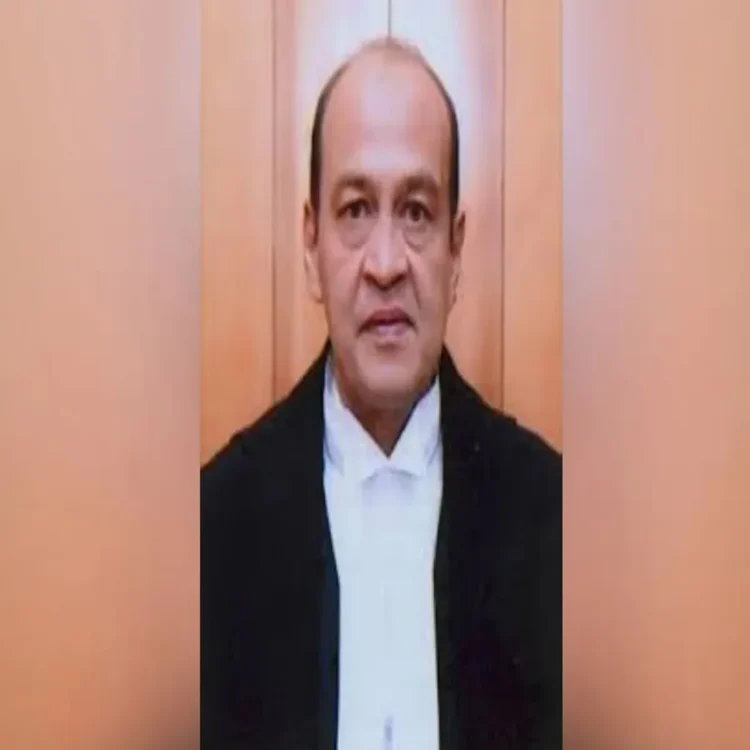
The Lok Sabha Secretariat confirmed on Monday that the report was submitted under the provisions of the Judges (Inquiry) Act, 1968. The findings are expected to be presented before both Houses of Parliament during an upcoming session. Since Parliament is currently not in session, the Monsoon Session, generally convened in July, is likely to be the first opportunity for formally placing the report before lawmakers.
Committee Formed After Cash Discovery Allegations
The three-member inquiry panel was constituted by Speaker Om Birla on August 12, 2025, following serious allegations involving Justice Varma. The controversy emerged after a fire broke out at his official residence in Delhi on the night of March 14, 2025.
During firefighting operations, officials allegedly discovered a significant quantity of partially burnt currency notes stored inside a room within the government bungalow. The incident immediately drew national attention and triggered calls for a detailed investigation into the circumstances surrounding the alleged cash recovery.
At that time, Justice Varma was serving in the Delhi High Court before later being transferred back to the Allahabad High Court, his parent institution.
Findings of Earlier Internal Judicial Probe
An earlier internal inquiry conducted under the supervision of former Chief Justice of India Sanjiv Khanna reportedly concluded that Justice Varma exercised either direct or indirect control over the storeroom where the money was allegedly kept.
The matter gained further momentum in July 2025 when more than 200 Members of Parliament signed a motion seeking his removal from office. Under existing constitutional provisions and the Judges (Inquiry) Act, only Parliament has the authority to remove judges of the Supreme Court and High Courts through a formal process.
The issue quickly became one of the most closely watched judicial accountability cases in recent years because of the constitutional implications involved in proceedings against a sitting high court judge.
Resignation Alters Removal Proceedings
However, the course of the case changed significantly after Justice Varma resigned from the Allahabad High Court. Legal experts familiar with judicial procedures pointed out that once a judge submits a resignation letter to the President and makes the resignation public, the individual is considered to have vacated office.
According to constitutional practice and previous Supreme Court interpretations, such resignations do not require approval to become effective. The President later provides formal acknowledgment, after which the Department of Justice issues an official notification.
Although Justice Varma’s name reportedly continues to appear on the Allahabad High Court website, legal observers believe he no longer holds judicial office and should now be treated as a private citizen under the law.
Experts have also noted that Parliament’s power of removal applies only to serving judges, meaning the resignation may effectively prevent any impeachment-style process from moving forward.
Inquiry Continued Despite Exit From Office
Despite the resignation, the committee proceeded with its inquiry because the investigation had already begun while Justice Varma was still serving as a judge. Individuals familiar with the process explained that the panel’s proceedings are regarded as part of judicial work and therefore continued independently of his resignation.
The committee eventually completed its examination and submitted the final report to the Lok Sabha Speaker for further parliamentary consideration.
Justice Varma, who would otherwise have retired on January 5, 2031, upon reaching the age of 62, now awaits the next phase of developments as Parliament prepares to review the report during a future session.
Once the findings are formally tabled, lawmakers are expected to determine whether any additional action or discussion is required in relation to the matter.