
DefensePolicy – Pentagon Cancels Planned Deployment of US Troops to Poland
DefensePolicy – The United States Department of Defense has reportedly halted plans to send more than 4,000 American troops from the United States to Poland, according to several US media organizations citing senior officials familiar with the decision. The move marks another shift in Washington’s military positioning across Europe amid ongoing discussions over troop commitments and allied responsibilities.
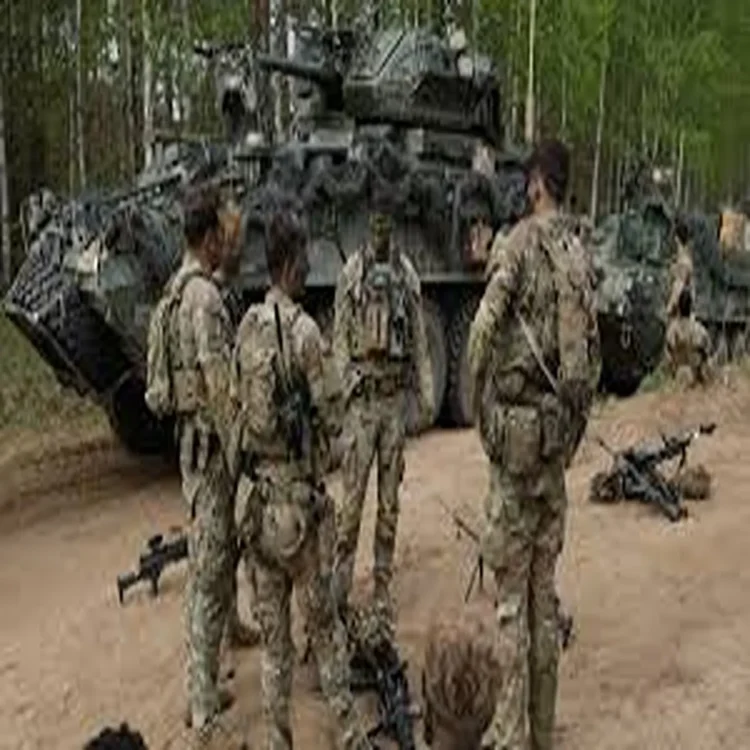
Deployment Plan Withdrawn After Internal Review
During a congressional hearing on Friday, acting US Army chief of staff Christopher LaNeve confirmed that the head of the US European Command had received instructions related to a reduction in forces. He explained that military leadership reviewed the planned deployment and ultimately concluded that the scheduled mission involving the 2nd Armored Brigade Combat Team would not proceed.
LaNeve noted that parts of the brigade had already begun preparations for overseas movement before the order was issued. Some personnel had departed while military equipment was already in transit when the deployment was called off.
According to his remarks, the directive originated from the office of US Defense Secretary Pete Hegseth. However, the Pentagon has not yet released a formal public statement explaining the reasons behind the decision.
Congress Reportedly Not Informed
The reported cancellation also drew attention on Capitol Hill. Senator Jeanne Shaheen, a Democratic member of the Senate Armed Services Committee, said lawmakers had not been officially informed before the decision became public through media reports.
Speaking to reporters, Shaheen stated that, to her knowledge, Congress did not receive prior notification regarding the reversal of the Poland deployment plan. The lack of communication has added to concerns among some lawmakers about transparency surrounding recent military decisions involving Europe.
Wider Changes to US Military Presence in Europe
The development follows broader discussions about the future of the American military footprint across Europe. Only weeks earlier, the Pentagon announced that nearly 5,000 US troops stationed in Germany would be withdrawn over a period ranging from six months to one year.
The administration has also continued evaluating troop placement in other European countries. Earlier this month, President Donald Trump reportedly said in an interview with Italian media that he was still weighing the possibility of relocating American troops currently based in Italy.
Trump reportedly criticized certain European allies during the conversation, arguing that some nations had not offered sufficient support to Washington during periods of geopolitical tension. His comments triggered political reactions within Europe, particularly in Italy.
Italy Responds to Trump’s Comments
Italian Defense Minister Guido Crosetto publicly questioned the reasoning behind suggestions that American forces could be reduced or relocated from Italy. He stressed that Italy remains actively involved in international security cooperation and ongoing maritime missions.
Crosetto pointed to joint efforts involving coalition countries in the Strait of Hormuz, where operations are focused on mine-clearing activities and ensuring safe maritime navigation in strategically important waters.
Italian media outlet ANSA earlier reported that Trump was considering scaling back military deployments in both Italy and Spain. The report said the US president expressed dissatisfaction with the level of support offered by some European allies during the conflict involving the United States, Israel, and Iran.
Italy Remains a Key US Military Hub
Despite ongoing discussions about troop adjustments, Italy continues to host one of the largest permanent American military presences in Europe. Data released by the US Department of Defense shows that by the end of 2025, approximately 12,700 active-duty US military personnel were stationed in Italy.
That figure places Italy second only to Germany in terms of American troop presence across the European continent. Analysts say any significant reduction in forces could influence NATO operations, regional logistics, and long-term defense coordination between Washington and its European partners.