
Heritage – India Secures Return of Stolen Chola-Era Temple Antiquities
Heritage – India has successfully secured the return of three rare bronze antiquities linked to historic temples in Tamil Nadu after years of investigation and international coordination. The artefacts, which had reportedly been taken out of the country unlawfully several decades ago, were part of the collection housed at the Smithsonian’s National Museum of Asian Art in the United States.
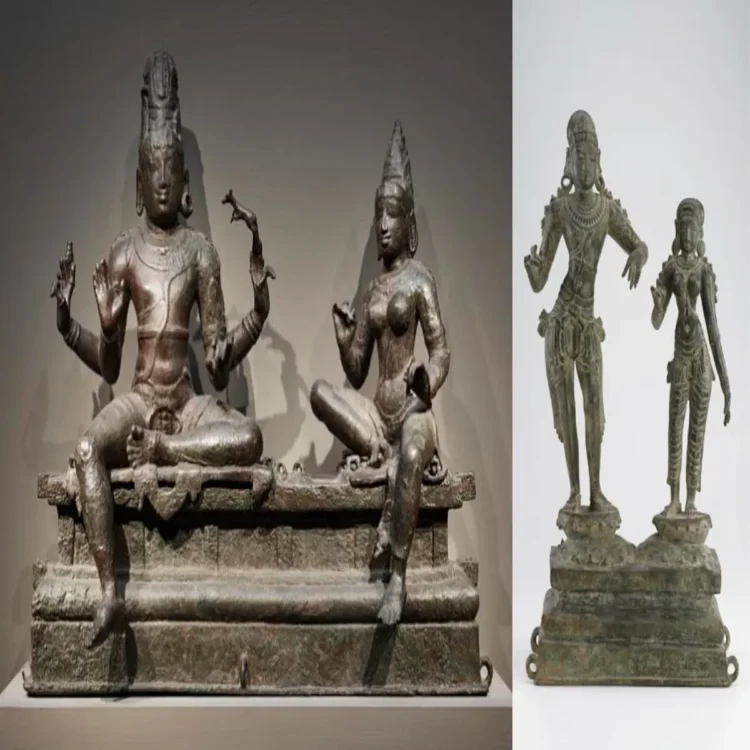
The recovered objects include the celebrated bronze sculpture of Shiva Nataraja from the Chola period, along with two additional bronze idols identified as “Saint Sundarar with Paravai” from the Vijayanagara era and “Somaskanda-Shiva and Uma,” another important Chola-period work. The latter two sculptures arrived in New Delhi on Tuesday night, according to officials from the culture ministry.
Investigation Backed by Historical Records
Union culture minister Gajendra Singh Shekhawat said the recovery became possible after extensive provenance research conducted by the Archaeological Survey of India (ASI). Investigators relied on archival material, temple documentation, and old photographs captured during the 1950s and 1960s to establish the original ownership of the artefacts.
Officials stated that historical photographs preserved at the French Institute of Pondicherry played a major role in confirming that the sculptures once belonged to temples in Tamil Nadu. These images, taken between 1956 and 1959, reportedly showed the idols in their original temple settings before they disappeared.
After examining the evidence, the ASI concluded that the sculptures had been removed from India in violation of existing laws governing antiquities and cultural property.
Shiva Nataraja to Remain in US Until 2028
Among the three recovered antiquities, the bronze Shiva Nataraja remains on display in an ongoing exhibition at the Smithsonian museum in the United States. Indian authorities have agreed to allow the sculpture to stay there temporarily under a long-term loan arrangement until 2028.
The sculpture originally belonged to the Sri Bhava Aushadesvara Temple located in Thiruthuraipoondi Taluk in Tamil Nadu’s Thanjavur region. According to the culture ministry, the idol had been photographed inside the temple in 1957, helping investigators verify its origin.
Officials confirmed that financial approval for the transportation and return process of the artefacts from the US had already been granted by the government.
Evidence-Based Negotiations Led to Repatriation
The ministry said sustained discussions between Indian authorities and the museum were supported by detailed documentary proof gathered during the investigation. ASI officials reportedly engaged in structured negotiations with the assistance of the culture ministry, eventually leading to recognition of India’s ownership claims.
Shekhawat noted that the recovery effort reflected the growing emphasis on reclaiming India’s stolen cultural treasures from overseas collections. He added that the combination of archival evidence, field documentation, and institutional cooperation strengthened India’s case during the repatriation process.
The government also announced that the returned idols would be displayed at the Gallery of Retrieved Antiquities located at the Red Fort in New Delhi. The gallery has been developed to showcase cultural objects that have been recovered and brought back to the country from foreign institutions and private collections.
Focus on Protecting Cultural Heritage
India has intensified efforts in recent years to trace and retrieve stolen antiquities believed to have been smuggled abroad over several decades. Officials say cooperation with international museums, law enforcement agencies, and research institutions has become a crucial part of these recovery initiatives.
Experts believe the return of historically significant sculptures such as the Shiva Nataraja represents an important step in preserving India’s artistic and religious heritage. Chola bronzes, in particular, are considered among the finest achievements of classical Indian metal craftsmanship and hold deep cultural significance.
The latest repatriation is expected to strengthen ongoing efforts to identify and recover more stolen artefacts linked to temples and historical sites across the country.