
Scam Networks – US Warns of Global Expansion and Billions in Losses
Scam Networks –The United States has warned that scam centres operating across Southeast Asia have developed into a vast criminal industry, inflicting billions of dollars in losses on Americans while supporting human trafficking, money laundering and other organised crimes.
Criminal Operations Reach Industrial Scale
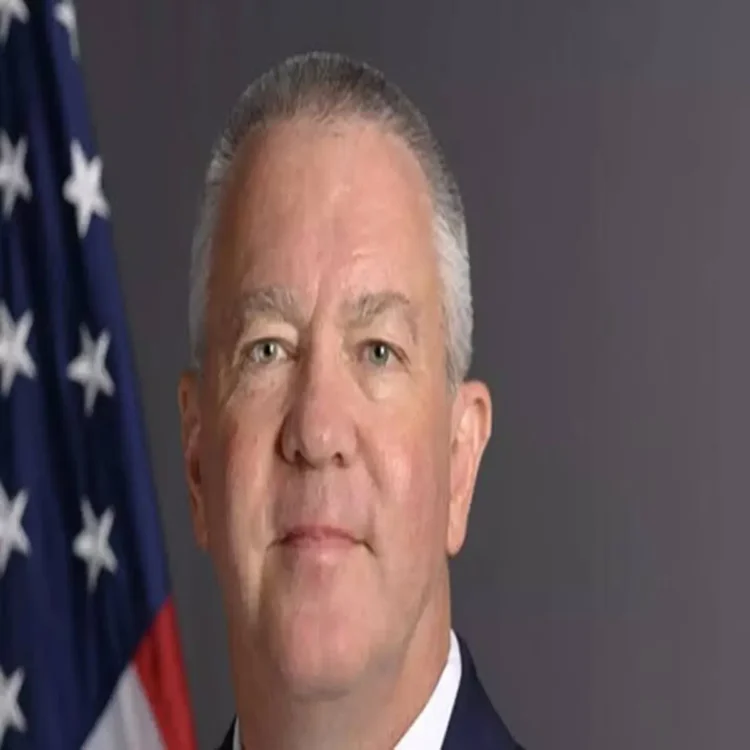
Testifying before the Senate Foreign Relations Committee, US officials said criminal organisations with links to China were a major driving force behind large-scale scam operations in Burma, Cambodia and Laos. Assistant Secretary of State Michael DeSombre said the activity in the three countries had expanded far beyond traditional fraud schemes.
According to DeSombre, what started as relatively small groups has evolved into a sophisticated underground economy with organised management, infrastructure, workers and supply networks. US officials cited estimates suggesting that hundreds of thousands of people from numerous countries have been trafficked into scam operations across the region.
American Victims Lose Billions
Reported financial losses suffered by Americans through scam groups based in Southeast Asia reached an estimated $12.5 billion in 2025, according to figures presented to the committee. DeSombre cautioned that the actual amount could be considerably larger because many victims do not report their losses.
The reported losses were roughly three times the level recorded in 2023, with victims identified across all 50 US states. The criminal networks were also estimated to have caused as much as $114 billion in losses across East Asian and Pacific countries during 2025.
Senate Foreign Relations Committee Chairman Jim Risch said some locations had effectively become centres dedicated to large-scale online fraud. He also warned that the same networks can facilitate other illegal activities, including drug and weapons trafficking.
Workers Lured Through Fake Jobs
US officials said human trafficking is closely connected to the operation of many scam compounds. Recruiters often advertise apparently legitimate jobs before sending workers to the centres. Once they arrive, their passports may be taken away, leaving them unable to leave freely.
Some victims are reportedly subjected to violence and torture and forced to carry out online fraud against people in other countries. This structure allows criminal organisations to maintain a steady workforce while concealing the identities and roles of those controlling the operations.
Scam Centres Expand Beyond Southeast Asia
Deputy Assistant Secretary of State David Bedard told lawmakers that the threat was no longer confined to Southeast Asia. According to him, scam networks are increasingly appearing in South Asia, Africa and the Western Hemisphere.
The groups are also changing how they operate. Rather than relying solely on large, easily identifiable compounds, some are moving into hotels, apartment buildings and other residential properties to make detection more difficult.
Bedard said the networks benefit from a fundamental challenge facing governments: criminal organisations can operate across borders much more easily than law enforcement agencies can coordinate internationally.
Multiple Industries Support the Networks
The US government said scam operations depend on a wider network of participants. Criminal leaders and managers oversee the schemes, while workers conduct the fraudulent activity. Other individuals, including officials, lawyers, accountants, bankers and cryptocurrency intermediaries, can provide services that help move money or sustain the operations.
US officials also pointed to different scam models emerging in various parts of the world, including call-centre fraud in India, lottery scams linked to Jamaica and timeshare-related schemes associated with criminal groups in the Caribbean. Washington has also expressed concern about the emergence of scam centres in Sri Lanka.
Washington Expands International Response
President Donald Trump signed an executive order in March directing federal agencies and the attorney general to develop a coordinated strategy to identify, disrupt and dismantle transnational scam networks.
The United States has since introduced visa restrictions against individuals connected to cybercrime and established a 13-country Counter Scams Contact Group. The initiative is intended to improve cooperation on investigations, asset seizures, sanctions, diplomatic measures and intelligence sharing.
DeSombre also said Trump had discussed transnational criminal organisations with Chinese President Xi Jinping. Washington has called on Beijing to demonstrate that it is not allowing Chinese criminal figures to avoid international accountability for their alleged involvement in these operations.