
Markets – Indian Equities Slip as West Asia Tensions Shake Investor Confidence
Markets – Indian equity markets opened lower on Friday as investors reacted nervously to renewed geopolitical tensions in West Asia and a sharp rise in international crude oil prices. Weak global cues and uncertainty surrounding the fragile ceasefire between the United States and Iran added pressure on benchmark indices during early trade.
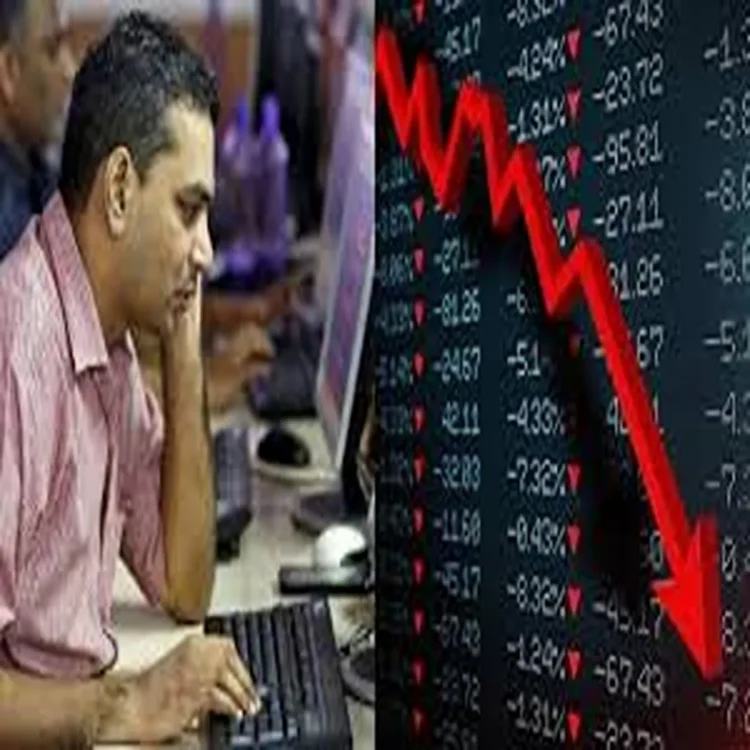
Benchmark Indices Witness Early Decline
The BSE Sensex dropped more than 500 points during the morning session, touching an intraday low of 77,291.72. At the same time, the NSE Nifty50 slipped nearly 170 points to trade around 24,158. Market participants remained cautious amid fears that escalating tensions in the Strait region could impact global trade flows and energy supplies.
Banking and automobile shares were among the biggest drags on the market. Stocks such as HDFC Bank, ICICI Bank, Axis Bank, Tata Motors, and Maruti Suzuki came under selling pressure as investors reduced exposure to risk-sensitive sectors.
Sectoral Performance Remains Mixed
Among the broader sectoral indices, private banks, PSU banks, auto, and oil & gas companies witnessed noticeable weakness. Concerns over rising fuel costs and global economic uncertainty weighed heavily on these segments.
However, not all sectors traded in negative territory. Information technology, pharmaceuticals, healthcare, and chemical stocks showed resilience despite the weak market mood. Analysts noted that investors shifted toward defensive sectors considered relatively stable during periods of global instability.
Market experts observed that fluctuations in crude oil prices continue to influence trading patterns worldwide. According to analysts, the ongoing cycle of escalation and temporary de-escalation in West Asia has created uncertainty across financial markets, especially for oil-importing economies like India.
Midcap Segment Continues to Outperform
Despite the weakness in benchmark indices, the broader market displayed signs of strength. Analysts pointed out that the Nifty Midcap index remained near record levels, reflecting sustained investor interest in mid-sized companies.
This divergence between large-cap and midcap performance has become a notable trend in recent months. Even with relatively high valuations in some segments, domestic investors continue to support broader market participation.
Fresh Geopolitical Concerns Impact Global Sentiment
Tensions between Washington and Tehran intensified again after Iran accused the United States of breaching the existing ceasefire arrangement. Iranian authorities claimed that American forces targeted vessels and civilian locations near the strategic Strait region.
The US administration, meanwhile, stated that recent military actions were carried out in response to attacks on American naval assets passing through the area. Despite the developments, US President Donald Trump indicated that diplomatic efforts were continuing and expressed hope that the ceasefire agreement would remain intact.
Oil Prices Rise Sharply
The renewed conflict fears pushed crude oil prices significantly higher in international markets. Brent crude climbed above the $102 per barrel mark, while US West Texas Intermediate crude also recorded strong gains.
Rising energy prices are closely monitored by investors because they can increase inflationary pressure, impact transportation costs, and affect corporate earnings across several industries. For India, which depends heavily on imported crude oil, sustained price increases may also influence fiscal and economic stability.
Asian and US Markets Also Under Pressure
Weakness was not limited to Indian equities. Major Asian indices, including Japan’s Nikkei, Hong Kong’s Hang Seng, and South Korea’s KOSPI, traded lower amid concerns over the worsening geopolitical situation.
US markets also ended the previous session in negative territory. The S&P 500 and Nasdaq closed with modest losses as investors turned cautious ahead of further developments in West Asia and the energy market.