
EducationReform – Delhi Plans Modern Upgrade for Over 10,000 Anganwadi Centres
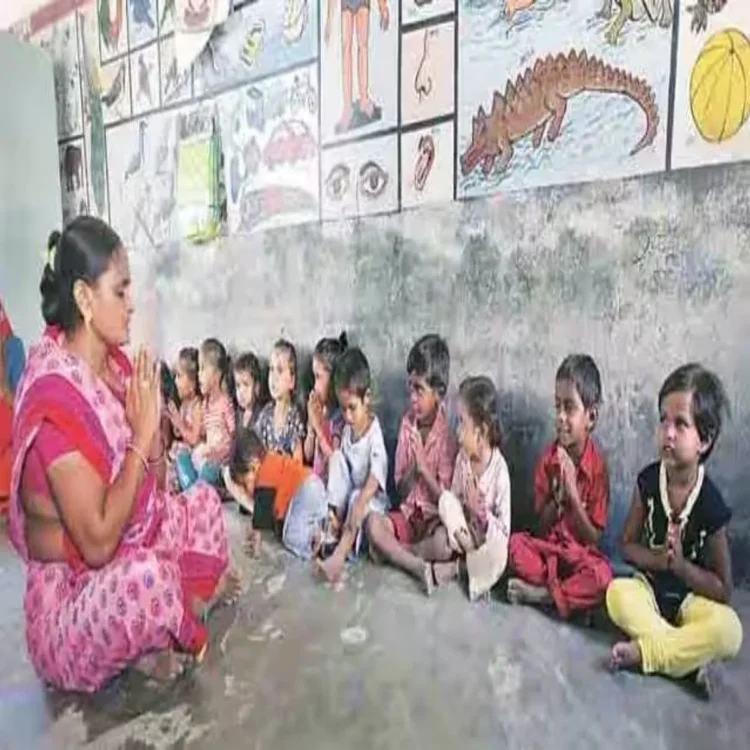
EducationReform – The Delhi government has prepared a large-scale plan to modernise more than 10,000 Anganwadi centres across the city, aiming to improve early childhood care through better infrastructure, learning spaces and child-friendly facilities. The initiative focuses on redesigning existing centres with modern layouts, improved furniture, educational materials, toys and efficient space management to create a more supportive environment for children.
Workshop Brings Experts Together for New Design Ideas
To move the project forward, the Department of Women and Child Development (WCD) organised a workshop at the Delhi Secretariat earlier this week. The meeting included architects, designers, education specialists, non-government organisations and industry representatives who discussed practical ways to redesign Anganwadi centres operating in crowded urban areas.
Officials said the discussions mainly focused on creating affordable and scalable models that could work within Delhi’s limited urban spaces. Experts explored ideas that could improve functionality without requiring large land areas or expensive construction.
Existing Centres Face Infrastructure Challenges
According to senior officials in the department, many Anganwadi centres currently function from rented premises located in densely populated neighbourhoods. These centres often struggle with poor ventilation, inadequate lighting, limited indoor space and the absence of safe outdoor play areas.
Authorities also pointed out that several centres are forced to relocate frequently because of rental issues, which affects continuity in services. In addition, Anganwadi workers manage multiple responsibilities despite facing shortages in maintenance support and resources.
The government believes that improving infrastructure can directly contribute to better learning outcomes, nutrition services and overall child development.
Flexible and Child-Friendly Designs Proposed
During the workshop, experts proposed several design solutions that could help optimise available space. Suggestions included modular structures, prefabricated units and flexible furniture that can be used for different activities throughout the day.
Participants also recommended foldable storage systems, wall-mounted learning tools and portable play equipment that could help maximise utility in smaller centres. These ideas were considered practical and cost-effective for urban settings where space remains a major concern.
Another important area of discussion was climate-sensitive architecture. Experts highlighted the need for better airflow, improved natural lighting and sustainable construction materials to make the centres healthier and more energy-efficient.
Government Focuses on Safe and Inclusive Learning Spaces
WCD Secretary Dr Rashmi Singh said the primary goal is to develop centres that are safe, stimulating and inclusive for children. She noted that the project is not limited to physical redesign but also depends heavily on collaboration between different stakeholders.
Under the proposed framework, the government will oversee policy decisions and implementation, while architects and designers will provide location-specific solutions. NGOs are expected to contribute community-level feedback, and corporate social responsibility partners may assist with financial support and expansion.
Officials confirmed that selected centres will first be redesigned under a pilot phase before the project is expanded across Delhi.
SAMARTH Initiative to Lead Wider Transformation
The redevelopment plan is closely linked with the SAMARTH Anganwadi initiative, which aims to transform these centres into community-oriented learning hubs. The programme is based on a hub-and-spoke model designed to strengthen service delivery across the capital.
As part of the initiative, 611 model Anganwadi hubs will be created with upgraded infrastructure and digital facilities. These hubs will support a larger network covering all 10,897 Anganwadi centres operating in Delhi.
Authorities believe that if implemented successfully, the initiative could significantly improve early childhood education, nutrition support and health services for children across the city.