
Chess – Carlsen’s Unbeaten Classical Streak Ends After Dramatic Loss
Chess – Magnus Carlsen’s impressive run without a loss in classical chess came to an unexpected halt after he was defeated by Jorden van Foreest in the fourth round of the TePe Sigeman & Co tournament. The Norwegian grandmaster, who had maintained an unbeaten record in the format for nearly a year, found himself outplayed in a tense and hard-fought encounter.
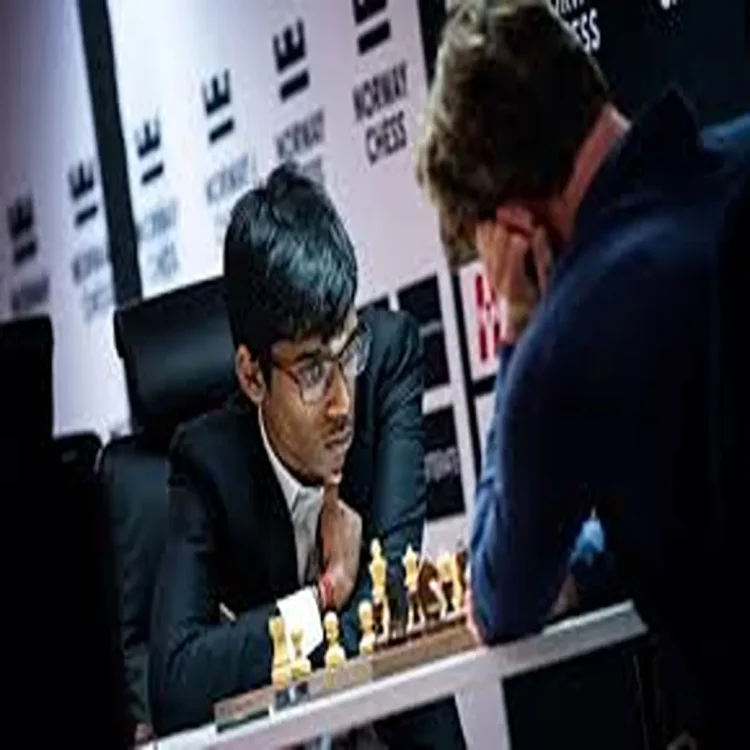
A tightly contested battle unfolds
The match began with both players demonstrating careful preparation and strategic awareness. The middlegame quickly developed into a complex struggle, with neither side gaining a clear advantage. As the game progressed, the position transitioned into an endgame marked by uneven material, requiring precise calculation and patience from both competitors.
Carlsen, known for his exceptional defensive skills, appeared to be steering the game toward a draw. Even as the position remained delicate, computer evaluations indicated that the balance was largely equal, reinforcing the expectation that the game would end without a decisive result.
Pressure builds in crucial moments
As the clock became a factor, the dynamics of the game shifted. Van Foreest began applying consistent pressure, presenting Carlsen with a series of practical challenges. While the Norwegian had successfully navigated similar situations in the past, the mounting time pressure added a layer of difficulty.
In the closing stages, Carlsen made a critical error that changed the course of the game. His knight became trapped in a sequence that left him with no viable recovery options. Recognizing the inevitability of defeat, he was forced to resign, marking a rare setback in his classical chess career.
Van Foreest reflects on unexpected victory
Speaking after the match, Van Foreest admitted that the result had taken him by surprise. He revealed that he had initially been prepared to accept a draw, believing that the position offered little chance for a win. However, a sudden opportunity altered the course of the game.
He described the encounter as deeply engaging, noting that both players were fully invested in the contest. According to him, the turning point emerged unexpectedly, and once the momentum shifted, the position quickly became difficult for Carlsen to manage.
Significance of the result
The defeat carries added importance given Carlsen’s limited participation in classical events in recent years. Since stepping away from the world championship cycle in 2022, he has been selective about his appearances in the traditional format. His participation in the Malmo event marked a notable return, particularly as he prepares for upcoming competitions, including Norway Chess 2026.
Ending such a long unbeaten streak highlights both the unpredictable nature of high-level chess and the growing competitiveness among the world’s elite players. It also underscores how even the most experienced players can face challenges under pressure.
Other notable results in the tournament
The round also featured strong performances from other participants. Fourteen-year-old Yagiz Kaan Erdogmus delivered an impressive victory over Nils Grandelius, securing sole leadership in the standings. His performance continues to draw attention as one of the tournament’s standout stories.
Elsewhere, Zhu Jiner recorded her first win by defeating Andy Woodward, adding momentum to her campaign. Meanwhile, India’s Arjun Erigaisi played to a draw against Nodirbek Abdusattorov in a closely contested game.
A reminder of chess unpredictability
Carlsen’s defeat serves as a reminder that even the most dominant players are not immune to setbacks. The game demonstrated how small inaccuracies, particularly under time pressure, can have significant consequences at the highest level of competition.
As the tournament progresses, attention will remain on how Carlsen responds to this loss and whether he can regain his usual consistency. At the same time, Van Foreest’s victory stands out as a defining moment, reinforcing his ability to challenge top-tier opponents.