
Defense – Taiwan Reports Fresh Chinese Military Activity Near Its Waters
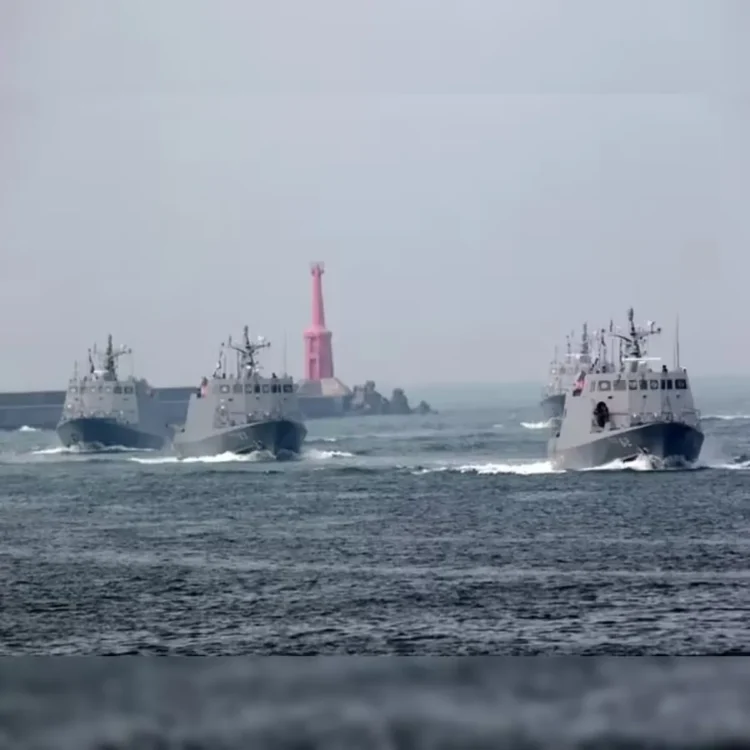
Defense – Taiwan’s Ministry of National Defense reported renewed Chinese military movements near the island early Monday, noting the presence of aircraft and naval units operating close to its surrounding waters. According to official figures released at 6 a.m. local time, two Chinese military aircraft sorties, along with eight naval vessels and three government ships, were detected in the vicinity.
Aircraft movements enter sensitive air defense zone
The ministry stated that both aircraft sorties entered Taiwan’s Air Defense Identification Zone (ADIZ), specifically approaching from the northern and southwestern sectors. Officials confirmed that Taiwan’s armed forces closely tracked the activity and implemented appropriate response measures to ensure security.
In a public update, authorities emphasized that surveillance systems remained active and that defense units maintained readiness throughout the monitoring period.
Similar activity recorded a day earlier
The latest development follows a comparable situation observed on Sunday. On that occasion, Taiwan detected one sortie of a Chinese military aircraft, accompanied by seven naval vessels and three official ships operating nearby. That aircraft reportedly crossed the median line in the Taiwan Strait and entered the northern section of the ADIZ.
Defense officials again noted that the situation was monitored in real time, with necessary defensive actions taken as part of routine preparedness.
Ongoing tensions tied to longstanding dispute
The recurring presence of Chinese military assets around Taiwan reflects broader geopolitical tensions in the region. Beijing continues to assert that Taiwan is an integral part of its territory, a position rooted in its national policy framework and reiterated in international forums.
Taiwan, however, operates with its own governing system, armed forces, and economic structure, maintaining a distinct political identity. This divergence has made Taiwan’s status one of the most sensitive and closely watched issues in global diplomacy.
Historical roots shape present-day dynamics
The dispute traces back several centuries. In 1683, the Qing Dynasty incorporated Taiwan into its territory after defeating Ming loyalist forces. Despite this, governance over the island remained limited for much of that period.
A major shift occurred in 1895 when China ceded Taiwan to Japan following the First Sino-Japanese War. Taiwan remained under Japanese rule for five decades until the end of World War II, when control reverted to Chinese authorities. However, the formal legal status of this transfer has been a subject of debate.
Division after civil war led to dual claims
In 1949, the Chinese Civil War resulted in the establishment of the People’s Republic of China on the mainland, while the Republic of China government relocated to Taiwan. Both sides initially claimed to represent all of China, leading to competing sovereignty claims that persist in different forms today.
Taiwan has since developed into a self-governing entity with its own political and economic systems. While it functions independently in practice, it has refrained from formally declaring independence, a move widely seen as an effort to avoid escalating military conflict.
Strategic significance keeps region under watch
The Taiwan Strait remains a critical area for international security, given its economic importance and strategic location. Military activities such as those reported over the past two days are closely observed by regional and global stakeholders, as they can influence stability in the Indo-Pacific.
Authorities in Taiwan continue to stress vigilance while maintaining that their responses are measured and aimed at preserving peace and security in the region.