
Infrastructure – PM Modi to Launch Ganga Expressway, Unveil Major Projects in Uttar Pradesh
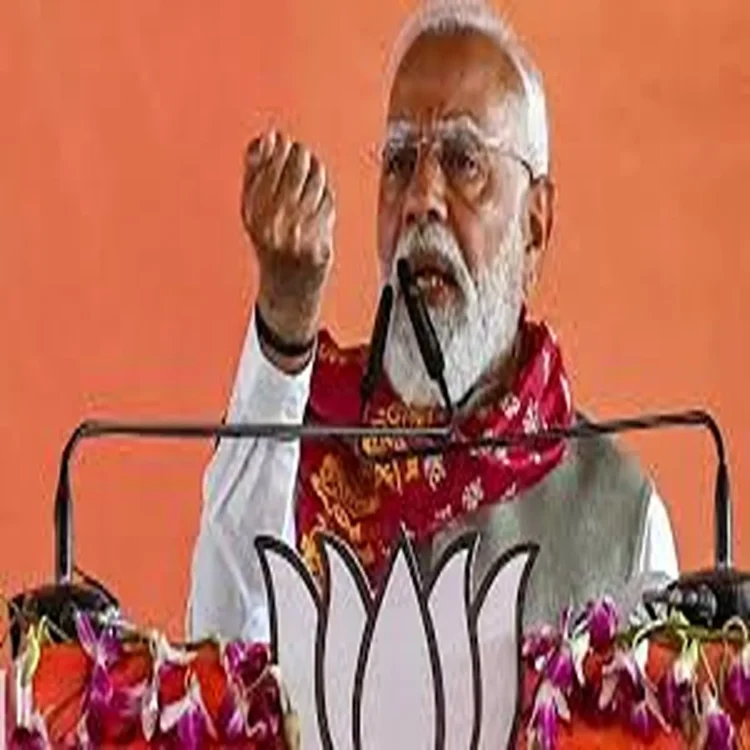
Infrastructure – Prime Minister Narendra Modi is set to begin a two-day visit to Uttar Pradesh starting Tuesday, during which he will inaugurate the Ganga Expressway, attend a women’s gathering in Varanasi, and lay the foundation for multiple development projects collectively valued at approximately Rs 6,350 crore.
Focus on Women-Centric Initiatives in Varanasi
The Prime Minister’s visit will commence in Varanasi with a Mahila Sammelan scheduled for Tuesday evening. The event is expected to highlight various welfare schemes aimed at empowering women, with a focus on initiatives introduced under the central and state governments’ joint efforts. Officials indicate that the programme will serve as a platform to showcase progress made in areas such as financial inclusion, health, and education for women.
Foundation of Key Infrastructure Projects
During his stay in Varanasi, the Prime Minister will also lay the foundation stone for more than 112 projects, estimated to cost around Rs 5,300 crore. Among these are 13 projects related to sewerage systems and water supply under the AMRUT 2.0 scheme. Additionally, plans include the construction of a 500-bed multi-super-speciality hospital at Shri Shiv Prasad Gupta Divisional District Hospital, along with new market complexes and office facilities in areas such as Bhojuveer and Sigra.
These projects are aimed at strengthening urban infrastructure, improving healthcare access, and enhancing civic amenities for residents.
Expansion of Rail Connectivity
As part of the visit, two new Amrit Bharat Express trains will be flagged off. These trains will operate on the Banaras to Pune (Hadapsar) route and the Ayodhya to Mumbai (Lokmanya Tilak Terminus) route. The introduction of these services is expected to improve long-distance rail connectivity and provide additional travel options for passengers.
Religious Visit and Cultural Significance
On April 29, the Prime Minister will visit the Shri Kashi Vishwanath temple in Varanasi, where he will offer prayers. The temple holds significant cultural and spiritual importance, and such visits often coincide with major development announcements in the region.
Ganga Expressway Inauguration in Hardoi
Following his visit to Varanasi, the Prime Minister will travel to Hardoi district to inaugurate the Ganga Expressway. This large-scale infrastructure project spans approximately 594 kilometres and has been developed as a six-lane access-controlled highway, with provisions for future expansion to eight lanes. The total project cost is estimated at around Rs 36,230 crore.
The expressway passes through 12 districts, including Meerut, Bulandshahr, Hapur, Amroha, Sambhal, Badaun, Shahjahanpur, Hardoi, Unnao, Raebareli, Pratapgarh, and Prayagraj. It is designed to connect the western, central, and eastern parts of Uttar Pradesh through a high-speed corridor.
Reduced Travel Time and Strategic Features
One of the key benefits of the expressway is the significant reduction in travel time between Meerut and Prayagraj, which is expected to decrease from the current 10 to 12 hours to nearly six hours. This improvement is anticipated to make transportation more efficient and support faster movement of goods and passengers.
A notable feature of the project is a 3.5-kilometre emergency landing strip located in Shahjahanpur district. This facility can be used for both civilian and defence purposes, adding a strategic dimension to the infrastructure.
Economic Impact and Future Prospects
Officials state that the Ganga Expressway is expected to play a crucial role in boosting economic activity across the region. Plans include the development of integrated manufacturing and logistics hubs covering around 2,635 hectares along the corridor. These developments are likely to lower logistics costs, improve supply chain efficiency, and enhance industrial competitiveness.
Improved connectivity is also expected to benefit farmers by providing easier access to urban markets and export opportunities, potentially leading to better price realisation for agricultural produce. In addition, the project is likely to generate employment opportunities and promote tourism by improving accessibility to various destinations.
T