
CourtOrder – Delhi High Court Stresses Timely Bail for First-Time Offenders
CourtOrder – The Delhi High Court has issued firm directions to trial courts, prison officials, and related authorities to ensure that first-time offenders are released on bail once they have completed one-third of their maximum possible sentence as undertrials. The court also expressed strong disapproval of the Delhi Police for submitting what it described as a misleading report in the matter.
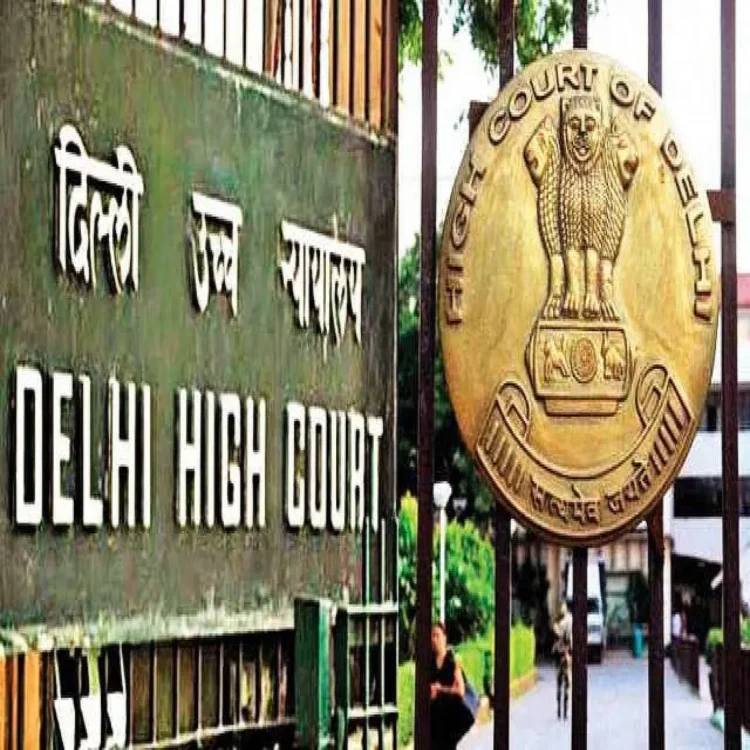
Court reiterates Supreme Court guidelines on undertrial detention
Justice Girish Kathpalia, while hearing a bail plea filed by an accused named Rishabh, observed that several individuals remain behind bars even after serving a significant portion of their potential sentence. In some cases, detainees had already spent more than one-third of the maximum punishment prescribed for the offences they face.
The court emphasized that this situation persists despite clear instructions issued earlier by the Supreme Court, particularly in the case addressing conditions in prisons across the country. The High Court underscored that these directions must not only be acknowledged but followed in both letter and spirit.
Authorities directed to ensure strict compliance
The order specifically instructed bodies such as the Delhi High Court Legal Services Committee and the Delhi State Legal Services Authority to actively monitor and enforce compliance with these guidelines. Copies of the order have also been directed to be circulated among Principal District and Sessions Judges as well as the Director General of Prisons to prevent further lapses.
The court made it clear that the responsibility lies collectively with judicial and prison authorities to ensure that eligible undertrial prisoners are not unnecessarily kept in custody beyond permissible limits.
Strong criticism of police conduct in investigation
During the proceedings, the court raised concerns about the conduct of the investigating agency. It noted that the police had submitted a status report that incorrectly linked certain incriminating audio recordings to the accused currently before the court. According to the judge, these recordings were actually associated with a co-accused, raising serious questions about the accuracy of the investigation.
Justice Kathpalia remarked that such misrepresentation cannot be overlooked, as it directly impacts the fairness of judicial proceedings. The court described the report as misleading and criticized the approach taken by the investigating officer.
Questions raised over selective arrests in the case
The High Court also questioned why only one accused had been arrested in a case involving multiple individuals. One of the co-accused, identified as Nitin, was allegedly involved in impersonating an official from a central agency to defraud victims.
Despite the seriousness of the allegations, the police failed to provide a clear explanation for not taking action against other accused persons. While acknowledging that arrest decisions fall within the discretion of investigators, the court pointed out that such selective action raises legitimate concerns and warrants scrutiny.
Bail granted based on legal precedent
Referring to established legal principles, the court reiterated that first-time offenders who have served one-third of the maximum sentence as undertrials should ordinarily be granted bail. In this case, the accused had no prior criminal record and had already spent a considerable period in custody, making him eligible for relief under the Supreme Court’s framework.
Separate case: Notice issued in media restriction plea
In a related development, a Delhi district court has sought a response from businessman Manoj Sandesara regarding a petition challenging restrictions placed on media coverage. The earlier order had barred media platforms from associating Sandesara and his family with an alleged bank fraud case linked to Sterling Biotech.
District Judge Vinod Kumar Meena issued notices to Sandesara, along with major technology platforms including Google and Meta, asking them to respond by April 29. The petition has argued that the restrictions are excessively broad and may infringe upon freedom of expression.