
Politics – Mayawati Calls for Sub-Quota Within Women’s Reservation Framework
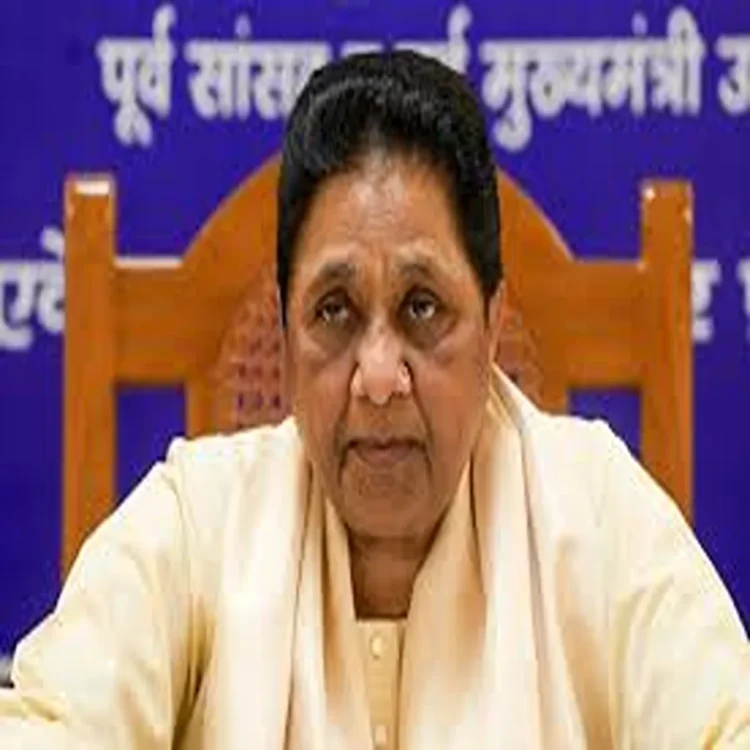
Politics – Bahujan Samaj Party (BSP) president Mayawati on Wednesday reiterated her demand for a separate quota for women from Scheduled Castes (SC), Scheduled Tribes (ST), and Other Backward Classes (OBC) within the proposed 33 percent reservation for women in Parliament and state assemblies.
Concern Over Equitable Distribution of Benefits
Speaking to a small group of journalists, the former Uttar Pradesh chief minister said her party supports the idea of reserving seats for women in legislatures. However, she expressed concern that without a clearly defined sub-quota, women from historically disadvantaged communities may not receive fair representation. According to her, the broader objective of empowerment could be weakened if safeguards are not built into the policy framework.
She pointed out that the central government has called a special session of Parliament to discuss the matter, but emphasized the need to ensure that benefits reach those who need them most. Without targeted provisions, she warned, representation could remain uneven.
BSP’s Long-Standing Position on Women’s Reservation
Mayawati highlighted that her party has consistently advocated for 50 percent reservation for women, aligning it with population proportions across different social groups. She alleged that political parties have hesitated to back such proposals due to their own strategic considerations.
Referring to developments in 2023, she recalled that the BSP had supported the introduction of the Women’s Reservation Bill in the Lok Sabha. At the time, she had stated that her party would fully back the legislation even if it included a higher reservation percentage along with a structured sub-quota for women from SC, ST, and OBC communities.
Emphasis on Social Justice and Safety
The BSP leader stressed that women’s reservation should not be treated merely as a political issue but as a matter linked to safety, dignity, and social advancement. She argued that deeply rooted social inequalities could prevent the policy from achieving meaningful outcomes if not addressed properly.
According to her, the lack of clear policy direction and insufficient political commitment have slowed progress in ensuring genuine empowerment. She added that women from weaker sections continue to face discrimination, violence, and exploitation, which further highlights the need for targeted measures.
Criticism of Opposition Parties
Taking aim at the Congress, Mayawati questioned why the demand for a sub-quota is being emphasized now. She claimed that during its time in power, the party did not take adequate steps to address this issue, attributing the inaction to what she described as a biased approach toward caste-based concerns.
Her remarks reflect ongoing political disagreements over how best to structure women’s reservation so that it benefits all sections of society equally.
Reference to Constitutional Ideals
Mayawati also invoked the legacy of B R Ambedkar, stating that the constitutional vision for equality, particularly concerning women and marginalized groups, has gradually weakened over time. She noted that Ambedkar had raised concerns about similar issues during his tenure, including the need for stronger safeguards for backward classes and women.
Call for Non-Partisan Approach
Concluding her remarks, she urged all political parties to rise above partisan interests and work collectively to implement women’s reservation in a way that ensures fair and inclusive representation. She emphasized that timely action is essential to bring about real change in the political participation of women across all communities.