
WaterCrisis – Kabul Faces Deepening Shortage Amid Growing Demand
WaterCrisis – In a narrow, muddy street climbing a hillside in one of Kabul’s low-income areas, daily survival has become a physical struggle. Marofa, a 52-year-old resident, lifts heavy containers of water despite her age and failing strength. Pulling aside her headscarf to reveal strands of grey hair, she speaks with frustration about the burden placed on residents who have no choice but to fetch water manually.
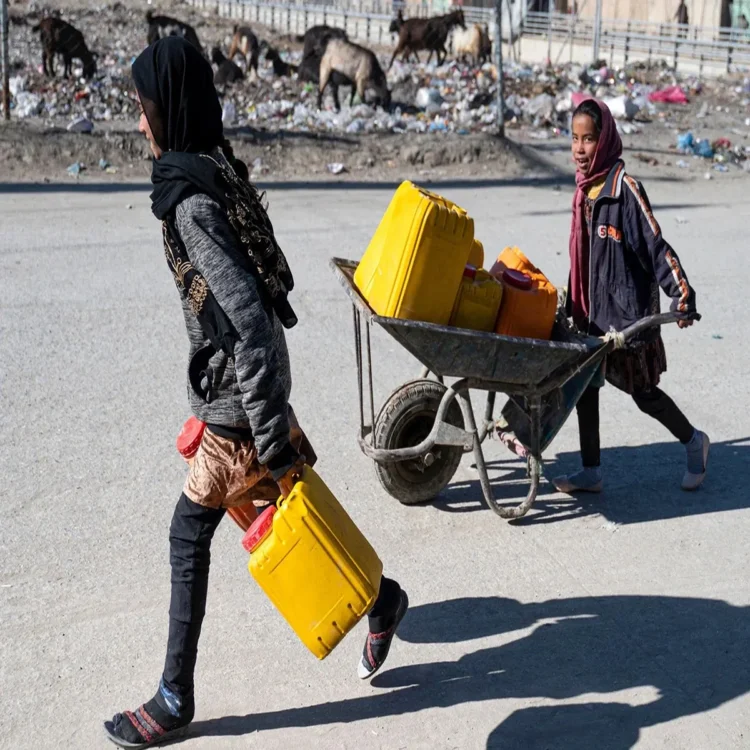
Daily Struggles for Basic Water Access
For many families in neighborhoods like Deh Mazang, access to safe drinking water remains limited. A nearby mosque offers water from a well, but the supply is discolored and unsuitable for consumption. Clean water is transported into the area on small vehicles and sold, often at prices beyond what residents can afford.
Elderly residents, including 90-year-old Wali Mohammad, express anger over the situation. With limited financial resources, many households struggle to secure both food and water. Some residents claim that informal pipelines once connected homes to shared wells, but these were reportedly cut off after the Taliban took control in 2021.
However, not all agree on the issue. A younger resident, Najibullah Rahimi, explained that such connections had reduced water levels in the well, leaving those living at higher elevations without any supply. According to him, authorities intervened to prevent further depletion.
Rapid Decline of Groundwater Resources
Kabul’s water crisis is rooted in a deeper environmental challenge. Located in a high-altitude valley, the city depends heavily on groundwater drawn from wells. Over time, these reserves have dropped significantly, forcing some wells to be drilled to depths of nearly 150 meters.
A recent report highlighted a sharp decline in aquifer levels over the past decade. These underground reservoirs refill slowly through rainfall and snowmelt. However, excessive extraction combined with reduced precipitation has accelerated depletion. Experts warn that without urgent reforms, Kabul could face a severe humanitarian crisis in the near future.
Climate Change and Urban Expansion
Changing weather patterns have intensified the problem. Reduced snowfall has limited natural groundwater recharge, while sudden heavy rains often result in flooding rather than absorption into the soil.
At the same time, Kabul’s rapid population growth has placed additional strain on limited resources. The city’s population has expanded dramatically over the past two decades, driven by returning migrants and regional displacement. With more than six million residents today, demand for water has surged beyond sustainable levels.
Urban development has further complicated the issue. Large areas of natural ground have been replaced by buildings and roads, reducing the ability of rainwater to seep into the earth. Experts note that even consistent rainfall now has minimal impact on replenishing groundwater.
Management Challenges and Overuse
Mismanagement has also played a role in worsening the crisis. Industries such as beverage production and greenhouse farming consume large volumes of groundwater. Despite awareness of the issue, regulation has historically been limited.
Authorities now acknowledge the seriousness of the situation. Officials cite population growth, declining rainfall, and rising consumption as key factors. Measures have been introduced, including restrictions on groundwater use, installation of water meters, and limits on commercial consumption. Businesses exceeding quotas may be required to relocate.
Ongoing Projects and Delays
Efforts are underway to improve water availability. Infrastructure projects such as small dams and absorption wells aim to enhance groundwater recharge. The Shah wa Arous Dam, completed recently, has increased water storage capacity, while maintenance work at Qargha Dam has expanded its reservoir.
However, larger projects that could significantly ease the crisis remain delayed. Plans for a pipeline from the Panjshir River and the Shah Toot Dam have faced funding and administrative hurdles. Together, these initiatives could provide water to millions, but progress has been slow.
Experts emphasize that prioritizing water infrastructure is essential for the city’s future. While visible development projects continue, they argue that access to safe water remains a more urgent necessity for public health and long-term sustainability.
Kabul’s water crisis highlights the intersection of environmental change, urban growth, and governance challenges. Without coordinated and timely action, the situation risks becoming far more severe in the years ahead.