
Agriculture – Mushroom Farming Boosts Rural Incomes and Women Entrepreneurship in UP
Agriculture – The push towards alternative farming practices in Uttar Pradesh is steadily reshaping the economic landscape of rural communities. Among the most promising developments is the rise of mushroom cultivation, which is providing a new source of income while encouraging women to step into entrepreneurship roles.
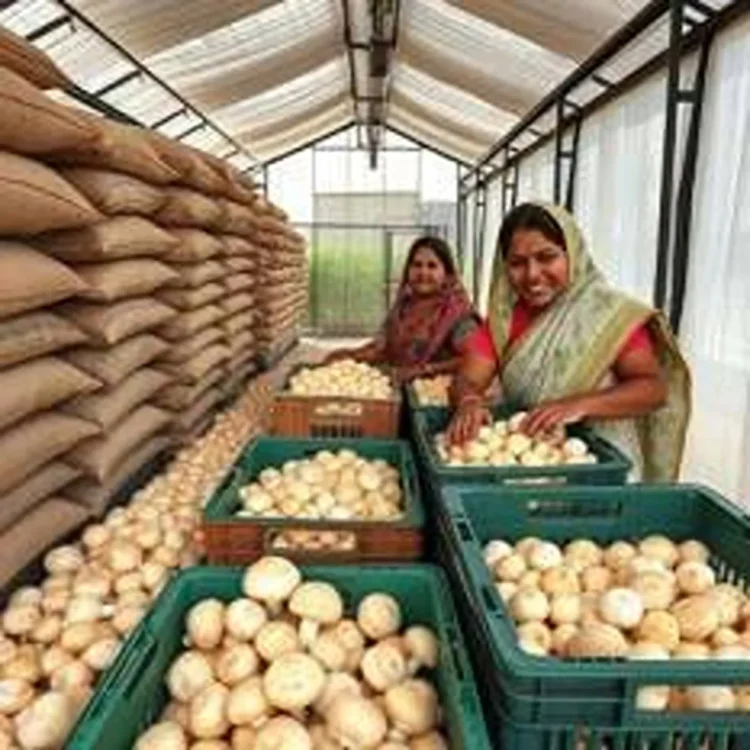
Shift from Traditional Crops to High-Value Farming
For decades, farmers in districts such as Bhadohi relied heavily on staple crops like wheat and paddy. However, changing economic needs and government-backed initiatives have encouraged a transition toward more profitable agricultural activities. Mushroom farming, in particular, has gained attention due to its relatively low investment requirements and high market demand.
This shift reflects a broader transformation in rural agriculture, where farmers are increasingly open to exploring innovative methods that can deliver better financial returns within shorter cycles.
A Local Success Story Inspiring Many
One such example is Pappu Devi from Bhadohi district, who chose to move beyond conventional farming and venture into mushroom cultivation. Her decision has proved financially rewarding, with her annual earnings now ranging between Rs 8 lakh and Rs 10 lakh.
Starting with limited resources, she invested around Rs 2.5 lakh from her savings and secured an additional loan of Rs 50,000. Initially operating on a small scale, she gradually expanded her business through consistent effort and careful planning.
Her journey highlights how determination combined with the right support can help individuals create sustainable livelihoods even in rural settings.
Role of Government Support and Training
The Uttar Pradesh State Rural Livelihood Mission has played a crucial role in enabling such transformations. Through this initiative, women are receiving structured training, technical assistance, and access to financial resources. These efforts are designed to help them build independent income streams and reduce reliance on traditional farming alone.
In Pappu Devi’s case, technical guidance from development organizations and institutional support helped her understand the nuances of mushroom cultivation, including production techniques, storage, and market access.
Officials associated with the programme note that such interventions are essential in building confidence among rural women, encouraging them to take calculated risks and adopt new income-generating activities.
Empowering Women Through Entrepreneurship
Beyond financial gains, initiatives like mushroom farming are contributing to a deeper social change. Women who were once limited to supporting roles in agriculture are now becoming decision-makers and entrepreneurs.
Self-help groups in the region have also started exploring similar ventures after observing successful models. This ripple effect is gradually strengthening community-based economic growth and promoting self-reliance among women.
Pappu Devi herself has become a source of inspiration for many, demonstrating that with proper training and access to resources, rural women can achieve significant success in business.
Broader Impact on Rural Economy
The state government’s focus on diversifying agriculture is part of a larger strategy to improve rural incomes and reduce dependency on a narrow range of crops. Mushroom cultivation fits well within this approach, as it requires limited land and can be managed efficiently even by small-scale farmers.
Experts believe that expanding such initiatives can help stabilize rural economies by creating multiple income channels. This, in turn, can lead to better living standards and reduced migration from villages to cities.
As more individuals adopt these practices, the cumulative impact is expected to strengthen local economies and foster long-term sustainability.
Growing Momentum Across the State
With increasing awareness and success stories emerging from different districts, mushroom farming is gaining momentum across Uttar Pradesh. The continued support of government programmes and community participation is likely to accelerate this trend.
For many rural families, this shift represents not just an economic opportunity but also a pathway toward greater independence and resilience.