
GlobalPolitics – US Bishops Rebuke Trump Over Remarks on Pope Leo XIV
GlobalPolitics – The United States Conference of Catholic Bishops has issued a strong response to recent remarks made by US President Donald Trump about Pope Leo XIV, urging that the head of the Catholic Church should not be drawn into political disputes.
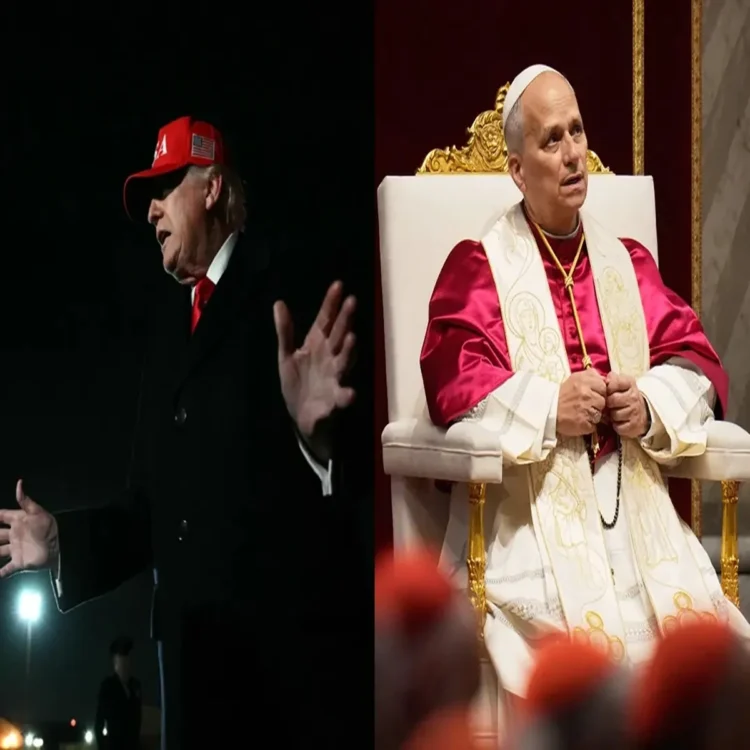
Church Leadership Responds to Presidential Comments
In an official statement released on Sunday, Archbishop Paul S. Coakley, who leads the USCCB, expressed concern over the tone and nature of the President’s comments. He described the statements as divisive and inappropriate, emphasizing that the Pope’s role is spiritual rather than political.
Coakley noted that Pope Leo XIV should not be viewed as a political opponent. Instead, he highlighted the Pope’s responsibility as a religious leader who speaks on matters of faith, morality, and human dignity. The Archbishop added that such public criticism risks undermining respect for religious institutions.
Social Media Posts Spark Controversy
The reaction from the bishops follows a series of posts shared by President Trump on his social media platform. In those messages, the President sharply criticized the Pope, particularly taking issue with his views on international relations and conflict resolution.
Trump questioned the Pope’s stance on global diplomacy, arguing that it lacked strength and effectiveness. He also accused the pontiff of being lenient on issues related to crime and suggested that his approach to international affairs was misguided.
Claims Linking Papal Election to US Leadership
In a more controversial claim, the President suggested that Pope Leo XIV’s election was indirectly influenced by his own time in office. According to Trump, the Catholic Church’s decision to appoint an American-born Pope reflected a response to his leadership on the global stage.
Additionally, Trump criticized the Pope’s interactions with individuals he described as politically left-leaning. He urged the pontiff to avoid commenting on political matters, arguing that such involvement could blur the line between religion and governance.
Defense of Administration Policies
The President also used the opportunity to defend his administration’s domestic and foreign policies. He pointed to what he described as firm law enforcement measures and a strong approach to international security.
Trump reiterated his stance against Iran acquiring nuclear weapons and defended previous US actions abroad. He maintained that his administration had taken decisive steps to protect national interests and maintain global stability.
Vatican’s Emphasis on Peace and Diplomacy
The dispute comes in the wake of Pope Leo XIV’s recent comments expressing concern over how Washington has handled ongoing global tensions, including issues involving Iran. The Pope has consistently called for peaceful dialogue, humanitarian consideration, and diplomatic solutions to conflicts.
As the first American-born pontiff, Pope Leo XIV has drawn significant global attention. His emphasis on compassion and negotiation has been a central theme of his leadership, particularly in addressing complex international challenges.
Growing Divide Between Political and Religious Voices
This exchange highlights an increasingly visible divide between political leadership in the United States and the Vatican. Observers note that the disagreement reflects broader tensions about the role of moral authority in global affairs.
While political leaders often focus on national interests and strategic priorities, religious figures like the Pope tend to advocate for universal values such as peace, justice, and human dignity. The recent developments underscore how these differing perspectives can sometimes lead to public conflict.
The situation continues to draw attention internationally, as it raises questions about the intersection of politics and religion in shaping global discourse.