
Politics – Modi Criticizes West Bengal Government Over Development Issues
Politics – Prime Minister Narendra Modi on Sunday launched a strong critique of the Trinamool Congress-led government in West Bengal, raising concerns about governance, development priorities, and national security issues linked to the Siliguri Corridor.
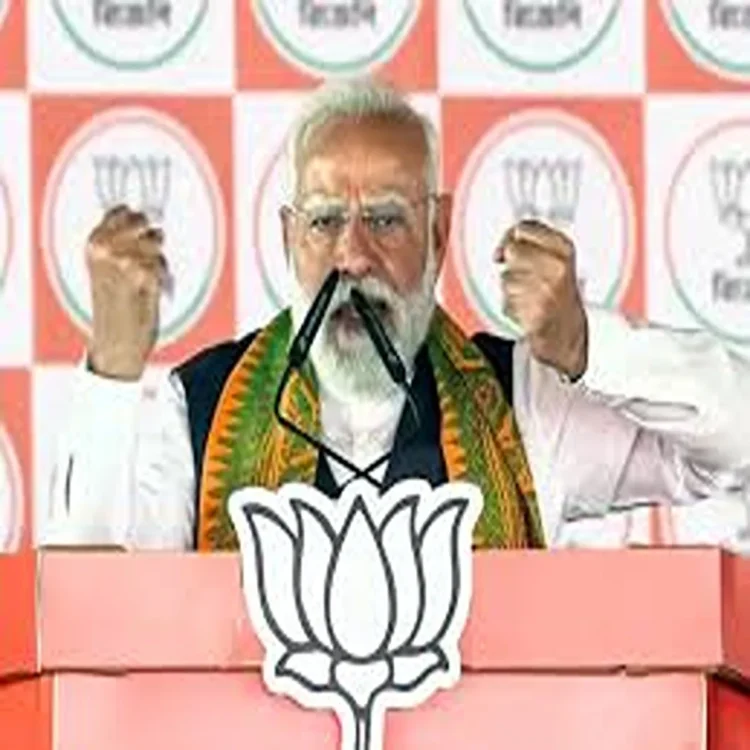
Concerns Over Strategic Corridor and National Unity
Addressing a public gathering at Kawakhali ground in Siliguri, located in Darjeeling district, the Prime Minister alleged that certain groups, which he described as divisive, had threatened the stability of the Siliguri Corridor. This narrow stretch of land is strategically important as it connects the northeastern states to the rest of India. According to Modi, such threats could have serious implications for national unity and security.
He further claimed that these groups received indirect support from the ruling Trinamool Congress, accusing the state government of aligning with them due to what he described as political compulsions. The Prime Minister suggested that such actions could weaken the country’s internal connectivity and stability.
Appeal to Voters Ahead of Elections
During his speech, Modi urged citizens to support Bharatiya Janata Party candidates in the upcoming elections. Emphasizing the importance of political choice, he highlighted the concept of a “double engine” government, referring to alignment between state and central leadership as a way to accelerate development.
He stated that coordinated governance could bring faster infrastructure growth, improved services, and better opportunities for the people of West Bengal, particularly in regions like North Bengal.
Allegations of Uneven Development
The Prime Minister also raised questions about the allocation of resources by the state government. He pointed out that while significant funds had reportedly been directed toward certain sectors, other areas—especially North Bengal—continued to face challenges related to infrastructure and development.
Modi remarked that despite recurring issues such as flooding caused by heavy rainfall in the region, the response from the state administration had been inadequate. He contrasted this with what he described as visible focus on urban celebrations, suggesting an imbalance in priorities.
Criticism of Governance in North Bengal
Highlighting North Bengal’s importance, Modi accused the state government of neglecting the region’s needs. He referred to communities such as tribal populations and workers in tea garden areas, stating that their concerns had not been adequately addressed.
The Prime Minister argued that development in sectors like transport, industry, and basic infrastructure had slowed down under the current administration. He described this as a broader governance issue affecting multiple sections of society, including youth and women.
Political Context and BJP’s Position
North Bengal has emerged as a politically significant region in recent years, particularly after the BJP’s strong performance in the 2019 Lok Sabha elections, where it secured a notable number of seats from the state. Modi’s speech appeared to reinforce the party’s focus on consolidating its presence in the region.
He reiterated that a change in governance could lead to improved outcomes for residents, framing the upcoming elections as an opportunity for voters to influence the state’s development trajectory.
Broader Debate on Governance and Development
The remarks come amid an ongoing political debate in West Bengal over development, resource allocation, and administrative priorities. While the ruling Trinamool Congress has defended its record, opposition parties, including the BJP, continue to raise concerns about governance and regional disparities.
As the state moves closer to elections, such exchanges are likely to shape public discourse, with both sides presenting contrasting visions for West Bengal’s future