
Politics – Veteran Congress Leader Mohsina Kidwai Dies at 94
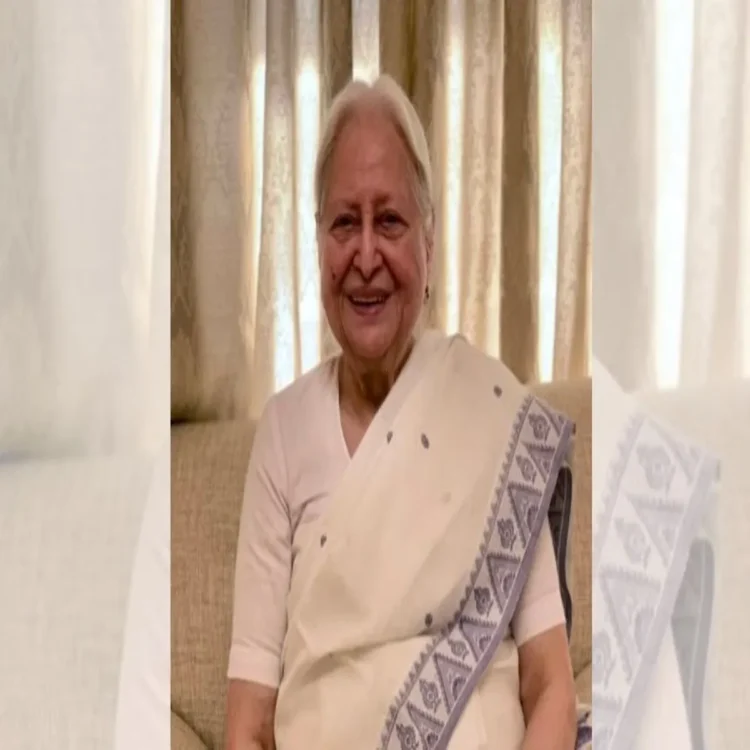
Politics – Mohsina Kidwai, a senior leader of the Indian National Congress and former Union minister, passed away at the age of 94 on Wednesday at a hospital in Noida after prolonged age-related health issues, according to her family.
A Long Career Across India’s Legislative Landscape
Kidwai’s political journey spanned several decades, making her one of the few leaders to serve in all four major legislative roles in India. Over time, she held positions as a Member of Legislative Council (MLC), Member of Legislative Assembly (MLA), and later represented the public in both the Lok Sabha and the Rajya Sabha. Her experience across these institutions reflected a deep understanding of governance at multiple levels.
She worked closely with former prime ministers Indira Gandhi and Rajiv Gandhi, holding significant responsibilities in Union ministries. Her tenure included portfolios such as health and family welfare, urban development, and tourism, where she focused on administrative continuity rather than public spotlight.
Known for Composure During Political Highs and Lows
Colleagues often described Kidwai as composed and measured, qualities that became particularly visible during difficult periods for her party. One such moment came in 2014, when the Congress faced a severe electoral setback. At the party headquarters in New Delhi, the atmosphere was tense, with uncertainty dominating discussions.
Amid that environment, Kidwai addressed a small group of journalists with calm assurance. Rather than reacting emotionally, she drew on historical perspective. She recalled earlier setbacks faced by the Congress, including the post-Emergency phase and electoral defeats in Uttar Pradesh during politically turbulent times. Her message was clear—revival required patience, grassroots engagement, and consistent effort rather than quick fixes.
Commitment to Ground-Level Politics
Kidwai consistently believed that political rebuilding begins at the grassroots. She emphasized direct communication with voters, encouraging leaders to reconnect with communities by visiting homes, listening to concerns, and acknowledging past mistakes.
This approach defined her political style throughout her career. She was not known for dramatic speeches or large-scale public mobilization. Instead, she focused on organizational strength and internal cohesion, ensuring that communication channels within the party remained open and functional.
Her colleagues recall her as someone who handled both administrative responsibilities and interpersonal relationships with equal care. She preferred persuasion over confrontation and maintained a steady presence even during periods of internal uncertainty within the party.
A Subtle Yet Independent Political Voice
Despite her largely low-profile approach, Kidwai occasionally made decisions that reflected her independent thinking. During the Congress presidential election in 2022, she supported Shashi Tharoor’s candidacy by proposing and seconding his nomination, even as the party establishment backed Mallikarjun Kharge.
While the move did not create major public controversy, it was noted within party circles as a sign of her willingness to express a differing viewpoint when necessary.
Personal Life and Legacy
Born in 1932 in Barabanki, Uttar Pradesh, Kidwai entered public life at a young age and remained active for decades. Her personal life remained largely private, with her family choosing to stay away from public attention.
Those close to her say she handled personal challenges with the same quiet resilience that marked her political life. She is survived by her children and extended family.
End of an Era for Congress
Kidwai belonged to a generation that witnessed both the dominance and decline of the Congress party. She viewed electoral setbacks not as exceptions but as phases that required reflection and rebuilding. Her consistent belief in patient, grassroots politics remained unchanged even in her later years.
With her passing, the Congress loses a leader who may not have sought public attention but played a stabilizing role within the party. Her absence marks the departure of a figure who valued steady work over visibility and remained committed to the organization through changing political landscapes.