
Parliament – Congress Calls Key Meeting Ahead of Women’s Reservation Debate
Parliament – The Congress party is preparing for a crucial internal discussion as Parliament gears up for an important legislative session on women’s representation.
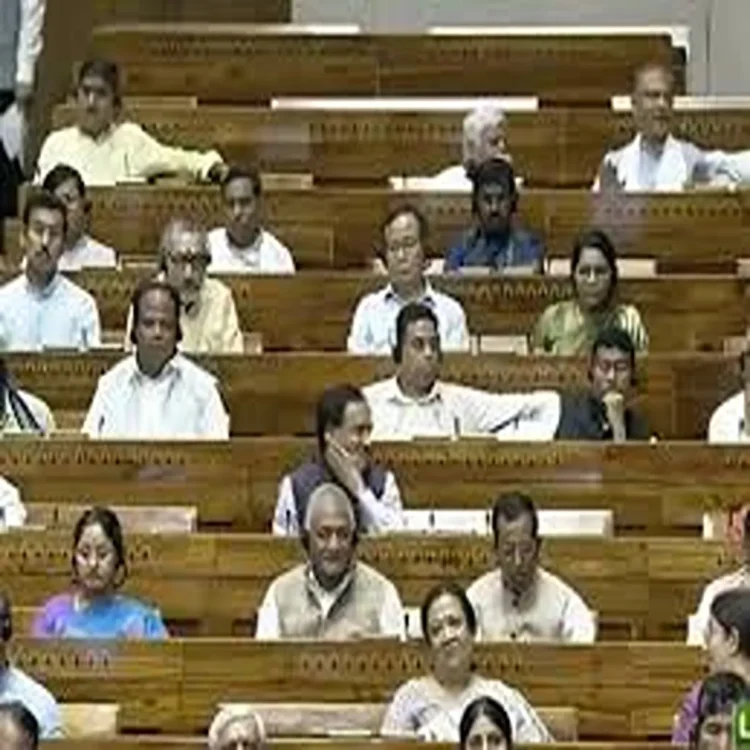
The Congress party is set to hold a meeting of its Congress Working Committee (CWC) in New Delhi on April 10, aiming to review recent developments surrounding the proposed Women’s Reservation framework. The discussion comes just days before a special three-day session of Parliament scheduled to begin on April 16, where the issue is expected to take center stage.
Focus on Upcoming Parliamentary Session
The special parliamentary session has been convened with a primary focus on amendments linked to the Women’s Reservation legislation. The government is preparing to introduce key changes to the existing framework, which was earlier formalized through the Nari Shakti Vandan Act in 2023.
That earlier law had tied the implementation of women’s reservation to the completion of a fresh census and the subsequent delimitation process. However, delays in conducting a new census have prompted the government to consider an alternative route. The revised plan proposes using data from the 2011 census to move the process forward.
Proposed Changes to Seat Distribution
Under the new proposal, the delimitation exercise and redistribution of parliamentary constituencies would rely on the 2011 census figures. As a result, the total number of seats in the Lok Sabha could rise significantly—from the current 543 to around 816.
If implemented, nearly one-third of these seats, estimated at about 273, would be reserved for women. While the plan maintains existing provisions for Scheduled Castes and Scheduled Tribes, it does not include a separate quota for Other Backward Classes. Additionally, the proposed framework suggests that states will not have discretion in applying the reservation, as the central legislation would be binding nationwide.
Legislative Path and Constitutional Amendments
To operationalize these changes, the government is expected to introduce two separate bills during the special session. One will amend provisions of the existing Nari Shakti Vandan Act, while the other will deal specifically with delimitation.
Both pieces of legislation would require approval as constitutional amendments, making broad political support essential for their passage. The move signals the government’s intention to expedite the implementation process rather than wait for a new census cycle.
Government’s Stand on Immediate Implementation
The central government has emphasized that it does not want delays in extending political representation to women, who make up nearly half of the country’s population. By relying on available census data, officials argue that the process can move forward without waiting for fresh demographic figures.
This approach is being presented as a practical solution to ensure timely inclusion of women in legislative bodies, particularly in the Lok Sabha, where representation has historically remained limited.
Opposition Raises Concerns
The proposal has drawn criticism from the opposition. Congress leader Jairam Ramesh has accused the government of altering its earlier position for political reasons, particularly with elections approaching in several states. He argued that the shift reflects an attempt to redirect public attention from broader economic challenges.
Ramesh also highlighted that the original law linked women’s reservation explicitly to both census and delimitation processes under constitutional provisions. According to him, modifying that linkage represents a significant departure from the earlier framework.
Call for Political Consensus
Amid the ongoing debate, Prime Minister Narendra Modi has appealed for cross-party cooperation. Speaking at a public event, he urged political leaders to set aside differences and support the amendment, stressing that the issue concerns equitable representation rather than partisan interests.
As the special session approaches, discussions within political parties and across the aisle are expected to intensify. The outcome of these deliberations could shape the future of women’s participation in India’s parliamentary system for years to come.