
Election – BJP Names Key Campaigners for West Bengal Polls
Election- The Bharatiya Janata Party has formally submitted its roster of prominent campaigners to the Election Commission of India as it gears up for the 2026 West Bengal Assembly elections.
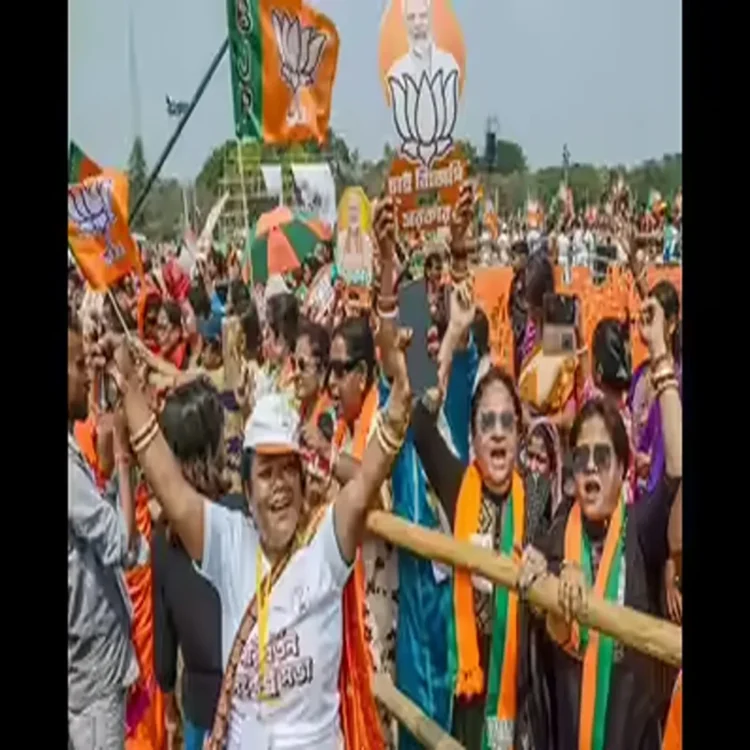
Senior Leaders to Lead Statewide Campaign
The list, handed over to Chief Election Commissioner Gyanesh Kumar, features a mix of the party’s most recognisable national figures along with influential regional leaders. These individuals are expected to play a central role in reaching voters across the state in the coming weeks.
Among those named are Prime Minister Narendra Modi, Defence Minister Rajnath Singh, and Home Minister Amit Shah. The party has also included Union ministers such as Nitin Gadkari and Dharmendra Pradhan, along with BJP president J.P. Nadda. Chief ministers from BJP-ruled states, including Himanta Biswa Sarma and Yogi Adityanath, are also part of the campaign lineup. Their inclusion signals the party’s intent to mount a broad and coordinated outreach effort.
Poll Schedule and Electoral Stakes
West Bengal is set to vote in two phases, scheduled for April 23 and April 29. The counting of votes will take place on May 4. With the state being a key political battleground, all major parties are intensifying their preparations ahead of polling day.
The BJP is aiming to expand its influence in the state, where it has been attempting to challenge the dominance of the ruling Trinamool Congress. The announcement of star campaigners is seen as an important step in mobilising support and strengthening the party’s organisational presence on the ground.
Modi Targets State Government in Rally
During a recent public meeting in Cooch Behar, Prime Minister Modi sharply criticised the Trinamool Congress administration. Addressing a large gathering, he suggested that the turnout reflected growing dissatisfaction with the current government.
He urged voters not to be intimidated during polling and emphasised confidence in democratic institutions. According to him, the election would mark a turning point, bringing an end to what he described as a climate of fear. He also indicated that legal accountability would follow once the results are declared, stating that law enforcement would act without bias.
Focus on Women’s Representation
In his speech, the Prime Minister also highlighted the government’s efforts to improve women’s participation in governance. He referred to initiatives aimed at economic empowerment and mentioned that millions of women have benefited from welfare schemes.
He spoke about the Women’s Reservation Act, which proposes 33 percent representation for women in the Lok Sabha and state assemblies. The government, he said, is working toward implementing this provision from the 2029 general elections.
Special Parliamentary Session Planned
To move forward with these reforms, the Centre has scheduled a special session of Parliament from April 16 to April 18. The Prime Minister described the legislation as long overdue, noting that the issue has remained unresolved for decades.
He also addressed concerns related to seat distribution, assuring that states which have managed population growth effectively would not face disadvantages. According to him, the objective is to ensure fair representation while expanding opportunities for women in legislative bodies.
Political Momentum Builds Ahead of Voting
With campaigning expected to intensify in the coming days, political parties are likely to focus on both local issues and national policies. The BJP’s strategy appears to combine high-profile leadership outreach with targeted messaging on governance and development.
As the election dates approach, the focus will remain on voter engagement, turnout, and the effectiveness of campaign narratives in shaping the final outcome.