
MediaFreedom – Delhi Police Seal UNI Office After Court Ruling Dispute
MediaFreedom – Press freedom concerns grow after government action on news agency premises – The sealing of United News of India’s office in the national capital has sparked a sharp debate over media independence and legal enforcement.
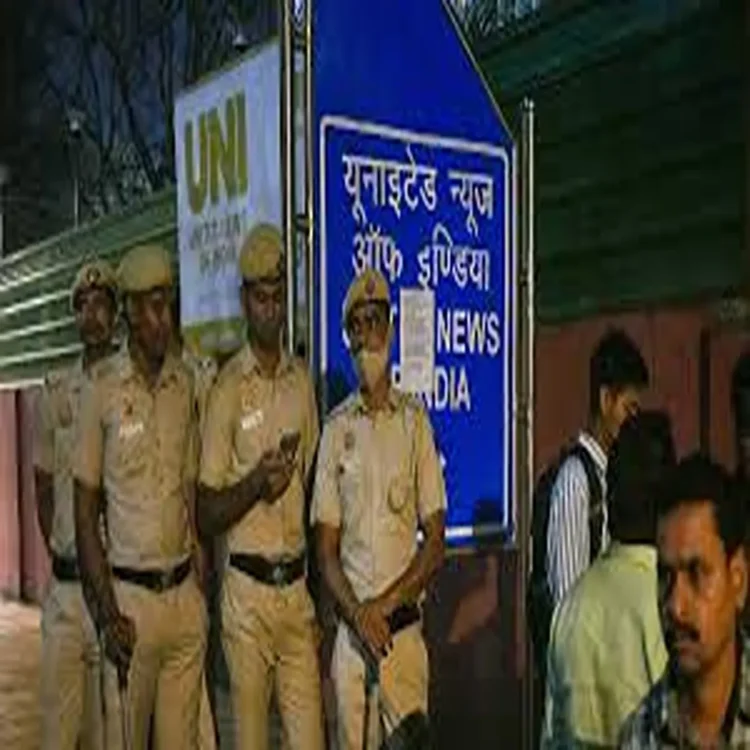
The office of United News of India (UNI), one of the country’s oldest news agencies, was sealed by Delhi Police on Friday following a court-backed directive. The action took place at the agency’s premises on Rafi Marg after the Delhi High Court upheld the cancellation of its land allotment. Authorities said the move was carried out in accordance with legal procedures, while the organisation and its stakeholders strongly criticised the development.
Court Decision Leads to Enforcement Action
Officials confirmed that police teams reached the UNI office with sufficient personnel to implement the sealing order. The operation followed the High Court’s dismissal of a petition filed by the agency challenging the termination of its land allotment by the Land and Development Office (L&DO), which functions under the Union Housing and Urban Affairs Ministry.
According to authorities, the land had been officially reclaimed by the government after due legal process. A notice placed at the site stated that the premises had been taken over in line with the court’s judgment and that any unauthorised use would attract legal consequences.
UNI and Management Raise Strong Objections
UNI and its current owner expressed deep concern over how the action was carried out. In statements released publicly, they described the incident as an excessive use of force and questioned the manner in which employees were treated during the operation.
The management claimed that staff members were not given adequate time to collect personal belongings or coordinate with senior officials before the premises were sealed. It also alleged that several employees were asked to leave abruptly, leading to confusion and distress among those present.
Allegations of Misconduct During Operation
The agency further alleged that some of its staff, including women journalists, were mishandled during the process. Claims were also made that individuals present at the site faced verbal abuse. In a video circulated online, a confrontation between police personnel and a woman journalist appeared to show physical pushing, after which the journalist lost balance and fell.
Witnesses in the video could be heard objecting to the handling of the situation, raising concerns over the approach adopted during the operation. UNI also alleged that some personnel involved in the action were not in an appropriate condition while on duty, though these claims remain unverified.
Police Response Denies Wrongdoing
Delhi Police officials rejected the allegations, stating that the entire operation was conducted transparently and in line with the law. A senior officer noted that the process was recorded on video to ensure accountability and denied any misconduct by the personnel involved.
Authorities emphasised that the enforcement action was purely based on the court’s directive and not targeted at the organisation’s editorial role or journalistic work. They maintained that all necessary precautions were taken during the sealing procedure.
Wider Debate on Press Freedom
The incident has triggered a broader conversation about press freedom and administrative authority. UNI, in its official communication, said the development raises serious questions about the environment in which media organisations operate, particularly when disputes intersect with government actions.
Observers note that while legal compliance is essential, the manner of execution in such sensitive cases often influences public perception. The situation continues to draw attention from media circles and civil society, with calls for clarity and transparency in handling such matters.
As the issue unfolds, it remains to be seen whether further legal or administrative steps will be taken by the concerned parties.