
WomenReservation – Debate Grows Over Timing of Women’s Quota Implementation
WomenReservation – The debate over the timeline for implementing women’s reservation in Parliament and state assemblies has resurfaced, with the Union government reportedly holding informal discussions with several Opposition parties about advancing the rollout of the quota. However, some key allies within the ruling National Democratic Alliance (NDA) say they have not been formally consulted on any such proposal.
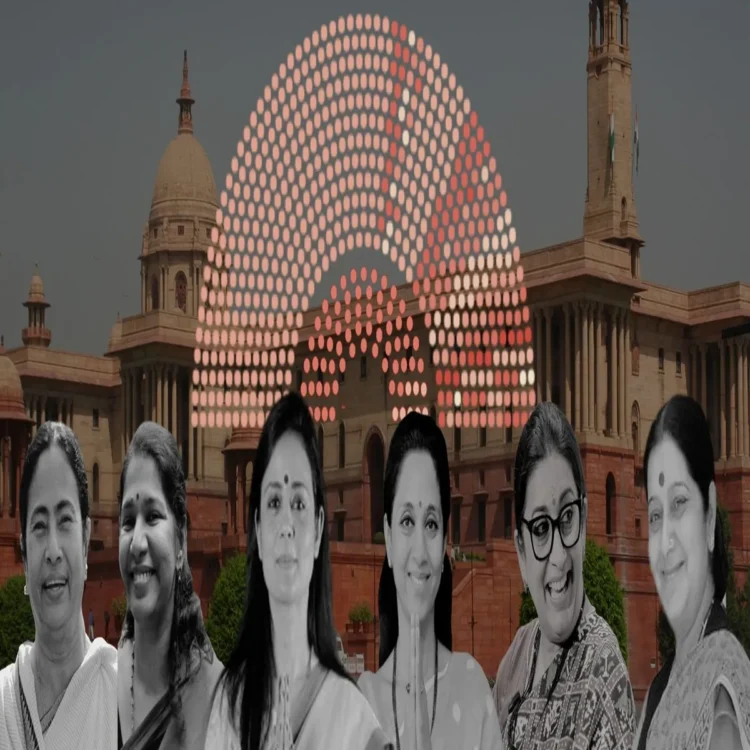
Allies Say No Formal Consultation Yet
Leaders from the Telugu Desam Party (TDP) and Janata Dal (United), both important partners in the NDA, indicated that they were not approached by the government regarding possible changes to the implementation process. Despite this, representatives of the two parties reiterated their long-standing support for reserving one-third of seats for women in legislative bodies.
Party sources said the idea of increasing women’s participation in decision-making institutions has broad political backing, and both TDP and JD(U) remain committed to the principle regardless of the procedural discussions surrounding the policy’s rollout.
Background of the Women’s Reservation Law
The current discussion stems from the Nari Shakti Vandan Adhiniyam, a law passed by Parliament in 2023 that mandates 33 percent reservation for women in the Lok Sabha and state legislative assemblies. The legislation marked a significant step in the long-standing demand for greater gender representation in Indian politics.
However, the law also specifies certain conditions before the reservation can take effect. According to its provisions, the quota will only be implemented after the first national census conducted following the law’s enactment and after a subsequent delimitation exercise that redraws parliamentary and assembly constituencies.
Delimitation Linked to Census Process
Delimitation refers to the process of redrawing electoral boundaries based on updated population data. The next such exercise is expected to take place after the upcoming national census, which is widely anticipated around 2027. Once the census results are available, constituencies across the country will be reorganized to reflect demographic changes.
Only after this process is completed can the reservation for women be applied to the newly defined constituencies, as outlined in the legislation.
However, if the government decides to implement the quota before the delimitation exercise is completed, it would require another amendment to the Constitution to modify the existing framework.
Political Debate Over Implementation Timeline
Reports suggest that the government has informally sounded out certain Opposition parties about the possibility of separating the implementation of women’s reservation from the delimitation process. Such a move could potentially allow the quota to come into effect earlier than currently planned.
While discussions appear to be ongoing, some parties have emphasized the need for broader consultation before any changes are considered.
A senior TDP leader stated that although the party has not been formally contacted regarding the proposal, it would support the idea if it helps expedite women’s representation without altering the current distribution of parliamentary seats.
Regional Concerns Over Delimitation
The issue of delimitation has also triggered concerns among several southern states, which fear that population-based redistribution of constituencies could reduce their representation in Parliament relative to more populous regions.
TDP leaders, however, indicated that introducing a women’s quota would not affect the total number of seats allocated to different states and therefore should not intensify those concerns.
Opposition Views and Broader Demands
Within the Opposition bloc, parties have expressed varied positions on the issue. Sources in the Congress said the party supports wider consultations involving multiple stakeholders before any change in the implementation mechanism is considered.
The Dravida Munnetra Kazhagam (DMK), another Opposition party, has maintained that the political empowerment of women should not be delayed and has long advocated implementing the quota without waiting for delimitation.
Duration of the Reservation Provision
Under the provisions of the 2023 law, the reservation for women in Parliament and state assemblies will remain in place for an initial period of 15 years. After this period, Parliament will have the authority to decide whether the arrangement should be extended.
The legislation also provides reserved seats for women belonging to Scheduled Castes and Scheduled Tribes within the broader quota system. During earlier debates on the bill, several Opposition parties had argued that similar provisions should also be extended to women from Other Backward Classes.
Efforts to pass a women’s reservation law have been made repeatedly since the mid-1990s, reflecting the long political journey behind the measure that eventually led to the passage of the 2023 legislation.