
EnergyPolicy – Trump Approves Temporary Waiver Allowing India to Import Russian Oil
EnergyPolicy – The United States government has confirmed that President Donald Trump personally authorised a temporary waiver permitting India to continue purchasing Russian oil. According to the White House, the move was designed to ease pressure on global energy markets that have been disrupted by ongoing military tensions involving Iran.
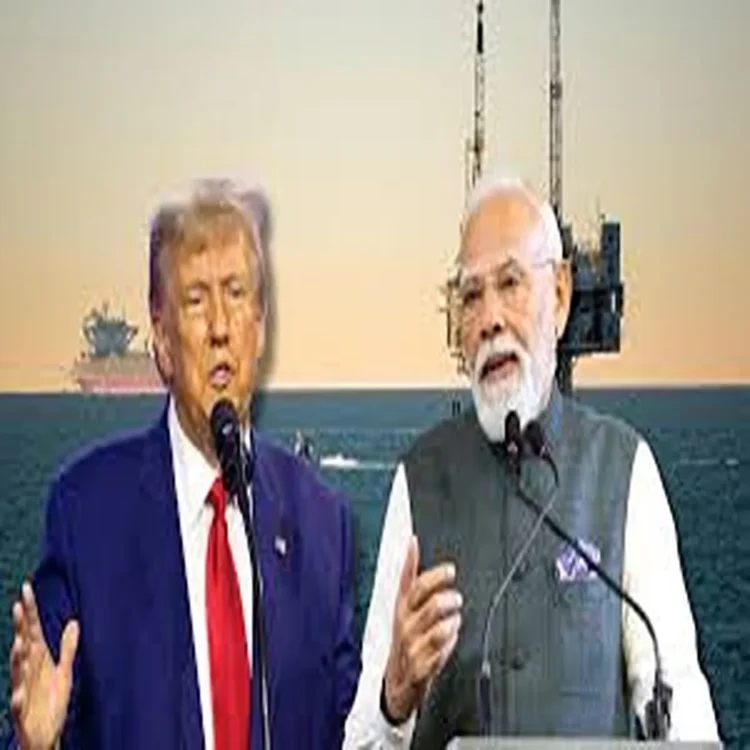
White House Explains Reason for Temporary Decision
White House Press Secretary Karoline Leavitt said the decision followed discussions involving the president, the Treasury Department, and senior national security officials. She explained that the administration viewed India as a reliable partner that had previously complied with sanctions by halting imports of Russian oil.
Leavitt noted that the waiver was not intended as a long-term policy shift but rather as a short-term measure to manage the immediate imbalance in global oil supply. The disruption, she said, was largely linked to instability connected to Iran and its impact on international energy markets.
Oil Shipments Already En Route
According to the White House, much of the Russian oil connected to the waiver had already been transported before the decision was formally approved. Officials indicated that the shipments were already at sea, which played a role in the administration’s decision to allow the transactions to proceed.
Leavitt said the temporary permission would help prevent additional volatility in energy markets during a period when supply chains are already under strain. The administration believes the arrangement will not significantly increase financial benefits for Russia.
Limited Financial Impact Expected for Moscow
Officials emphasised that the waiver is limited in scope and duration. The White House indicated that the measure was carefully structured so that it would not provide substantial economic gains to the Russian government.
Leavitt told reporters that the administration evaluated the broader geopolitical context before approving the move, balancing energy security concerns with ongoing sanctions policies related to Russia.
Update on US Military Campaign Against Iran
During the same briefing, the White House also provided updates on Operation Epic Fury, a US military campaign focused on weakening Iran’s missile systems and naval capabilities.
Leavitt stated that the operation has made rapid progress since it began roughly ten days earlier. According to the administration, more than 5,000 targets connected to Iranian military infrastructure have been struck during the campaign.
Officials reported that Iran’s ability to launch counterattacks has declined significantly since the operation started. Ballistic missile launches attributed to Iran have reportedly dropped by more than 90 percent, while drone-based attacks have fallen by roughly 35 percent.
Iranian Naval Capabilities Significantly Damaged
The White House also said that US forces have targeted several Iranian naval assets as part of the operation. According to Leavitt, more than 50 Iranian vessels have been destroyed, including a ship believed to be capable of launching drones.
Military assessments cited by the administration indicate that Iran’s naval forces have suffered severe operational damage. Officials described the fleet as largely unable to conduct effective combat operations following the recent strikes.
Strategic Goals of Operation Epic Fury
Leavitt reiterated that the objectives of Operation Epic Fury remain unchanged. The campaign is aimed at dismantling Iran’s ballistic missile capacity, weakening its military infrastructure, and preventing its regional allies from destabilising the Middle East.
Another central objective, according to the administration, is ensuring that Iran does not develop nuclear weapons capabilities.
Protecting Global Energy Routes
The White House also emphasised the importance of maintaining secure energy transportation routes, particularly through the Strait of Hormuz, one of the world’s most critical oil shipping corridors.
Leavitt said President Trump has reaffirmed his commitment to ensuring that oil continues to move safely through the strategic waterway so that the United States and its international partners can maintain stable energy supplies.
As part of this effort, the administration has introduced political risk insurance for oil tankers operating in the Gulf region. Officials also indicated that the US Navy could provide escorts to commercial vessels if necessary to ensure the uninterrupted movement of energy shipments.