
MissileDefense – Saudi Air Defences Intercept Drone Wave Targeting Shaybah Oil Field
MissileDefense – Saudi Arabia’s air defence systems intercepted and destroyed a new wave of aerial threats aimed at the strategic Shaybah oil field early Saturday, according to information released by the country’s Ministry of Defence and reported by Arab News. The attempted strikes involved multiple unmanned aircraft and missiles, which were detected and neutralised before reaching their intended targets.
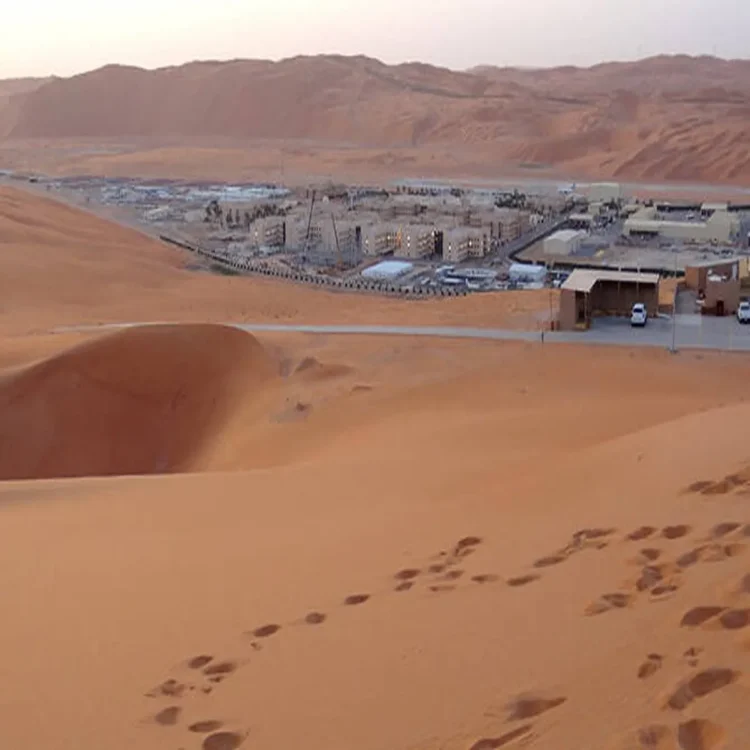
Defence systems intercept multiple drones
Military spokesperson Major General Turki Al-Maliki said that Saudi forces tracked and intercepted 16 drones launched in four separate waves. The aircraft were detected while flying across the Rub’ al-Khali desert, commonly known as the Empty Quarter, heading toward the Shaybah oil facility.
According to the defence ministry, the drones were destroyed in the air before they could threaten the vital energy installation. Officials stated that surveillance systems and air defence units responded quickly after the objects were identified approaching Saudi airspace.
The ministry described the operation as part of ongoing defensive measures aimed at protecting key national infrastructure and maintaining stability in the region’s energy sector.
Missiles aimed at Prince Sultan Air Base intercepted
In additional updates, Al-Maliki confirmed that Saudi forces also intercepted two missiles targeting Prince Sultan Air Base in Al-Kharj. Defence units successfully destroyed both a ballistic missile and a cruise missile before they reached the military installation.
Prince Sultan Air Base is considered one of the Kingdom’s important military facilities and plays a central role in regional air operations. Authorities said the interception prevented any damage or casualties.
Officials emphasised that the air defence network remains on high alert due to the increasing frequency of aerial threats across the region.
Drone incident reported east of Riyadh
Saudi defence authorities also confirmed that another drone was shot down east of Riyadh during the same period. The incident marks the third straight day in which Al-Kharj and surrounding areas have faced attempted aerial attacks.
Al-Kharj lies roughly 80 kilometres southeast of the Saudi capital and is known as a major industrial and logistical centre. The repeated attempts to strike the region have raised concerns among security analysts about the persistence of drone-based attacks on strategic locations.
Despite these attempts, officials stated that all incoming threats were successfully neutralised without disruption to civilian life or industrial operations.
Strategic importance of the Shaybah oil field
The targeted Shaybah oil field holds a crucial position within Saudi Arabia’s energy infrastructure. Located deep in the Empty Quarter desert near the United Arab Emirates border, the field is classified as one of the Kingdom’s “super-giant” oil reserves.
Beyond crude oil production, the site also supports the country’s broader gas strategy. A large processing facility at Shaybah extracts natural gas liquids, which are supplied to petrochemical industries across Saudi Arabia.
Energy experts note that the protection of such facilities remains a priority for Saudi defence forces because they contribute significantly to global oil supply and the national economy.
Regional tensions and rising aerial threats
The attempted strike on Shaybah is the first reported since late February, following the beginning of a large-scale US-Israeli air campaign against Iran. Since then, tensions across the Gulf region have intensified, with several countries reporting aerial threats.
Regional defence updates indicate that within the previous 24 hours, the United Arab Emirates intercepted more than 125 drones and six ballistic missiles aimed at its territory. On Friday, Saudi defence forces also stopped five missiles headed toward Prince Sultan Air Base along with several drones targeting Riyadh and Al-Kharj.
Security analysts say the growing use of drones and missiles has become a defining feature of current regional tensions.
Regional organisations condemn attacks
The continued attempts to target Gulf infrastructure have drawn strong reactions from regional organisations. The Arab League and the Organisation of Islamic Cooperation have both condemned the attacks and called for stability across the region.
During an extraordinary ministerial meeting held in Riyadh on March 1, the Gulf Cooperation Council reaffirmed the right of member states to defend their territories against what it described as hostile actions.
Following a Cabinet meeting chaired by Crown Prince Mohammed bin Salman on March 3, the Saudi government stated that the Kingdom retains the full right to respond to threats and will take necessary steps to protect its territory, citizens and residents.
Officials said defence forces will continue to strengthen monitoring and interception capabilities to counter further attacks targeting critical infrastructure.