
Judiciary – Supreme Court Examines NCERT Class 8 Textbook Content
Judiciary – The Supreme Court has stepped in to examine concerns surrounding a Class 8 Social Science textbook issued by the National Council of Educational Research and Training, after references to corruption within the judicial system drew objections from members of the legal community.-
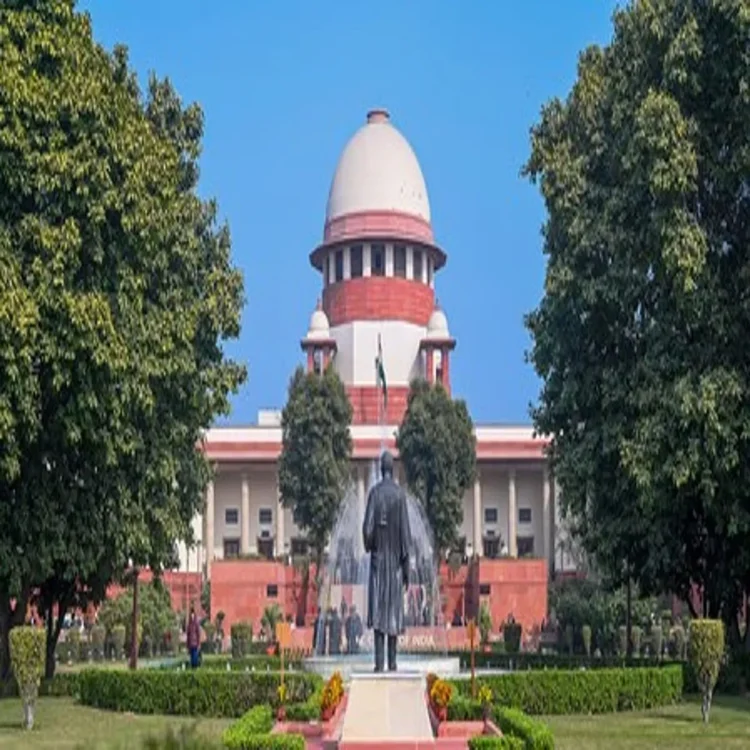
The Supreme Court has initiated proceedings on its own motion over certain passages in a newly revised Class 8 Social Science textbook published by the National Council of Educational Research and Training. The move follows concerns raised about how the book discusses issues related to the functioning of the judiciary, including references to corruption.
Bench to Hear Matter on February 26
According to the official cause list, a Bench led by Chief Justice of India Surya Kant, along with Justices Joymalya Bagchi and Vipul M. Pancholi, is scheduled to take up the matter on February 26. The case has been registered under the title “In Re: Social Science Textbook for Grade–8 (Part-2) published by NCERT and ancillary issues.”
The top court’s decision to act suo motu comes after strong reactions from sections of the Bar who questioned the inclusion of references to corruption in a chapter explaining the role of the judiciary in society.
Concerns Raised by Senior Advocates
During a recent hearing in an unrelated matter, senior advocates Kapil Sibal and Abhishek Manu Singhvi drew the court’s attention to the textbook content. They expressed concern that school students were being introduced to discussions about corruption within the judicial system at an early stage of learning.
Sibal submitted that many members of the legal fraternity were deeply troubled by the material, describing it as inappropriate for inclusion in a school-level textbook. He argued that the manner in which the issue was presented could affect young minds and undermine confidence in judicial institutions.
Chief Justice Surya Kant acknowledged the seriousness of the concerns, stating that he had already received communications from members of the judiciary who shared similar apprehensions. He observed that both the Bar and the Bench were disturbed by the development and emphasised that the integrity of the institution must not be compromised.
He indicated that the court was considering suitable action and asked counsel to wait briefly, signalling that the court would take cognisance of the issue independently.
What the Textbook Contains
The controversy centres on a revised chapter titled “The Role of the Judiciary in Our Society.” The updated edition was prepared in line with the National Education Policy 2020 and the National Curriculum Framework for School Education.
In addition to explaining the structure and responsibilities of courts, the chapter discusses challenges faced by the justice delivery system. These include case backlog, shortage of judges, procedural complexity, infrastructural limitations and references to instances of corruption at different levels.
The text also provides approximate data on pending cases in the Supreme Court, various High Courts and district courts. It outlines accountability mechanisms, including complaint redressal processes designed to address misconduct.
Government and NCERT Response
Following objections raised before the court, the Union Ministry of Education directed that distribution of the textbook be temporarily paused. NCERT subsequently confirmed that circulation had been kept on hold pending review.
In an official statement, the council acknowledged that certain material included in the chapter was inappropriate and attributed the issue to an editorial oversight. It expressed regret over the lapse and clarified that there was no intention to diminish the authority or dignity of the judiciary.
NCERT further stated that the chapter would be revised after consultation with subject experts and relevant stakeholders to ensure that the content remains accurate, balanced and suitable for students.
The Supreme Court’s forthcoming hearing is expected to examine the broader implications of the issue, including how institutional integrity and academic content should be balanced within school curricula.