
Quad – US Senators Push Early Leaders’ Summit Before Trump-Xi Talks
Quad – Two senior members of the US Senate have called on the Trump administration to organize a meeting of Quad leaders before President Donald Trump’s anticipated discussions with Chinese President Xi Jinping in April, arguing that such a move would reinforce Washington’s negotiating position.
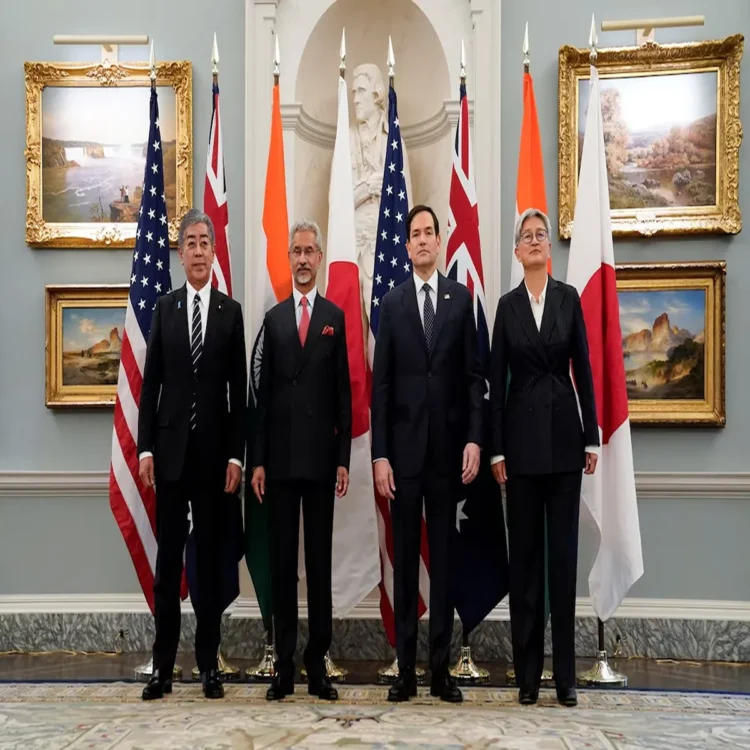
Lawmakers Call for Strategic Timing
Senators Tim Kaine of Virginia and Pete Ricketts of Nebraska, both serving on the Senate Foreign Relations Committee, conveyed their recommendation in a letter addressed to Secretary of State and National Security Advisor Marco Rubio. They urged the administration to fast-track the next leaders’ summit of the Quadrilateral Security Dialogue, which brings together the United States, India, Japan and Australia.
According to the senators, holding the summit ahead of Trump’s planned visit to Beijing would demonstrate cohesion among key Indo-Pacific democracies at a critical moment of strategic rivalry with China. They emphasized that the sequence of diplomatic engagements could significantly influence the broader geopolitical climate.
India Expected to Host Upcoming Meeting
India is slated to host the next Quad leaders’ gathering. Although the summit had originally been placed on the 2025 calendar, it is now expected to take place later this year. Leaders from all four member nations, including President Trump, have previously signaled their intention to attend.
The senators argued that convening the leaders before Trump meets Xi would project unity and strategic clarity. They said a coordinated stance among Quad partners would allow the US president to approach discussions with Beijing from a stronger position.
Building on Recent Diplomatic Gains
In their letter, Kaine and Ricketts pointed to recent advances in US relations with fellow Quad members as a foundation for deeper cooperation. They cited progress in ties with Australia, India and Japan, describing these developments as an opportunity to reinvigorate collective action.
The lawmakers noted expanding collaboration between Australia and Japan in areas such as critical technologies and efforts to strengthen supply chains. They also referenced renewed commitments under the AUKUS security partnership and enhanced coordination on extended deterrence measures.
Additionally, they highlighted the administration’s announcement of a trade agreement with India. According to the senators, the deal creates fresh opportunities to expand strategic and defense collaboration, both bilaterally and across the Indo-Pacific region.
Shared Challenges Across the Indo-Pacific
The senators underlined a range of common concerns facing Quad members. These include vulnerabilities in global supply chains, restrictions affecting access to critical minerals, and increasing competition in emerging technologies. They also pointed to broader concerns over maintaining a free and open Indo-Pacific.
In particular, they observed that Japan has faced growing diplomatic and military pressure from China, alongside economic measures that have raised concerns about regional stability. The lawmakers suggested that coordinated action through the Quad framework could help address such challenges while reinforcing international norms.
Quad’s Expanding Strategic Role
Over the past decade, the Quad has developed into a prominent platform for policy coordination among its four members. Its agenda now spans maritime security, supply chain resilience, advanced technology cooperation and broader regional stability.
The senators said the grouping is well suited to advance objectives outlined in President Trump’s 2025 National Security Strategy. These include strengthening allied deterrence, reducing strategic dependencies, safeguarding technological leadership and supporting freedom of navigation.
They concluded their appeal by urging the administration to prioritize preparations for the leaders’ summit, followed by foreign ministers’ meetings and working-level consultations. Such steps, they wrote, would reaffirm American leadership and ensure that future engagement with Beijing reflects unity and careful strategic planning.
The lawmakers also requested a detailed briefing by March 13, 2026, to better understand the administration’s approach and priorities regarding the Quad.
As geopolitical competition intensifies in the Indo-Pacific, the timing and structure of high-level diplomacy are likely to remain central to US strategy. The proposed sequence of a Quad summit followed by bilateral talks with China reflects a broader effort to align partnerships before entering complex negotiations with Beijing.