
Railway – Rishikesh–Karanprayag Line Nears Completion in Uttarakhand
Railway – The long-awaited Rishikesh–Karanprayag railway project is approaching its final phase, marking a significant milestone in Uttarakhand’s transport network and regional development plans.
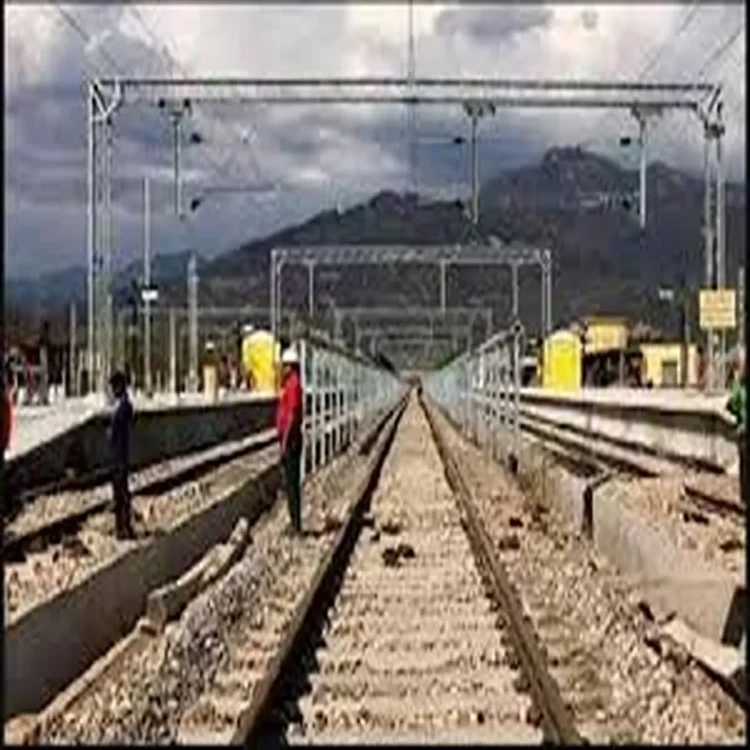
The ambitious rail corridor, considered vital for improving access to the Char Dham pilgrimage circuit, is set to transform travel across the mountainous terrain of the state. Officials describe the project as more than a transport upgrade, positioning it as a strategic investment that blends connectivity, economic opportunity, and disaster preparedness.
Project Seen as Catalyst for Growth
Chief Minister Pushkar Singh Dhami has described the railway initiative as a defining moment for Uttarakhand’s future. According to him, the project is expected to stimulate the hill economy, boost tourism, and strengthen infrastructure in border areas that hold strategic importance.
State authorities believe the rail link will reduce travel time significantly for pilgrims heading to the Char Dham shrines, while also opening new avenues for trade and local employment. The government views the corridor as an anchor for broader economic activity, including hospitality, small businesses, and logistics services in remote districts.
Escape Tunnels May Double as Roads
One of the most discussed features of the project is the possibility of converting emergency escape tunnels into parallel roadways. Built alongside the railway tunnels for safety purposes, these passages could be adapted in the future to serve as alternate routes for vehicles.
Given Uttarakhand’s vulnerability to landslides, flash floods, and other natural disasters, such parallel roads could play a crucial role during emergencies. Officials suggest that these routes would not only aid disaster response teams but also provide residents with additional travel options during road blockages.
Infrastructure experts say this dual-use approach reflects long-term planning in a region where terrain and climate often disrupt conventional road networks.
Stations to Reflect Cultural Heritage
Beyond engineering achievements, the project is also being shaped with cultural themes in mind. Tourism and Culture Minister Satpal Maharaj said the railway stations are being designed to reflect Uttarakhand’s spiritual and historical identity.
Rather than functioning solely as transit hubs, the stations are expected to introduce travelers to local traditions and mythology. For instance, Shivpuri station will draw inspiration from Neelkanth Mahadev, while Devprayag station is being designed around the theme of Samudra Manthan. Srinagar station will highlight Maa Rajrajeshwari.
Other stations along the route will also carry distinctive themes. Byasi is planned to honor Maharishi Ved Vyas, Maletha will pay tribute to Veer Madho Singh Bhandari, and Karanprayag will incorporate motifs associated with Badrinath and Radha–Krishna. Gauchar station is set to be dedicated to Bal Govind Krishna.
Officials believe this approach will enhance the spiritual journey for pilgrims while offering a platform to promote local art, crafts, and heritage.
Expansion Plans for Kumaon Region
As work on the Rishikesh–Karanprayag line moves closer to completion, attention is gradually shifting to another proposed rail link connecting Tanakpur and Bageshwar. The route is widely regarded as essential for improving connectivity in the Kumaon region.
Preliminary surveys are examining multiple alignments, including possible links through Almora and Someshwar. The state government intends to request the Central Government to designate the Tanakpur–Bageshwar corridor as a National Project, a move that would help secure funding and expedite administrative approvals.
Officials acknowledge that constructing rail infrastructure in the Himalayan landscape presents technical challenges. However, they maintain that improved connectivity is necessary to address migration from hill districts by generating employment and business opportunities locally.
A Multi-Dimensional Infrastructure Push
Policy analysts observe that the Rishikesh–Karanprayag railway project represents a broader shift in how infrastructure is being planned in Uttarakhand. By combining rail development, potential road expansion, disaster resilience, and cultural tourism, the state aims to create a sustainable growth model.
If completed as envisioned, the project could reshape travel patterns, strengthen regional economies, and improve emergency response capabilities in the hill state. For Uttarakhand, the rail line is not just about tracks and stations—it signals a long-term strategy to integrate development with geography and heritage.