
Trade – India–EU Free Trade Pact Set to Redefine Exports and Industry Growth
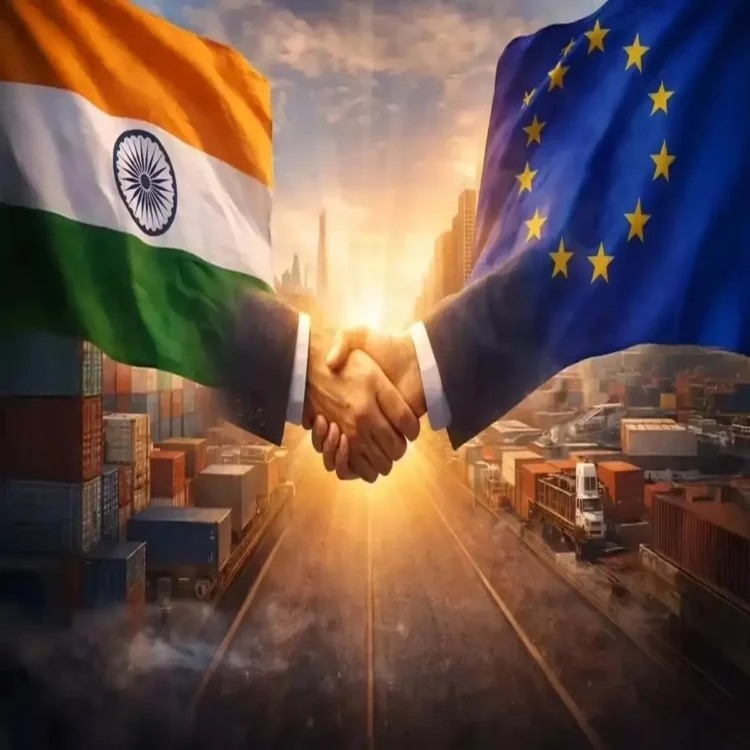
Trade – India’s proposed Free Trade Agreement with the European Union is steadily taking shape as a cornerstone of the country’s long-term trade strategy, with far-reaching implications for exports, manufacturing, and innovation-led growth. Designed to deepen economic ties with one of the world’s largest markets, the agreement aligns with India’s broader goal of building trusted, diversified global partnerships while advancing its development roadmap.
A Strategic Push for Export Expansion
The trade pact is expected to unlock fresh momentum for Indian exporters by improving market access across a wide range of goods. According to estimates shared by the Gujarat Chief Minister’s Office, India’s current exports to the European Union stand at about INR 1.44 lakh crore, or roughly USD 16.6 billion. With the agreement in place, that figure is projected to rise as tariff barriers are dismantled and regulatory pathways become more predictable.
India, one of the fastest-growing major economies, is set to gain preferential entry into European markets across nearly all tariff lines. A significant share of exports will benefit from immediate duty elimination, covering sectors such as textiles, leather goods, footwear, agricultural products, engineering goods, pharmaceuticals, chemicals, automobiles, and steel. During FY 2024–25, these categories together made up around a quarter of Gujarat’s exports to the EU, highlighting the state’s central role in leveraging the agreement.
Textiles and Apparel Poised for Major Gains
The European Union already ranks as India’s second-largest destination for textiles and apparel. Under the proposed arrangement, zero-duty access across all textile and clothing categories could reduce existing tariffs by as much as 12 percent. This would open doors to a European import market valued at over USD 260 billion.
India’s global textile and apparel exports currently total about USD 36.7 billion, with USD 7.2 billion directed to the EU. Industry analysts believe the removal of duties could significantly expand India’s footprint in segments such as cotton yarn, man-made fibre apparel, ready-made garments, home textiles, and fashion wear for both men and women.
Strengthening Synthetic and Blended Textile Hubs
Within India, exports to the EU are dominated by ready-made garments, followed by cotton textiles and man-made fibre products. Surat, a major production centre for synthetic and blended textiles, plays a pivotal role in this ecosystem. Improved access to European buyers is expected to help local manufacturers scale operations, generate employment, and move up the value chain while reinforcing India’s reputation as a reliable and sustainable sourcing destination.
Gems, Jewellery, and Marine Products in Focus
The agreement also offers a competitive edge to India’s gems and jewellery sector, which is deeply rooted in skilled craftsmanship and supported by a strong base of micro, small, and medium enterprises. Surat, one of the world’s leading diamond processing centres, hosts thousands of cutting and polishing units, including several advanced large-scale facilities.
Preferential entry into the EU’s jewellery import market, valued at over USD 79 billion, could accelerate growth beyond India’s current USD 2.7 billion export level. Similarly, marine exports are set to benefit from sharp tariff reductions of up to 26 percent, improving access to a European seafood market worth more than USD 50 billion. Gujarat’s exporters are expected to see rising demand for value-added seafood products.
Chemicals and Industrial Clusters Gain Momentum
By 2047, India aims to capture a sizeable share of the global chemical industry and establish itself as a trillion-dollar manufacturing hub. Under the trade agreement, most chemical exports to the EU would face zero duties, improving competitiveness across inorganic, organic, and agrochemical segments. This shift is likely to support MSME-led clusters and encourage the development of sustainable, technology-driven products.
South Gujarat, the state’s primary chemical hub, stands to benefit significantly due to its strong industrial base and proximity to key ports such as Dahej and Hazira.
Platform for Industry Collaboration
The Vibrant Gujarat Regional Conference scheduled for April 2026 in Surat is expected to act as a launchpad for translating the agreement’s provisions into business outcomes. By bringing together stakeholders from textiles, jewellery, chemicals, petrochemicals, and marine sectors, the event aims to connect regional strengths with growing European demand, helping industries prepare for a more competitive global landscape.