
SupremeCourt – Mamata Banerjee to Personally Argue SIR Case Before Apex Court
SupremeCourt – West Bengal Chief Minister Mamata Banerjee is scheduled to appear before the Supreme Court on Wednesday, where she will personally present arguments in the Special Intensive Revision (SIR) case. The hearing is listed for February 4 and will take place in Courtroom 1 before a bench headed by Chief Justice Surya Kant.
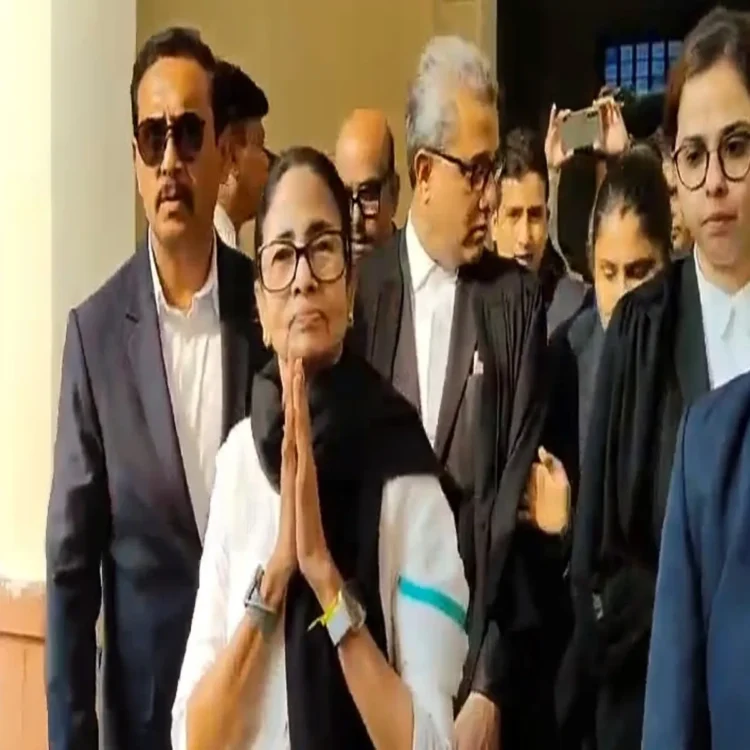
Application Filed to Appear as Party in Person
Court records indicate that Banerjee has formally submitted an application requesting permission to address the court herself. The Supreme Court’s official causelist reflects her status as a “party in person,” a designation that allows a litigant to argue their own case without legal representation. Senior officials familiar with the registry process confirmed that the application has been accepted and listed accordingly.
Rare Appearance by a Sitting Chief Minister
If she proceeds as planned, Banerjee’s appearance will mark a rare and possibly unprecedented moment in the country’s judicial history. According to legal observers and court sources, no serving Chief Minister has previously appeared in person to argue a matter before the Supreme Court. The development has drawn attention within legal circles for its constitutional and institutional significance.
Hearing Scheduled Before Chief Justice-Led Bench
The case is set to be heard by a bench led by Chief Justice Surya Kant, underscoring the importance of the matter. Courtroom 1, where constitutionally significant cases are typically taken up, has been designated for the hearing. The Special Intensive Revision case involves issues that are understood to have wider implications, which explains its placement before the senior-most bench.
Legal Background of the Chief Minister
Banerjee’s decision to argue her own case is supported by her academic background in law. Official records show that she earned her law degree from Jogesh Chandra Choudhury College of Law in Kolkata. While she has spent most of her career in active politics, her formal legal training provides the foundation for her move to appear without counsel.
Reactions From the Legal Community
The announcement has prompted reactions from experienced members of the legal fraternity. Former Additional Solicitor General K C Kaushik described the development as historic, noting that it is highly unusual for an elected executive head to take on the role of an advocate in the country’s highest court. Speaking to the media, Kaushik said that in his decades-long legal career, he had not witnessed a comparable instance involving a sitting Chief Minister.
Significance Beyond the Case Itself
Beyond the immediate legal questions involved in the SIR matter, Banerjee’s personal appearance is being viewed as symbolically significant. It highlights the intersection of constitutional roles, where an elected political leader engages directly with the judiciary using legal mechanisms available to any citizen. Legal experts note that while the law permits such appearances, they remain extremely uncommon at the highest level of the judicial system.
What to Expect From the Hearing
The court is expected to first consider procedural aspects, including the acceptance of Banerjee’s request to argue in person, before moving to the substantive issues of the case. Observers anticipate close attention to the proceedings, given both the nature of the case and the identity of the party presenting arguments.
As the hearing date approaches, the development continues to draw interest for its legal, constitutional, and institutional implications, placing the spotlight firmly on Courtroom 1 when the matter is taken up.