
Vande Bharat 4.0: India’s Next Leap in High-Speed Rail Innovation
Vande Bharat 4.0: India’s railway transformation is entering a decisive new phase with preparations underway for the Vande Bharat 4.0 trains. Building on the success of earlier versions, including the recently introduced Sleeper variant, Indian Railways is aligning technology, safety, and passenger comfort with long-term national development goals. Over the next 18 months, the focus will be on rolling out a new generation of trains that reflect India’s ambition to match and exceed global railway standards.
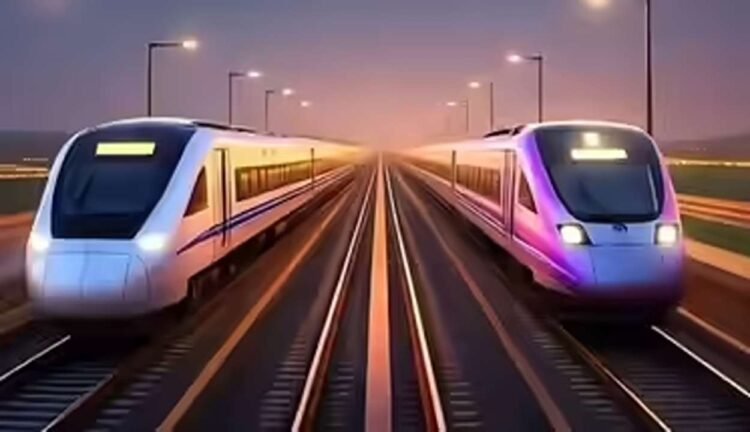
A Strong Foundation Built by Earlier Vande Bharat Versions
The Vande Bharat journey began as an effort to modernize passenger rail travel through indigenous design and manufacturing. The earlier versions, especially Vande Bharat 2.0 and 3.0, demonstrated impressive performance metrics such as rapid acceleration, reduced travel time, and smoother ride quality. These trains proved that India could successfully design semi-high-speed rail systems suited to its diverse geography and passenger needs.
With faster acceleration, improved braking systems, and upgraded interiors, the existing fleet has already changed how people perceive long-distance rail travel. The operational success of these versions has encouraged Indian Railways to take the next technological leap with Vande Bharat 4.0.
Government Vision and Long-Term Rail Expansion Goals
The expansion of Vande Bharat services is closely aligned with the broader national vision articulated by Narendra Modi. The goal is to strengthen rail connectivity across cities while supporting economic growth, regional integration, and sustainable mobility. According to policy direction shared by the Ministry of Railways, the plan includes introducing around 800 Vande Bharat trains by 2030 and scaling this number to more than 4,500 advanced-generation trains by 2047.
Railway Minister Ashwini Vaishnaw has emphasized that railways are not just a transport system but a backbone of national development. Connecting major cities, industrial corridors, and emerging urban centers through high-speed rail is seen as a strategic investment in India’s future.
Introduction Timeline and Expected Rollout
The Vande Bharat 4.0 version is targeted for introduction by 2027. Over the next year and a half, Indian Railways will focus on design validation, testing, and manufacturing readiness. Lessons learned from the deployment of earlier versions will directly influence the new model, ensuring higher reliability and lower maintenance requirements.
This phased approach allows engineers and planners to integrate advanced systems without disrupting ongoing services. It also ensures that safety certifications and operational training are completed before large-scale deployment.
Advanced Safety Systems and Kavach 5.0 Integration
One of the most significant upgrades in Vande Bharat 4.0 will be the integration of Kavach 5.0, the latest evolution of India’s indigenous Automatic Train Protection system. Kavach technology is designed to prevent collisions, control train speed, and enhance operational safety even in challenging conditions.
By incorporating Kavach 5.0 as a core component, Vande Bharat 4.0 trains aim to set new benchmarks in rail safety. This system represents a move towards intelligent rail networks where automation and real-time monitoring reduce human error and improve overall efficiency.
Passenger Comfort and Global Standards
Beyond speed and safety, Vande Bharat 4.0 is being designed with a strong focus on passenger comfort and build quality. Improved seating ergonomics, better noise insulation, enhanced climate control, and modern onboard amenities are expected to be part of the new design philosophy.
Officials have stated that the upcoming version will align closely with global best practices in high-speed rail. This means not only matching international performance standards but also offering a travel experience that feels premium, reliable, and consistent across routes.
Role of Vande Bharat in India’s 2047 Development Vision
As India moves toward its target of becoming a developed nation by 2047, railway mobility is emerging as a central pillar of infrastructure growth. High-speed and semi-high-speed trains like Vande Bharat reduce travel time, boost tourism, support business mobility, and lower carbon emissions compared to road and air travel.
The Vande Bharat platform symbolizes self-reliance, technological capability, and future readiness. With the 4.0 version, Indian Railways aims to reinforce its position as a modern transport provider capable of serving a rapidly growing economy.
Looking Ahead
The evolution of Vande Bharat trains reflects a broader shift in how India approaches public transport infrastructure. Vande Bharat 4.0 is not just an upgrade but a statement of intent to lead in railway innovation. As testing and development progress, these trains are expected to redefine express rail travel and strengthen India’s position on the global rail map.