
Bihar: Samriddhi Yatra Signals a New Phase of Governance and Development
Bihar : Chief Minister Nitish Kumar has once again taken to the ground with the launch of the Samriddhi Yatra from Bettiah in West Champaran. This statewide outreach marks his seventeenth major public tour and the fifteenth since assuming office as the head of the state government. The initiative comes at a politically significant time, soon after a decisive mandate in the Bihar Assembly elections, and reflects a renewed emphasis on governance, development, and public engagement.
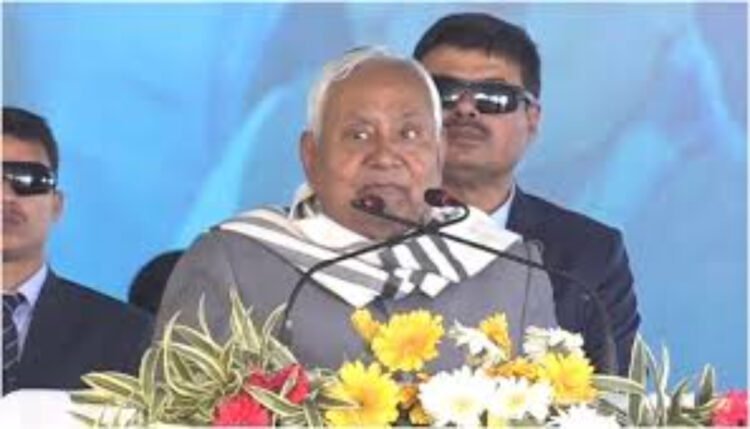
Background of the Samriddhi Yatra
The Samriddhi Yatra has been positioned as a continuation of the Chief Minister’s long-standing practice of directly reviewing development work across Bihar. Despite challenging winter conditions, the launch event sent a clear message that the government intends to maintain momentum in administrative delivery. The yatra is designed not only as a symbolic journey but also as a practical mechanism to assess how policies translate into outcomes on the ground.
Political Context After the Assembly Elections
The recent Assembly elections resulted in a landslide victory for the alliance led by the Janata Dal (United), supported by the Bharatiya Janata Party and other partners. This overwhelming mandate has increased public expectations from the government. Within this context, the Samriddhi Yatra is being seen as an effort to reassure citizens that electoral promises will be followed by concrete action. The leadership aims to demonstrate that governance will remain performance-driven rather than complacent after electoral success.
Review of Development Projects and Programmes
One of the central objectives of the Samriddhi Yatra is to review projects that were initiated during earlier outreach programmes, particularly the Pragati Yatra and the Saat Nischay or Seven Resolves programme. Between December 2024 and February 2025, development schemes worth nearly Rs 50,000 crore were announced under Pragati Yatra initiatives. Out of 430 identified projects, 428 have already received departmental approval, and funding along with implementation plans have been cleared by the state Cabinet. This extensive approval rate is being highlighted by the government as evidence of administrative efficiency.
Administrative Preparedness and Public Interaction
To ensure the smooth conduct of the Samriddhi Yatra, Chief Secretary Pratyaya Amrit has instructed senior officials, including department heads, district magistrates, and superintendents of police, to coordinate closely. The focus is not limited to ceremonial events; the Chief Minister is expected to interact directly with citizens during the tour. Such interactions are intended to help identify local issues, assess service delivery, and reinforce accountability within the administrative machinery.
Government Perspective on the Yatra
According to party spokespersons from the ruling side, the Samriddhi Yatra is a response to the responsibility that comes with an absolute majority. Leaders from Janata Dal (United) have stated that the government recognizes the scale of public expectations and is committed to meeting them. During the tour, the Chief Minister is expected to review the status of ongoing schemes and lay foundation stones for new projects considered crucial for Bihar’s long-term development.
Opposition Criticism and Political Debate
The opposition, however, has questioned the intent behind the yatra. Leaders from the Rashtriya Janata Dal have argued that the initiative is politically motivated rather than focused on public welfare. One of the key criticisms has been that the tour should have begun from Aurangabad, where a bridge collapse recently raised serious concerns about infrastructure safety, instead of Champaran. Opposition voices have suggested that repeated yatras under different names reflect political strategy more than substantive change.
Questions Around Political Messaging
Opposition spokespersons have also raised questions about the theme of prosperity associated with the Samriddhi Yatra. They argue that without addressing pressing issues such as infrastructure failures and governance lapses, the idea of prosperity remains rhetorical. According to them, such tours are aimed at preserving political ground and managing alliance dynamics, particularly with partners like the Bharatiya Janata Party, rather than directly resolving citizen grievances.
Role of Women Voters in Electoral Success
Political analysts have added another dimension to the discussion by highlighting the decisive role played by women voters in the recent elections. More than 1.56 crore women reportedly received financial assistance shortly before polling, a factor widely believed to have influenced voting patterns. Analysts suggest that future government initiatives, including those reviewed during the Samriddhi Yatra, may continue to prioritize welfare schemes targeted at women as a key electoral and social strategy.
Overall Significance of the Samriddhi Yatra
Taken as a whole, the Samriddhi Yatra represents a blend of governance review, political messaging, and public outreach. For supporters, it underscores a proactive approach to development and accountability. For critics, it raises questions about priorities and intent. Regardless of perspective, the yatra has once again placed governance, development, and public engagement at the center of Bihar’s political discourse.