
Mexico Train Disaster: Tragic Passenger Train Derailment in Southern Mexico Triggers Nationwide Emergency Response
Mexico Train Disaster: A deadly passenger train accident in southern Mexico has shocked the nation and prompted an immediate federal response. On Sunday, a navy-operated passenger train derailed in the state of Oaxaca, leaving at least 13 people dead and dozens more injured. The incident occurred near the small town of Nizanda, close to the border between Oaxaca and Veracruz, while the train was navigating a curved section of track. Officials confirmed that the train was carrying 241 passengers along with nine crew members at the time of the derailment, making it one of the most serious rail accidents in the region in recent years.
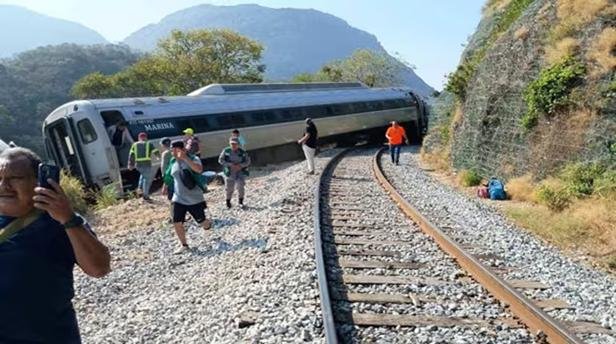
Incident Location and Initial Details
The accident involved the Interoceanic Train, a major transportation service designed to connect Mexico’s Pacific coast with the Gulf of Mexico. According to early reports, the train lost stability while moving through a curve, causing several carriages to leave the tracks. The surrounding area is remote and rugged, which made immediate access difficult for emergency responders. Despite these challenges, rescue operations began within hours of the derailment.
Updated Casualty Figures and Medical Response
Initial statements from the Mexican Navy indicated that around 20 passengers had been injured. However, as rescue teams reached more of the affected area and medical assessments continued, authorities revised the figures significantly. Officials later confirmed that 98 people were injured in total, while 13 passengers lost their lives due to the crash.
https://x.com/RT_com/status/2005429519726072211?s=20
Among the injured, 36 individuals were receiving ongoing medical treatment in hospitals across the region. Five of those injured were reported to be in critical condition, requiring intensive care. Authorities also confirmed that 139 passengers were declared out of danger after receiving medical evaluations. Hospitals in both Oaxaca and neighboring Veracruz were placed on alert to accommodate the influx of patients.
Federal Leadership and Government Action
President Claudia Sheinbaum addressed the nation shortly after the updated casualty figures were released. She confirmed that she had instructed senior federal officials to travel immediately to the accident site to supervise rescue efforts and ensure support for victims and their families. The president emphasized that the federal government would remain actively involved until all affected individuals received assistance.
Coordination of the emergency response was assigned to the interior ministry, with regular public updates promised to maintain transparency. The government also confirmed that support services, including counseling and financial assistance, would be extended to families impacted by the tragedy.
Emergency Teams and Rescue Operations
Emergency services, including navy personnel, paramedics, firefighters, and local authorities, were rapidly deployed to the scene. Rescue workers focused on evacuating passengers from damaged carriages, administering first aid, and arranging transportation to medical facilities. Images from local media showed severely damaged train cars and responders assisting injured passengers along the tracks.
Due to the remote location, helicopters and specialized vehicles were used to transport critically injured individuals. Temporary medical stations were also set up near the crash site to stabilize patients before transfer to hospitals.
Investigation Into the Cause of the Crash
The Attorney General’s Office confirmed that a formal investigation has been launched to determine the cause of the derailment. The inquiry will analyze both technical factors, such as track conditions and train mechanics, and operational aspects, including speed, signaling, and crew procedures. Authorities stated that findings would be shared publicly once the investigation is complete.
Background of the Interoceanic Train Project
The Interoceanic Train was inaugurated in 2023 as part of the Interoceanic Corridor of the Isthmus of Tehuantepec, a large-scale infrastructure initiative launched under former president Andrés Manuel López Obrador. The project aims to stimulate economic growth in southern Mexico by providing a strategic transport link for both passengers and freight between the Pacific and Gulf coasts.
The corridor has been viewed as a symbol of regional development and modernization. This tragic accident has raised renewed questions about rail safety, infrastructure maintenance, and emergency preparedness along the route.