
SamajwadiParty – Akhilesh Yadav Rejects Split Claims, Targets BJP in Gorakhpur
SamajwadiParty – Samajwadi Party president Akhilesh Yadav has brushed aside recent claims suggesting unrest within his party, while simultaneously sharpening his political attack on the Bharatiya Janata Party (BJP) over governance, education, law and order, and infrastructure issues in Uttar Pradesh.
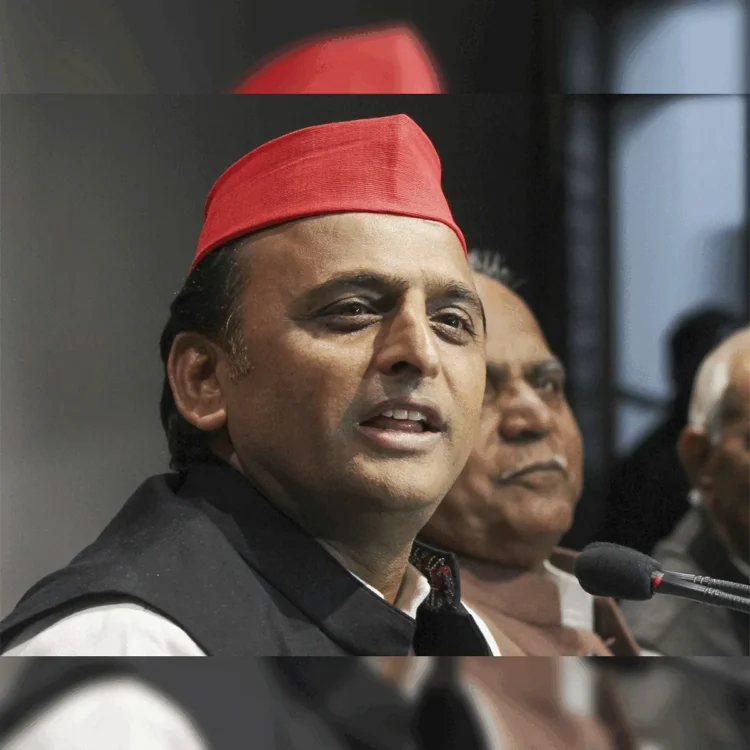
Akhilesh Responds to Rajbhar’s Remarks
The controversy began after Uttar Pradesh minister Om Prakash Rajbhar claimed that major political changes were likely within the Samajwadi Party and hinted at a possible internal division. However, Akhilesh Yadav appeared unfazed by the assertions.
Reacting to Rajbhar’s comments, Yadav used a sarcastic remark to question the credibility of such statements and suggested that political narratives built around speculation would not continue indefinitely. His response indicated that the Samajwadi Party leadership was not taking the allegations seriously.
SP Leaders Dismiss Speculation
Samajwadi Party Member of Parliament Rajeev Rai also rejected Rajbhar’s claims. He criticized the minister’s repeated public statements and described them as unnecessary political commentary lacking substance.
Rai remarked that such remarks had become habitual and argued that there was little reason to attach significance to them. According to him, the statements were aimed more at attracting attention than presenting any meaningful political insight.
Focus Shifts to 2027 Uttar Pradesh Elections
As political parties begin preparations for the 2027 Uttar Pradesh Assembly elections, Akhilesh Yadav emphasized that the Samajwadi Party is concentrating on strengthening its organizational structure, particularly in Gorakhpur.
Addressing reporters in Lucknow, he said the party had set an ambitious target for the region and was determined to challenge the BJP’s political dominance there. He added that party leaders would soon decide the schedule for organizational meetings and outreach programs in Gorakhpur.
Allegations on Education and Employment
Akhilesh Yadav accused the BJP government of weakening the education system in Gorakhpur during its tenure. He alleged that a significant number of primary schools had either been closed or rendered ineffective, affecting educational opportunities for local children.
The former chief minister further claimed that the closure of schools had been accompanied by a reduction in government employment opportunities. According to him, these developments had negatively impacted both students and job seekers across the region.
Questions Raised Over Law and Order
Continuing his criticism, Yadav alleged that law and order conditions in Uttar Pradesh had deteriorated. He claimed that crime levels remained a major concern and pointed to Gorakhpur as an example where citizens were facing increasing challenges despite the area’s political significance.
He also expressed concern over the condition of public healthcare facilities, alleging that many primary health centers lacked adequate resources and staffing. According to Yadav, weakening public services was forcing residents to rely increasingly on private institutions for essential healthcare.
Criticism of Infrastructure Projects
The Samajwadi Party chief also targeted the state’s infrastructure policies. Referring to the Gorakhpur Link Expressway, he questioned the quality of development projects and argued that several initiatives were being presented more favorably than their actual condition justified.
He said that if administrative shortcomings were visible in the chief minister’s own constituency, it raised broader concerns about governance standards across the state.
Allegations Over Elections and Land Issues
Akhilesh Yadav additionally questioned the conduct of certain electoral processes and accused the ruling party of lacking transparency. He alleged irregularities during previous elections and argued that greater public scrutiny was necessary.
On land-related matters, he claimed that residents in Ayodhya had faced difficulties due to government actions linked to land acquisition and development projects. He also alleged that farmers and traders had been adversely affected by these decisions.
With political competition intensifying ahead of the next Assembly elections, both the ruling BJP and opposition parties are expected to further sharpen their campaigns, making issues such as governance, employment, infrastructure, and public welfare central themes in the coming years.