
Politics – Akhilesh Yadav Confident of Alliance Victory in Uttar Pradesh 2027 Elections
Politics – Samajwadi Party chief Akhilesh Yadav on Sunday expressed strong confidence that his party will return to power in Uttar Pradesh after the 2027 Assembly elections. He also indicated that the broader opposition alliance is expected to remain united as preparations for the polls gradually take shape.
Alliance Strategy and Seat Sharing Approach
Speaking during an interaction with reporters in Rewari, Yadav suggested that the Samajwadi Party is likely to contest the upcoming elections in coordination with the Congress. He underlined that the opposition grouping would continue to function cohesively in the run-up to the elections.
According to him, discussions around seat distribution would not be driven merely by numerical divisions but by the ability of candidates to secure victories. He emphasized that the focus would remain on selecting strong contenders rather than negotiating for a higher number of seats. This approach, he said, would strengthen the alliance’s overall performance.
Criticism of Ruling Party’s Electoral Prospects
Yadav also took aim at the ruling Bharatiya Janata Party, claiming that it is facing setbacks in various ongoing Assembly elections across the country. Referring to the political climate, he suggested that declining performance at the national level could translate into electoral losses in states as well.
He pointed out that political outcomes in legislative bodies often reflect broader public sentiment, adding that setbacks in Parliament may indicate weakening support outside it too. His remarks were framed as a broader critique of the ruling party’s governance and electoral standing.
Address to Party Workers in Lucknow
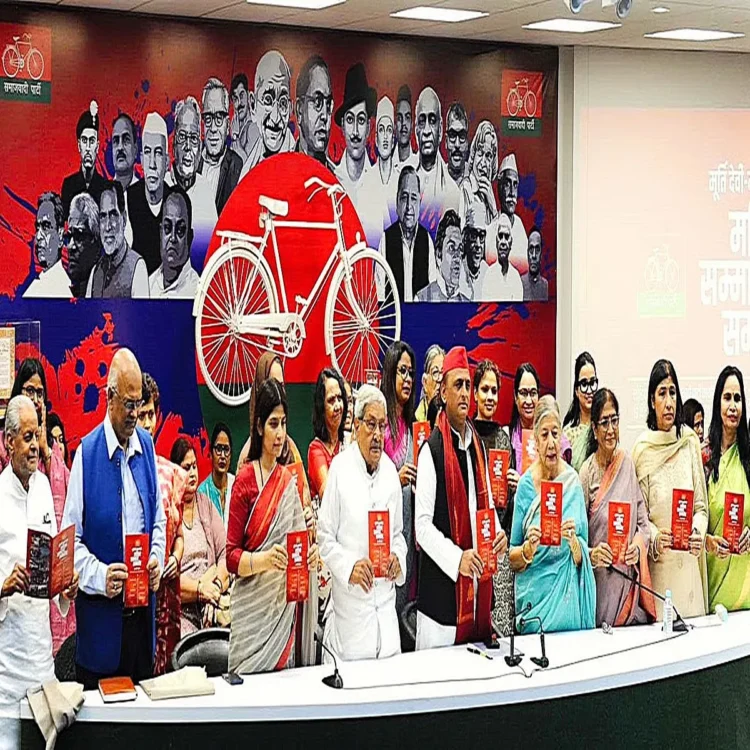
Earlier in the day, Yadav addressed party members at the Samajwadi Party headquarters in Lucknow, where he delivered a sharp critique of the ruling National Democratic Alliance at the Centre. He argued that the alliance had lost its moral authority to govern, citing recent legislative developments as evidence.
In particular, he referred to the inability to pass a constitutional amendment related to women’s reservation in the Lok Sabha. According to Yadav, this reflected a disconnect between the government’s claims and the expectations of the public.
Remarks on Women’s Reservation Debate
On the issue of women’s representation, Yadav accused the ruling party of inconsistency. He said that while the government often labels the opposition as being against women, its own actions tell a different story.
He questioned the party’s commitment, noting that it had not promoted women to top leadership roles within its own structure. He further suggested that slogans centered on women’s empowerment were used selectively, particularly during election campaigns, rather than being backed by consistent policy action.
Views on Military Representation and Recruitment
Responding to a question regarding the demand for the creation of an Ahir regiment in the Indian Army, Yadav reiterated his support for the proposal. He said such initiatives could help increase participation from specific communities.
Expanding on the idea, he also proposed the possibility of forming a Gujarat regiment, arguing that regions with lower representation in the armed forces could benefit from targeted efforts. According to him, such steps could encourage greater participation and strengthen recruitment across different parts of the country.
Political Positioning Ahead of 2027
Yadav’s remarks reflect an early attempt to position the Samajwadi Party and its allies as a united alternative ahead of the next Assembly elections in Uttar Pradesh. By focusing on alliance unity, candidate selection, and criticism of the ruling party, he signaled the key themes that may shape the opposition’s campaign.
With several years still remaining before the elections, these statements are likely part of a broader effort to consolidate support and build momentum at the grassroots level. How these strategies evolve over time will play a crucial role in determining the political landscape in the state.