
Census – Akhilesh Yadav Questions BJP Over Women Quota And Delay Concerns
Census- Samajwadi Party leader Akhilesh Yadav on Thursday criticised the Bharatiya Janata Party, alleging that the issue of women’s empowerment has been reduced to mere political messaging rather than meaningful action. Speaking in the Lok Sabha during a discussion on proposed amendments to the Women’s Reservation Act, 2023, he questioned the government’s intent and raised concerns over delays in conducting the national Census.
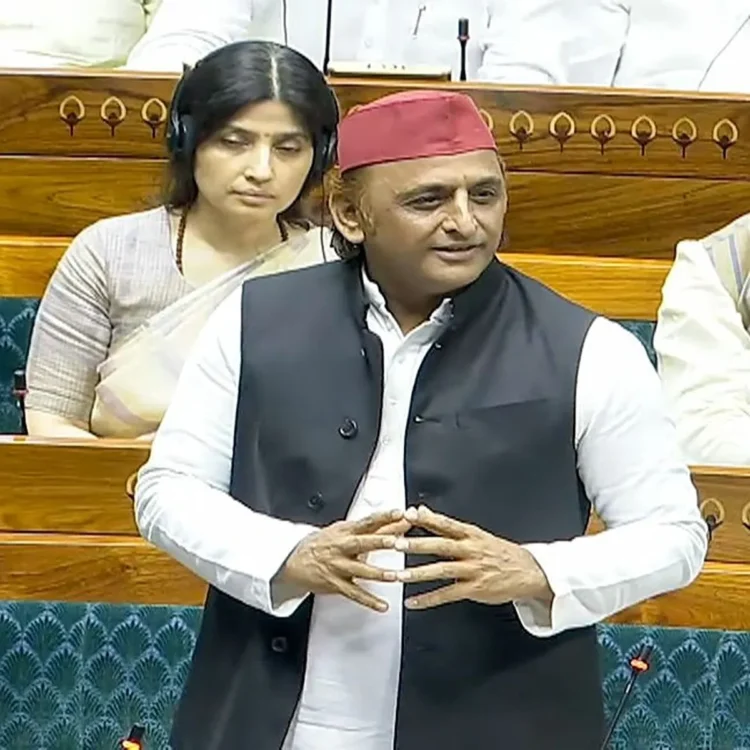
Debate Over Women’s Reservation Intensifies
Participating in the parliamentary debate on three bills related to women’s reservation and the formation of a delimitation commission, Yadav reiterated his party’s long-standing support for increased representation of women in politics. He stated that the Samajwadi Party has consistently backed policies aimed at strengthening women-led development and ensuring gender equality.
He emphasized that leaders with socialist ideology have historically worked towards social and gender justice, adding that such principles should guide policymaking rather than political convenience.
Questions Raised on Representation Within BJP
During his speech, Yadav also took aim at the ruling party’s internal structure. He questioned the level of participation of women within organisations linked to the BJP, suggesting that there is a gap between public messaging and actual representation.
He further asked how many states and Union Territories governed by the BJP or its allies currently have women serving as chief ministers. Highlighting governance in Union Territories, he remarked that leadership roles there come with limited powers, indirectly questioning the effectiveness of such positions in ensuring meaningful representation.
Concerns Over Census Delay
A key part of Yadav’s argument focused on the timing of the proposed changes. He alleged that the government’s push for delimitation, tied to the implementation of women’s reservation, could be contributing to delays in conducting the Census.
According to him, linking these processes raises questions about whether administrative steps are being used to postpone essential exercises like population counting. The Census plays a crucial role in policy planning and resource allocation, making any delay a matter of concern for governance and development.
Political Messaging Versus Policy Implementation
Yadav argued that slogans alone are not sufficient to bring real change. He claimed that while the government frequently highlights women’s empowerment in its public communication, the actual outcomes in terms of representation and policy execution need closer examination.
He questioned the number of women elected as Members of Parliament and Members of Legislative Assemblies from the BJP, suggesting that measurable indicators should be used to assess commitment to gender equality.
Broader Implications for Policy and Governance
The discussion reflects a broader political debate on how best to implement women’s reservation in India. While there is general agreement across parties on the importance of increasing women’s participation in governance, differences remain over the timing, process, and political intent behind legislative changes.
As Parliament continues to deliberate on these bills, the focus is likely to remain on balancing policy objectives with transparency and timely implementation of key national processes such as the Census.