
Article370 – Seven Years After Constitutional Change, Jammu and Kashmir Remains Politically Divided
Article370 – Seven years after the abrogation of Article 370, political leaders in Jammu and Kashmir continue to express sharply different views on its impact, reflecting the region’s ongoing political divide. While the Bharatiya Janata Party (BJP) says the constitutional change has strengthened governance, improved security and expanded development opportunities, opposition parties maintain that the move stripped the region of its constitutional protections and identity. The anniversary once again brought contrasting narratives from leaders across the political spectrum.
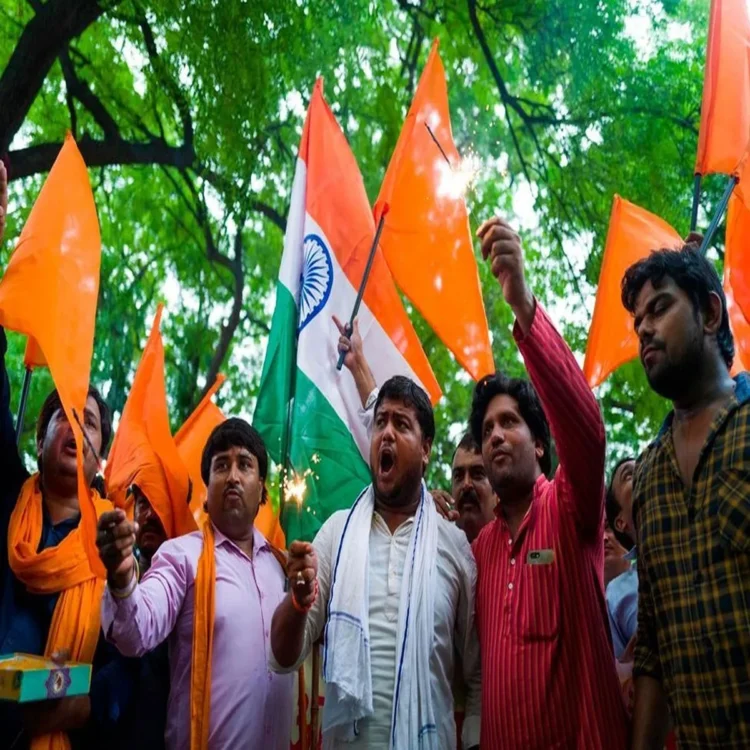
BJP Highlights Changes Since 2019
Speaking to reporters on Tuesday, BJP leader Ashok Koul said the situation in Jammu and Kashmir has changed significantly since the special constitutional status was revoked. According to him, administrative systems that had struggled in the past are now functioning more effectively, allowing residents to carry out daily activities with greater ease.
Koul said people are now able to conduct business without the restrictions that once affected normal life. He noted that markets remain open later into the evening, commercial activity has become more stable, and residents can travel freely to work and manage their daily responsibilities. He also stated that educational opportunities for students have improved, with schools, colleges and universities operating more smoothly than before.
The BJP leader added that the party plans to mark the anniversary with public events in Jammu and Kashmir as well as other parts of the country, describing the constitutional change as a milestone in the region’s development.
PDP Renews Demand for Restoration of Special Status
On the eve of the anniversary, People’s Democratic Party (PDP) president Mehbooba Mufti led a candlelight demonstration in Srinagar. During the protest, she reiterated her demand for the restoration of Articles 370 and 35A, arguing that the provisions represented the constitutional rights and identity of the people of Jammu and Kashmir.
Mufti also called for progress on resolving the broader Jammu and Kashmir issue and sought the release of prisoners held in different jails across the country. She maintained that Article 370 had protected local interests, including land ownership and employment rights, and said its removal had deeply affected the region’s political and social landscape.
Addressing supporters, Mufti argued that the constitutional provisions were granted under the Constitution of India and should therefore be restored. She further accused the BJP of removing Jammu and Kashmir’s special status despite public opposition and said her party would continue pursuing its demand through democratic means.
National Conference Seeks Statehood Restoration
National Conference MLA Sajjad Shaheen also used the anniversary to renew the demand for the restoration of Jammu and Kashmir’s statehood. He said many residents continue to feel disappointed over the reorganisation that converted the former state into two Union Territories.
Shaheen urged the Union government to honour its commitment to restore statehood, pointing out that such assurances had previously been made in Parliament and before the Supreme Court. According to him, fulfilling that promise would address an important public expectation in the region.
Contrasting Narratives Across the Region
Seven years after the constitutional changes, Jammu and Kashmir continues to witness different political interpretations of the developments since 2019. Supporters of the government’s decision point to improvements in infrastructure, public services, connectivity, investment and the overall security environment as evidence of positive change.
At the same time, opposition leaders continue to press for the return of the region’s former constitutional status and statehood, arguing that these issues remain central to the aspirations of many residents.
The anniversary has also drawn attention to comparisons between Jammu and Kashmir and Pakistan-occupied Jammu and Kashmir (PoJK). While officials and BJP leaders cite development projects, administrative reforms and improved stability in the Union Territory, reports from PoJK continue to highlight concerns related to governance, economic challenges, restrictions on civil liberties and public protests. These contrasting narratives remain at the centre of the wider political discussion surrounding the region’s future