
WaterDispute – Punjab Seeks Massive Dues From Rajasthan Over Supply
WaterDispute – A fresh dispute between Punjab and Rajasthan has surfaced over long-pending payments related to water supply, with the Punjab government now formally seeking a substantial amount it claims is overdue for decades.
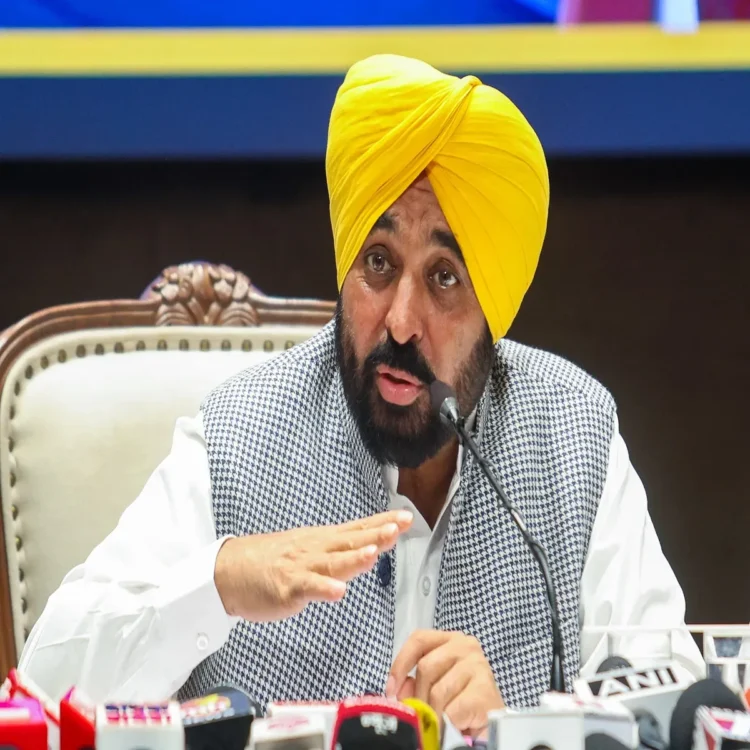
Punjab Chief Minister Bhagwant Mann has announced that his government intends to recover approximately Rs 1.44 lakh crore from Rajasthan. The claim relates to unpaid royalty charges for water supplied since 1960, which Punjab alleges have not been cleared despite continuous usage.
Punjab Raises Long-Standing Financial Claim
According to the Punjab government, Rajasthan had been paying charges for water usage until 1960 but discontinued payments afterward, even though the water supply continued uninterrupted. Mann stated that the dues have accumulated over the years and now represent a significant financial claim.
He warned that the matter cannot be ignored any longer, indicating that Punjab may reconsider ongoing water supply arrangements if the issue remains unresolved. The state has already reached out to Rajasthan, seeking discussions to address the pending payments.
Historical Agreement Under Scrutiny
The dispute is rooted in a historical water-sharing agreement signed in 1920. This arrangement involved the British administration, the princely state of Bahawalpur, and the ruler of Bikaner. Under this agreement, Rajasthan was required to pay for the water it received through specific canal systems.
Mann emphasized that the current claim is linked to water supplied via the Ferozepur Feeder. He argued that the original agreement clearly outlined payment obligations, which Punjab believes remain valid even today.
Indus Treaty Cited in Payment Disagreement
A key point of contention is the interpretation of agreements made after 1960, particularly the Indus Waters Treaty. Punjab has alleged that Rajasthan continues to benefit from earlier arrangements while citing later developments to avoid payment obligations.
The Chief Minister pointed out that the 1960 treaty does not explicitly address royalty payments, nor does it cancel the earlier agreement. He suggested that this selective interpretation has contributed to the prolonged dispute.
Punjab also claims that Rajasthan currently draws around 18,000 cusecs of water through the Rajasthan Feeder, making the issue financially significant for both states.
Lack of Periodic Review Highlighted
Mann noted that the 1920 agreement required a review every 25 years, but successive governments failed to revisit or renegotiate its terms. This lack of periodic assessment, he said, allowed the issue to remain unresolved for decades.
He added that if dues are calculated from 1960 to 2026, the total amount reaches approximately Rs 1.44 lakh crore. The Punjab government has formally communicated this figure to Rajasthan and requested a meeting to discuss the matter.
Possibility of Central Intervention
Punjab has indicated that it may approach the Central Government if discussions with Rajasthan do not yield results. Mann stated that his administration is prepared to explore all available legal and administrative options to secure what it considers rightful dues.
He also expressed concern that states demanding water through projects like the Sutlej-Yamuna Link Canal have not addressed the issue of pending payments. According to him, resolving financial obligations should be part of broader discussions on water sharing.
Awaiting Rajasthan’s Response
As the situation develops, the Rajasthan government has yet to issue an official response to Punjab’s claims. The outcome of this dispute could have wider implications for inter-state water sharing arrangements and financial accountability.
With Punjab taking a firm stance, attention is now focused on whether both states can reach a negotiated settlement or if the matter will escalate further through central or legal channels.