
Politics – Rahul Gandhi Questions Intent Behind Proposed Electoral Bills
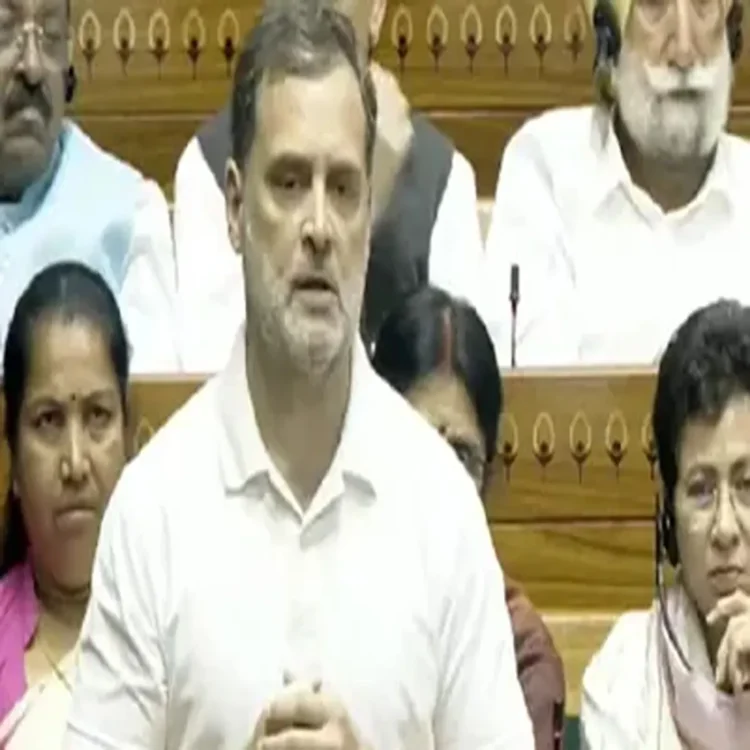
Politics – The Leader of Opposition in the Lok Sabha, Rahul Gandhi, on Friday raised sharp objections during a parliamentary discussion on three proposed bills, alleging that the Centre is advancing a broader political agenda under the cover of women’s reservation. He argued that the current proposals do not genuinely address women’s empowerment and instead aim to reshape the country’s electoral framework.
Concerns Over Purpose of Women’s Reservation
Speaking during the debate, Gandhi maintained that the legislation being discussed cannot be considered a true women’s reservation measure. According to him, the government is presenting the initiative as a step toward gender equality, but its underlying intent lies elsewhere. He called for the reintroduction of the version of the Women’s Reservation Bill that was passed earlier, stating that his party would support that model without hesitation.
He emphasized that genuine representation for women should not be tied to broader political restructuring and insisted that any such reform must remain focused on empowerment rather than electoral calculations.
Allegations of Impact on Marginalised Communities
Gandhi further argued that the proposed framework could adversely affect representation for Other Backward Classes (OBCs) and other marginalized groups. He claimed that the government is using the concept of women’s reservation to divert attention from the demand for a caste census, which many opposition parties view as essential for ensuring fair representation.
In his remarks, he described the approach as unfair, suggesting that it could limit opportunities for communities that have historically sought greater participation in legislative bodies. He also expressed concern that the move may dilute their presence in decision-making institutions.
Claims of Electoral Reconfiguration
A significant part of Gandhi’s criticism centered on what he described as an attempt to alter the electoral map of the country. He accused the ruling party of trying to adjust political boundaries and representation patterns to maintain its position of power.
Referring to earlier developments in regions such as Assam and Jammu and Kashmir, he suggested that similar strategies are now being considered on a wider scale. According to him, these changes could have long-term consequences for how representation is distributed across states.
Debate Over Regional Representation
The issue of delimitation and its potential impact on southern states also featured prominently in his speech. Gandhi echoed concerns that future changes in constituency boundaries could reduce the relative representation of certain regions in the Lok Sabha.
He stated that his party would strongly oppose any measure that it believes could weaken the voice of states, particularly those in the south. He argued that maintaining a balanced representation across regions is essential for preserving the federal structure of the country.
Questions on Inclusion in Key Sectors
In addition to legislative concerns, Gandhi questioned the government’s record on ensuring adequate representation of Dalits and OBCs across various sectors. He pointed to what he described as gaps in their presence within the bureaucracy, judiciary, and corporate landscape.
He called for greater transparency and concrete steps to improve inclusivity, arguing that symbolic recognition alone is not sufficient without meaningful participation in governance and economic institutions.
Strong Opposition Signals
Concluding his remarks, Gandhi reiterated his party’s firm stance against the proposed bills in their current form. He described the measures as inconsistent with the principles of fair representation and warned that they could face significant resistance in Parliament.
The debate reflects broader disagreements between the government and opposition over how to balance gender representation with social and regional equity. As discussions continue, the future of these legislative proposals is likely to remain a key point of political contention.